Iran Military Advisor Alerts of Foes’ Schemes, Calls for National Cohesion
An advisor to Iran's top military official has issued a cautionary statement regarding adversarial schemes camouflaged as campaigns for women’s rights. The advisor stressed the importance of maintaining vigilance, fostering national unity, and steering clear of any divisions within society.
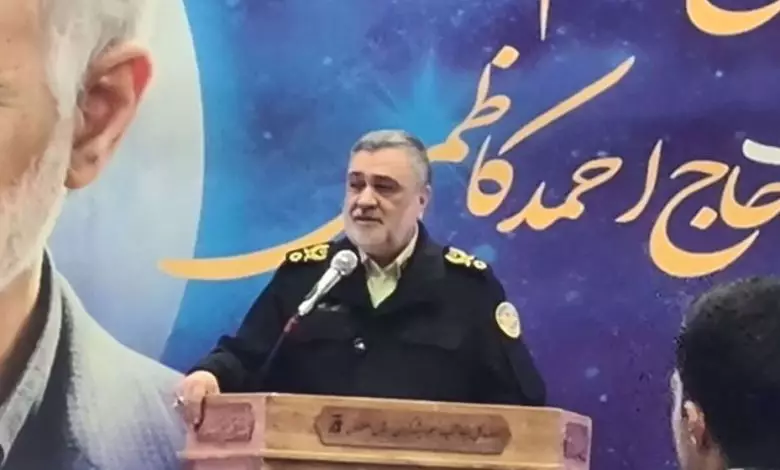
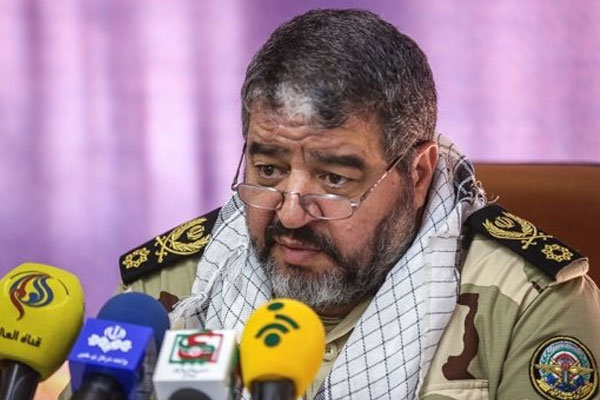
In a speech on Thursday at a ceremony commemorating the sixth anniversary of General Qassem Soleimani’s martyrdom in Isfahan, Brigadier General Hossein Ashtari asserted that slogans promoting women’s rights are part of the enemy’s strategy to create discord among the populace.
He emphasized that opponents are unable to fulfill their objectives through military or security strategies and are therefore attempting to sow division. He underscored the critical need for authorities to respond to the needs of the underprivileged and to avoid politicizing social matters.
Unity and cohesion deliver a significant setback to adversaries, Ashtari emphasized, noting that opponents will not prevail through military or security engagements. He stressed the importance of preventing any divisions among the populace.
Ashtari has recognized the financial strains facing the populace and cautioned against any efforts to leverage these difficulties for political advantage.
He stated that various methods exist to tackle economic pressures, and any attempt to leverage this as a justification for political objectives is evidently unacceptable to the populace.
Demonstrations broke out in Iran starting on Sunday as shop owners in Tehran shuttered their stores following the rial’s decline to unprecedented lows against the US dollar.
Iran’s Attorney-General Mohammad Movahedi-Azad stated on Wednesday that peaceful economic demonstrations are a “recognizable reality” that should be handled through appropriate legal frameworks. He further cautioned that any organized efforts to manipulate these protests would encounter firm legal consequences.
Movahedi-Azad has voiced criticism of the imposition of unilateral and extraterritorial sanctions, highlighting their potential to restrict access to critical goods, medications, financial services, and essential resources. Such actions, he argues, closely align with the concept of collective punishment, a notion that is firmly opposed by both international humanitarian and human rights laws.
The attorney general emphasized the crucial need to differentiate between legitimate protest and criminal activities. He remarked that economic challenges often give rise to social demands and subsequent demonstrations, stating that peaceful economic protests should be channeled through lawful avenues.
He cautioned, however, against efforts to exploit genuine demands for ulterior motives.
Movahedi-Azad stated that there are attempts to create instability by exploiting networked media, spreading distorted narratives, and manipulating misled individuals or groups to disrupt public order.
He asserted that the judiciary has an obligation to delineate a clear boundary between the legitimate right to protest and criminal behavior.
He added that any efforts to transform economic protests into incidents of insecurity, damage to public property, or the implementation of external schemes will be met with a legal, proportional, and definitive response.
On Thursday, Ashtari underscored “maintaining cohesion” as a crucial national priority, emphasizing that safeguarding the Islamic Republic remains a paramount responsibility as per the late Imam Khomeini’s teachings.
He commended the pivotal influence of Ayatollah Seyyed Ali Khamenei, Leader of the Islamic Revolution, in steering the nation through challenging times.
The populace is urged to express gratitude for a visionary and prudent leader who has effectively navigated the complexities of the Islamic Revolution. It is asserted that no one demonstrates greater concern for the citizens, particularly the marginalized, than the Leader.
Highlighting Iran’s historical challenges of enduring plots, sanctions, and threats since the 1979 revolution, Ashtari noted, “Whenever the security of the nation is endangered, the citizens have consistently stood in unison.”
He called for a commitment to the path forged by the martyrs, expressing optimism that the nation will overcome present challenges and achieve new milestones without undermining the sacrifices made by its heroes.