Zionist Regime’s Strikes in Southern Lebanon Result in Two Fatalities Amid Ceasefire Breaches
According to Lebanon's Ministry of Health, 'israeli' airstrikes on southern Lebanon have resulted in the deaths of at least two Lebanese individuals, while five others have sustained injuries. These incidents involved attacks on vehicles in two separate strikes.
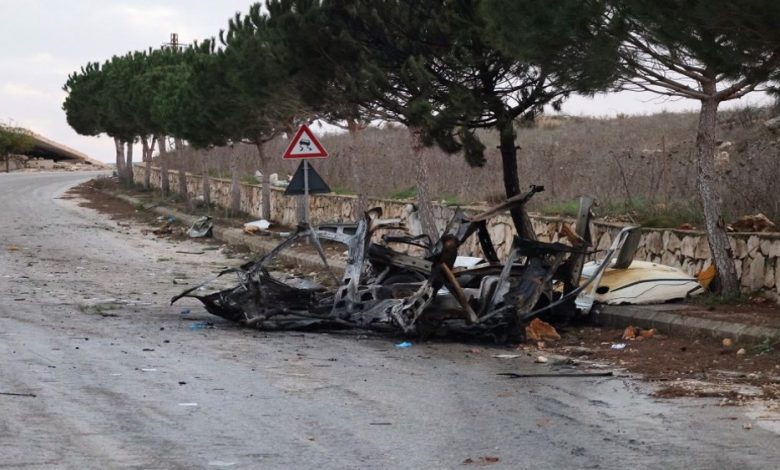
At least two Lebanese citizens have been confirmed dead and five others injured following two distinct Israeli airstrikes aimed at vehicles in southern Lebanon, as reported by Lebanon’s Ministry of Health.
An Israeli drone strike on Tuesday targeted a vehicle traveling between Markaba and al-Aadaissah in southern Lebanon’s Marjayoun district, resulting in the death of one individual, according to a statement from the Health Ministry.
In a separate incident, an Israeli drone targeted a pickup truck in the Sebline region along the Mount Lebanon coast, resulting in one fatality and injuring five individuals, as reported by the ministry.
In a further breach of the ceasefire agreement, Israeli forces reportedly advanced into the town of al-Dhahirah, crossing 750 meters beyond the Blue Line. There, they allegedly transported boxes of ammunition, including explosives and hand grenades, and positioned them in proximity to a residential house.
In a recent development, the occupying forces have reportedly erected Israeli flags in the area, a move regarded as a fresh provocation.
After the Israelis planted explosives, the Lebanese army promptly set up a security perimeter in the vicinity and safely detonated the materials in a controlled operation to avert any casualties.
Lebanese sources have reported artillery attacks from the Israeli military in the vicinity of Marwahin, located in southern Lebanon. The latest Israeli strikes across southern Lebanon have resulted in at least three fatalities, occurring amid ongoing violations of the ceasefire. This persistent shelling has elicited strong condemnation from the United Nations and the Hezbollah resistance movement.
Israel’s Minister of Defense, Israel Katz, issued a stern warning late last month, indicating that Tel Aviv is ready to initiate a conflict with Lebanon should the Hezbollah resistance movement fail to disarm by the end of 2025.
Lebanon has reportedly been cautioned by both Arab and international entities regarding Israel’s potential plans for an extensive offensive targeting the nation, according to statements made by Foreign Minister Youssef Raggi on Friday.
Hezbollah has announced that it will maintain its arsenal as long as Israel persists with airstrikes on Lebanon and continues to hold parts of the territory.
The recent attacks coincide with a historic development, as Lebanon and Israel have dispatched envoys to participate in a U.S.-monitored committee in Beirut for the first time in decades. This initiative represents a move towards enhancing indirect negotiations, a process encouraged by the peace plan proposed by the Trump administration.
The United States Ambassador to Lebanon, Michel Issa, has recently emphasized that despite Israel’s involvement in discussions, it does not signify that the airstrikes will cease, highlighting the delicate nature of the ceasefire and the potential for further intensification of hostilities.
Hezbollah leader Naim Qassem has openly criticized Lebanon’s involvement, describing it as a “free concession” to the Israeli authorities.
Since October 8, 2023, hostilities have erupted between Hezbollah and Israel, marked by exchanges of fire. This escalation occurred just a day after Israel initiated a substantial military campaign against the Gaza Strip in response to a surprise operation by Hamas.
The Lebanese resistance movement has pledged to maintain its retaliatory attacks in response to the ongoing Gaza conflict, declaring that these actions will persist as long as the Israeli regime continues its military operations.
By September 2024, the situation escalated into a full-scale war, resulting in the deaths of over 4,000 Lebanese individuals and injuries to approximately 17,000, with the majority being women and children.
In its ongoing operations against Lebanon, the Israeli military also claimed the life of Sayyed Hassan Nasrallah, the Secretary-General of Hezbollah.
Despite the establishment of a ceasefire in November 2024, Israel has been conducting frequent strikes in southern Lebanon, asserting they are aimed at Hezbollah activities. These actions have been criticized for breaching the agreement.
Israeli authorities continue to maintain their presence in five strategically important regions of southern Lebanon, namely Labbouneh, Mount Blat, Owayda Hill, Aaziyyeh, and Hammamis Hill, all situated near the border.