What happens in case of American ground invasion of Iran?
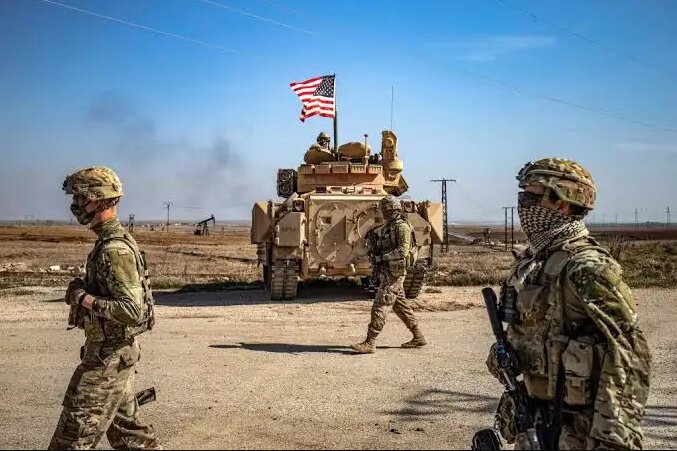
A ground invasion of Iran, contrary to the assumptions of Washington’s war advocates, would drag the United States into a war of attrition and a quagmire worse than Vietnam.
Months have passed since the beginning of the American and Zionist regime’s aggression against Iran, but Washington has still not achieved any of the goals with which it justified the war. Contrary to Donald Trump’s claims, the United States has neither been able to destroy Iran’s nuclear program, nor has it succeeded in eliminating the country’s missile capability, nor has it achieved the goal of regime change, nor has it managed to weaken the Resistance Front. As a result, a war that was supposed to force Iran to retreat in a short time has now exposed the failure of America’s political and military calculations.
Despite these failures, the same currents that encouraged Trump to expand the war are once again trying to push him toward an even more dangerous stage. The occupying Zionist regime and the war-mongering faction within the White House and Congress are pressing more than anyone for the direct entry of American ground forces. Nevertheless, a ground invasion cannot compensate for the failures of the previous attacks and will only expand the dimensions of the catastrophe for the United States.
A ground entry into Iran would be a new gamble in which Washington would confront a vast geography, extensive defensive capacity, national resistance, and the possibility of the war spreading across the entire region. This aggression will not only fail to achieve America’s already-failed objectives, but will trap the country’s military in a war of attrition—costly and with no exit strategy—a war that could repeat the quagmire of Vietnam, Iraq, and Afghanistan for American policymakers, and even assume deeper and more destructive dimensions.
Trump’s new gamble after the failure of the bombing tactic
Wars enter the ground-operation phase when cheaper tools cannot achieve the political and military objectives of the war’s architects. For this reason, the emergence of the ground invasion option against Iran should not be seen as a sign of American strength, but rather as an admission of strategic failure—a strategy that, over the past months, was built on airstrikes, intelligence operations, assassinations, sabotage, and political and economic pressure. If Washington could have reached its goals with those same tools, it would never have felt the need to accept the heavy costs of a ground war.
America and its allies began the war with a set of specific objectives: destroying Iran’s nuclear program, eliminating its missile and drone capabilities, weakening the Axis of Resistance, creating internal instability, and ultimately forcing the Islamic Republic to retreat or even undergo regime change. Now, months into the conflict, none of these goals have been fully realized. This very failure has led some war-mongering currents in Washington to put a costlier and more dangerous option on the table.
It is not only the Zionist regime that supports the expansion of the war. Influential lobbies backing the Israeli regime, such as AIPAC, have for years worked to steer U.S. foreign policy toward Iran. Alongside them, a segment of hardline currents within the U.S. administration, certain cabinet members, a number of senators and congressmen, as well as a group of neoconservative think tanks, have consistently emphasized increasing pressure and even using the military option against Iran. This coalition sees the failure of the bombing tactic not as a reason to end the war, but as a pretext to move into a far riskier phase.
However, the greatest mistake of these currents is to imagine that escalating the level of violence automatically increases the probability of victory—while the experience of recent decades shows precisely the opposite. In Vietnam, Iraq, and Afghanistan, the United States also possessed absolute air superiority, advanced technology, and extensive military equipment, yet that superiority could not guarantee Washington’s political objectives. The reason is clear: wars end when political goals are achieved, not when firepower is merely increased.
Thus, if Trump—under pressure from domestic war-mongering currents, pro-Israel lobbies, and hardline officials—decides to launch a ground invasion of Iran, he will, in fact, enter a stage whose risk is far greater and whose costs are far heavier than all previous phases of the war. Such a decision will neither compensate for past failures nor achieve America’s stated objectives; it will only push Washington one step closer to a war of attrition with no clear horizon—a war that will be far harder to exit than to begin.
Gradual attrition of the invading army in Iran’s vast geography
The biggest mistake of the architects of a ground war against Iran is that they see the country’s geography only as lines on a map. Iran is a vast, mountainous country with diverse climates; any invading force will face severe difficulties from the very first stages. The Zagros and Alborz mountain ranges, desert regions, limited passes, dense cities, and the great distances between strategic centers will reduce the possibility of a rapid, unified advance and make the invaders’ supply lines long and vulnerable.
To continue operations, the U.S. military will need a constant flow of fuel, ammunition, food, equipment, and replacement troops. The farther the invading forces move from borders and support bases, the harder it will become to protect roads, convoys, depots, and positions. Under such conditions, a large portion of America’s military power, instead of advancing, will be consumed by holding captured areas and defending lines of communication, and the attrition of forces and equipment will increase over time.
Air superiority and advanced technology will not solve this problem either, because a ground war is not run solely by fighter jets, missiles, and satellites. This kind of war requires the continuous presence of soldiers, control of routes, and securing the rear. Iran, for its part, possesses formal and popular capacities and experience in asymmetric warfare, and can make the battlefield scattered, prolonged, and costly. Consequently, the invading forces will face not a fixed defensive line but a multi-layered, continuous resistance.
Nor can Washington bank on the imaginary collapse of Iranian society. Foreign aggression can overshadow internal differences and bring various segments of society together in defense of the country’s territorial integrity. Even critics of domestic policies will not necessarily support the entry of a foreign army or attempts at occupation. Thus, the assumption of a public welcome for invaders could repeat the same miscalculation the United States made before attacking Iraq.
To thwart a ground invasion, Iran does not need to defeat America in a classical battle; it is enough to prevent Washington from achieving a rapid, low-cost, and presentable victory. As the war lengthens, casualties, financial costs, troop exhaustion, and political pressure inside the United States will mount. Ultimately, Iran’s geography, multi-layered resistance, and long supply lines will trap the invading army in a war that is easier to start than to end.
A quagmire deeper than Vietnam, Iraq, and Afghanistan
The United States has started wars before with promises of quick victory, but in Vietnam, Iraq, and Afghanistan it faced a different reality. In all three cases, military superiority and advanced technology could not create a sustainable political victory for Washington. The U.S. military was able to topple governments or strike vast areas, but it could not establish a stable order in line with its own objectives. In the end, wars that were supposed to be short and low-cost turned into prolonged, costly, and grinding conflicts.
A ground invasion of Iran could create a situation even more difficult than those experiences, because Iran differs from Vietnam, Iraq, and Afghanistan in terms of size, population, defensive capability, and regional standing. Iran is a vast country with a cohesive governing structure, organized armed forces, and extensive missile and drone capacities. Moreover, Iran’s geographical position lies at the center of a network of energy routes, U.S. military bases, and sensitive regional countries, and any ground war could expand the conflict beyond Iran’s borders.
In such a scenario, America will not only face costs on the battlefield. Rising casualties, growing military expenditures, disruption in energy markets, pressure on regional allies, and the spread of domestic protests will gradually erode the U.S. government’s political capacity. The longer the war drags on, the larger the gap between stated objectives and actual results will become, and the government will face increasing difficulty in explaining the continuation of the war to the public.
The experience of Vietnam, Iraq, and Afghanistan showed that America’s failure does not always mean defeat in a specific battle. Sometimes failure occurs when Washington, after years of war, thousands of dead, and enormous costs, is forced to withdraw without achieving its main goals. Iran can impose such a pattern of attrition on America on an even larger scale and deny Washington a rapid and presentable victory.
Thus, a ground invasion of Iran would not be just another military operation for America; it could turn into a strategic crisis whose consequences would linger for generations in the country’s domestic and foreign policy. The same currents that are encouraging Trump to expand the war may make the start of the invasion seem simple, but ending such a war will not be up to them. This gamble could trap America in a quagmire deeper, costlier, and more devastating than Vietnam, Iraq, and Afghanistan.
MNA