The war of attrition with Iran: What happened to US patriots?
According to estimates put forward, America’s seven-month war with Iran has placed considerable pressure on Washington’s weapons stockpiles; pressure whose consequences may continue for years after the end of the conflict.
The issue is not only the missiles the US military has consumed on the battlefield, but the time it needs to replace them; a time that can affect Washington’s ability to confront potential crises in other regions, especially East Asia.
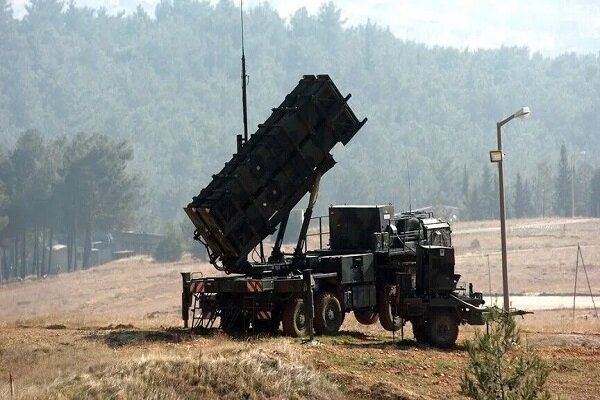
According to a report attributed to the Center for Strategic and International Studies, in seven months of confrontation with Iran, Washington used approximately the equivalent of 19 years of Patriot missile purchases of these interceptors. In the same assessment, restoring US missile stockpiles to prewar levels has been stated to take at least three years. These figures indicate the gap between the speed of munitions consumption in an intense conflict and the ability of the US defense industry to compensate for it.
The importance of this issue increases when we know that military power is not measured merely by the number of aircraft, ships, or advanced systems. The ability to sustain operations in a prolonged conflict and to quickly replace consumed equipment is also a determining factor. An army may possess advanced technology and extensive firepower, but if its munitions stockpiles decrease at a rate faster than production capacity, it will face more serious limitations in continuing operations.
Patriot; An Important Link in US Air Defense
The Patriot system is one of the important air defense equipment of the United States and its allies, used to counter certain aircraft and missile threats. The interceptor missiles of this system play an important role in protecting forces, bases, and military facilities. The extensive consumption of these missiles can force commanders to make more difficult decisions about how to allocate munitions, the priority of defending targets, and the level of risk acceptance.
Compensating for this reduction in stockpiles is also not simply a matter of increasing government orders. The production of advanced missiles depends on specialized components, raw materials, skilled manpower, and industrial capacity. Developing production lines and increasing delivery speed is a time-consuming process, and one cannot expect an increase in demand to immediately lead to a proportionate increase in supply.
For this reason, even after the intensity of the conflict decreases, pressure on the US military can continue. Washington must simultaneously meet the needs of forces deployed in the Middle East, maintain its commitments in Europe, and be prepared for potential crises in East Asia. The longer the rebuilding of stockpiles takes, the more difficult it will be to manage these commitments.
A Window of Vulnerability for Washington and a Possible Opportunity for China
One of the most important strategic consequences of the reduction in US munitions stockpiles is its connection to the competition between Washington and Beijing. China is considered America’s most important strategic rival, and any potential conflict in the Indo-Pacific region could require extensive consumption of precision munitions and defense systems.
Under such circumstances, the reduction in interceptor stockpiles can complicate US military planning. Washington will be forced to strike a balance between meeting current needs in the Middle East and maintaining readiness for potential crises in East Asia. This situation may be what analysts refer to as a “window of vulnerability”; a period in which the replacement of consumed munitions has not yet been completed, but America’s security needs in other regions still persist.
Of course, these conditions do not mean China’s definitive superiority or America’s inability to defend its interests. Washington’s military power is not limited to Patriot missiles, and this country still possesses a naval fleet, air force, base network, and regional allies. However, in a prolonged confrontation, the depth of stockpiles and the speed of replacing munitions can become as important as technology and the quality of weapons.
A Cost Beyond the Battlefield
The consequences of this situation are not limited to the US military either. Washington’s allies, who depend on American systems and munitions for air defense, may face delays in the delivery of orders if demand increases. Under such conditions, the US government must prioritize between the needs of its own forces and the requests of its security partners; a decision that can affect military relations and the security calculations of allies.
For Iran too, this issue has strategic importance; because it shows that the assessment of a military confrontation should not be made only on the basis of the number of equipment or the firepower of the parties. The capacity to withstand pressure, the continuity of operations, and the cost of replacing weapons also play a role in determining the course of a conflict. Of course, the reduction in US interceptor stockpiles alone is not sufficient to prove this country’s military defeat and must be examined alongside the operational results and the extent to which the declared objectives of both sides have been achieved.
Ultimately, the extensive consumption of Patriot missiles and the time needed to rebuild America’s stockpiles will be the possible restriction of Washington’s strategic freedom of action in the post-conflict period. The war may end on the battlefield, but its effects on weapons stockpiles and military readiness will remain for years; an issue that takes the real cost of a prolonged confrontation beyond the days of military operations.
MNA