The illusion of besieging Iran; How realistic it could be?
The White House tests every pressure tool against Iran, each falling short. Now, a leaked “land blockade” scheme, mocked by allies, exposes a widening gap between policy and reality.
As time passes, more signs of the confusion of Donald Trump’s administration in dealing with Iran are revealed. Over the past months, the US president has tested almost all conventional tools of pressure against Iran; from military strikes and threats to expand the war to maximum economic pressure, intensification of sanctions, psychological operations, repeated claims about Iran’s readiness to negotiate, attempts to build international consensus, and even threats of unprecedented actions. But none of these policies have achieved Washington’s stated objectives. Iran has not retreated from its positions, its deterrence structure has not collapsed, nor has the US been able to impose its desired order on the region.
Under these circumstances, the more strategic failures accumulate, the greater the gap between policy and reality grows. Usually, powers that face deadlock on the ground, instead of revising their strategy, turn to ideas that are less based on geopolitical realities and more the product of political wishes and illusions. The latest example of this situation is the claim that the US and the Zionist regime are examining a plan for a “land blockade of Iran”; a plan that, even before being met with Tehran’s reaction, was ridiculed by many analysts and even Israeli journalists.
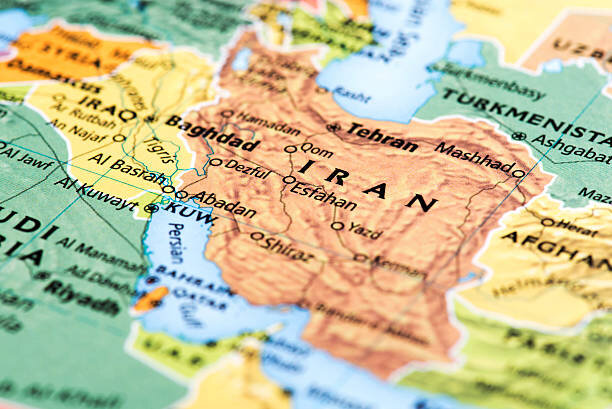
The Telegraph newspaper has claimed that Washington and Tel Aviv are examining a scenario in which Iran’s neighboring countries would close their land borders, restrict the passage of goods, and exert unprecedented economic pressure on Iran. The publication of this news was quickly met with reactions from Doron Kadosh, a journalist for Israeli Army Radio, and also Barak Ravid, a journalist for Axios. They asked, with a sarcastic tone, whether the designers of such an idea had even once looked at the map of the region. These very reactions show that this scenario was not taken very seriously even within media circles close to the Zionist regime.
The reason for this ridicule is completely clear. Iran is not a country that can be blockaded by a political decision or diplomatic pressure. Iran shares land borders with seven neighboring countries: Iraq, Turkey, Pakistan, Afghanistan, Turkmenistan, the Republic of Azerbaijan, and Armenia. The total length of these borders is about five thousand six hundred kilometers. This means that implementing any land blockade requires controlling more than 5,600 kilometers of borders and, more importantly, bringing on board seven independent governments with entirely different interests, policies, and security calculations.
This very point is the first reason for the inefficiency of this plan. None of Iran’s neighboring countries has an identical version of relations with Tehran. Iraq supplies a significant portion of its energy, electricity, and gas needs from Iran, and the economy of the two countries’ border regions depends on trade. Turkey sees Iran as one of its main transit routes to Central Asia and East Asia and has extensive economic relations with Tehran. Pakistan, in addition to border cooperation, pursues important joint energy and transportation projects with Iran. The Republic of Azerbaijan, Turkmenistan, and Armenia each have direct interests in maintaining connectivity with Iran in the areas of transit, energy, and trade. Afghanistan, too, due to its extensive dependence on Iranian trade routes and goods, practically cannot comply with such a plan.
In other words, to execute such a scenario, the US would have to convince seven independent countries to sacrifice their economic and security interests and even part of their decision-making independence for Washington’s strategy; a strategy whose success even America’s traditional allies doubt. The experience of past years has shown that many regional governments are unwilling to pay the costs of Washington’s confrontational policies; especially when these policies could plunge their economy, domestic security, or regional relations into crisis.
The second reason is Iran’s geopolitical position. Iran is not merely a consumer or importer of goods, but is considered one of the most important transit hubs of West Asia. The North-South Corridor, the routes connecting the Persian Gulf to Central Asia, the link to the Caucasus, as well as the eastern routes toward Pakistan and Afghanistan, have granted Iran a special position. Any attempt to cut these routes would not only target Iran, but would also disrupt the region’s trade and transportation chain. For this reason, many neighboring countries would themselves be harmed more than they would benefit from a blockade of Iran.
From a security perspective, this plan also lacks logic. Controlling thousands of kilometers of shared borders, in areas where a significant portion is mountainous, desert, or impassable, requires enormous military and security costs. Even countries that implement the strictest border policies today are unable to completely seal their borders; let alone having seven countries simultaneously and in coordination carry out such an action against a country with Iran’s geographic size and capabilities.
More importantly, historical experience also proves the contrary. Over past decades, the US has tried to influence countries like Cuba, North Korea, Iraq, and Venezuela with the harshest sanctions and various forms of economic pressure, but even in those cases it was unable to create a complete, leak-proof blockade. Today, as the global economy is more dependent than ever on diverse networks of trade, transportation, and technology, the idea of a complete blockade of a country with Iran’s geopolitical position resembles a propaganda scenario more than an executable plan.
In fact, the “land blockade” plan should be assessed more as part of psychological warfare rather than an operational strategy. The aim of proposing such ideas is to create an impression of Iran’s isolation, influence public opinion, and convey the message that the US still has new options at its disposal to increase pressure. But the gap between psychological warfare and realities on the ground is vast. When a proposal is described as unfeasible and absurd even by media outlets and analysts close to the Zionist regime, it is clear that its operational value is very limited.
The reality is that the Trump administration today faces a strategy crisis more than ever before. The military approach did not achieve the desired goals, maximum pressure could not force Iran into submission, repeated threats had no deterrent effect, and the narrative of negotiations could not convince public opinion. In such an atmosphere, it is natural that each day a new and unrealistic idea is placed on the table; ideas designed more to showcase the existence of “options on the table” than to truly solve the problem.
The “land blockade of Iran” plan is precisely a product of such conditions; conditions in which failures on the ground and in politics have weakened decision-making power and replaced strategic analysis with wishful thinking. This scenario is compatible neither with the geography of the region, nor with the economies of neighboring countries, nor with security considerations, nor with the realities of international politics. Hence, this plan should be seen less as a sign of US strength and more as a symbol of Washington’s strategic deadlock and the Trump administration’s entrapment in a swamp of its own making; a swamp from which the more difficult the exit becomes, the more fantastical and delusional ideas emerge from within it.
MNA