Tear Gas and Tragedy: Nationwide Uproar Follows ICE Crackdown Amid Denials from Trump
The United States has intensified its crackdown on protests targeting Immigration and Customs Enforcement, deploying tear gas and chemical irritants against demonstrators. This comes amid growing nationwide protests against the immigration policies of the Trump administration.
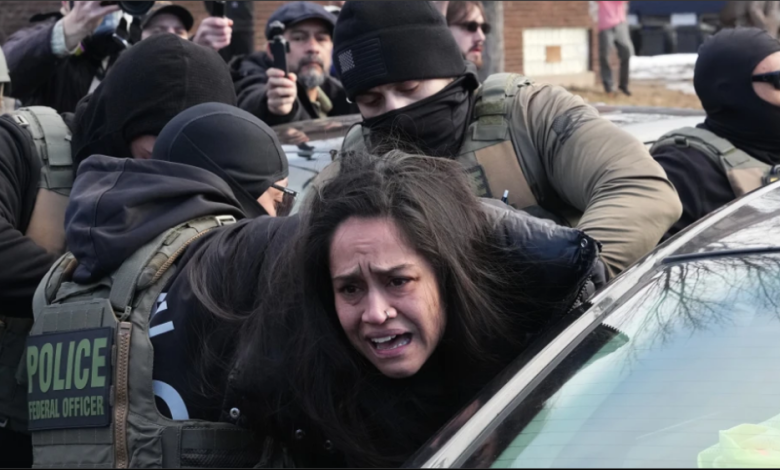
On Tuesday in Minneapolis, federal agents resorted to the repeated use of tear gas and eye irritants against demonstrators, enveloping city streets in thick, suffocating plumes of chemicals near the location where a protester was recently fatally injured.
Witnesses recounted tumultuous scenes where law enforcement officers deployed an orange chemical agent from a moving Jeep and then drove off, leaving one individual in distress, frantically rubbing snow into his eyes in an attempt to alleviate the discomfort.
Protests have erupted in response to the fatal shooting of Renee Good, a 37-year-old resident of Minneapolis, by an ICE officer last week. The incident has become a catalyst for widespread outrage, with critics decrying it as an example of militarized immigration enforcement.
A shooting incident was reported on the second day of what the Department of Homeland Security describes as the largest immigration operation in U.S. history, focusing on the Twin Cities area.
In the face of increasing video evidence and numerous eyewitness accounts, the administration led by Trump has maintained that the killing was executed in self-defense. However, local authorities have strongly refuted this assertion.
Minneapolis Mayor Jacob Frey strongly criticized the rationale provided, describing it as “garbage,” and asserting that Good did not present any danger to the federal agents present at the location.
Public outrage has extended far beyond the confines of downtown Minneapolis. In Brooklyn Park, Minnesota, students left their classrooms to protest against the intensified security measures, aligning themselves with similar demonstrations by youths occurring in various communities across the nation.
In another part of the city, significant crowds congregated outside a hotel accommodating federal officers, creating a din with drumbeats and whistles. Meanwhile, helmeted agents equipped with batons maintained a watchful presence.
Tensions escalated outside a federal building, which is currently functioning as the command center for the operation, as clashes erupted between protesters and law enforcement officers.
Civil liberties advocates argue that the forceful policing strategies, along with the extensive federal presence, effectively serve as collective punishment for entire communities.
Minnesota, together with the cities of Minneapolis and St. Paul, initiated legal action on Monday aimed at preventing what has been described as a “federal invasion” of the state.
The lawsuit contests the deployment of over 2,000 Department of Homeland Security agents, claiming that the administration has infringed upon the 10th Amendment by usurping the state’s self-governing law enforcement powers.
The international community reacted swiftly with widespread condemnation. The United Nations High Commissioner for Human Rights called for an independent investigation into the killing of Good, emphasizing that under international law, lethal force is sanctioned only as a last resort in the face of an imminent threat.
UN spokesperson Jeremy Laurence emphasized the need for accountability.
The repercussions have extended to the US Attorney’s Office, where at least five federal prosecutors have reportedly resigned. This follows internal disagreements regarding the Department of Justice’s management of the case, according to sources with knowledge of the situation.
A senior official from the Department of Justice announced on Wednesday that there is no foundation for launching a criminal civil rights investigation. This statement is expected to intensify criticism from those who believe there is a recurring theme of immunity.