Pakistan Conducts Cross-Border Strikes in Afghanistan Following Wave of Suicide Bombings
Pakistan's Ministry of Information has announced that its military forces have conducted operations along the Afghan border, aiming at militant hideouts linked to recent assaults throughout the nation.
In a statement released on Sunday via the social media platform X, Pakistan’s Ministry of Information and Broadcasting announced that the country’s armed forces conducted “intelligence-based, selective operations” targeting seven camps and hideouts associated with the Pakistan Taliban, also referred to as Tehrik-e-Taliban Pakistan (TTP), along with its affiliates.
The Ministry has asserted that it possesses “conclusive evidence” indicating the recent assaults in Islamabad, as well as in the northwestern districts of Bajaur and Bannu, were executed by militants acting “under the direction of their Afghanistan-based leadership and handlers.”
Reports indicate that Pakistan has consistently called on Afghanistan’s Taliban administration to address militant groups operating from Afghan soil for cross-border attacks. However, as of now, Kabul has not implemented any significant measures in response.
In a recent statement, Pakistan reaffirmed its commitment to fostering peace and stability within the region. However, it emphasized that the well-being and security of its citizens remain the nation’s utmost priority.
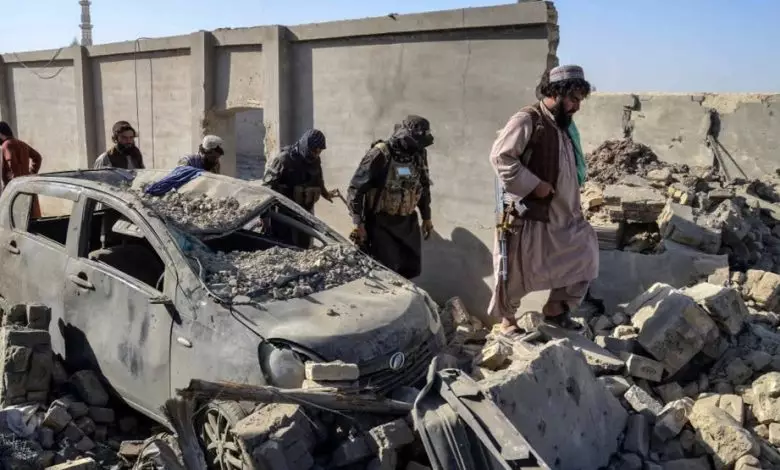
The Taliban’s Ministry of Defense issued a statement on Sunday criticizing the recent airstrikes, claiming they targeted a religious school and residential homes in the Nangarhar and Paktika provinces, leading to numerous casualties, including women and children.
The statement declared accountability of the Pakistani military for assaults on civilians and religious locations, emphasizing that there will be a forthcoming response that will be measured and appropriate.
The airstrikes were conducted in response to a series of lethal assaults within Pakistan. Mere hours preceding the aerial operations, a suicide bomber launched an attack on a security convoy in Bannu district, located in the Khyber Pakhtunkhwa province, resulting in the death of two soldiers, among them a lieutenant colonel.
On Monday, a suicide bomber, aided by armed assailants, drove an explosives-filled vehicle into a security checkpoint in Bajaur, resulting in the deaths of 11 soldiers and a child. Officials later identified the attacker as an Afghan national.
Earlier on February 6, a devastating suicide attack occurred during midday prayers at the Khadija Tul Kubra mosque located in Islamabad’s Tarlai Kalan area. The tragic event resulted in the deaths of at least 31 worshippers and left 170 others injured.
The attack has been claimed by Daesh, with the Pakistani military asserting that the planning, training, and ideological preparation for the assault occurred within Afghanistan.
The recent violence poses a risk to a delicate ceasefire between the two neighboring countries, established following deadly border clashes in October of the previous year, which resulted in numerous fatalities among soldiers, civilians, and alleged combatants.
Pakistan has witnessed a notable increase in attacks over recent years, which authorities attribute to the Tehreek-e-Taliban Pakistan (TTP) and banned Baloch separatist factions. Officials in Islamabad allege that the TTP is operating from within Afghanistan, a claim that the militant group disputes.