Iran’s missile power still unused, ready to confront enemy
A senior Iranian Armed Forces spokesman says that the country’s naval, ground, and missile capabilities are fully prepared to confront any potential scenario, stressing that Tehran has not used its true missile power yet.
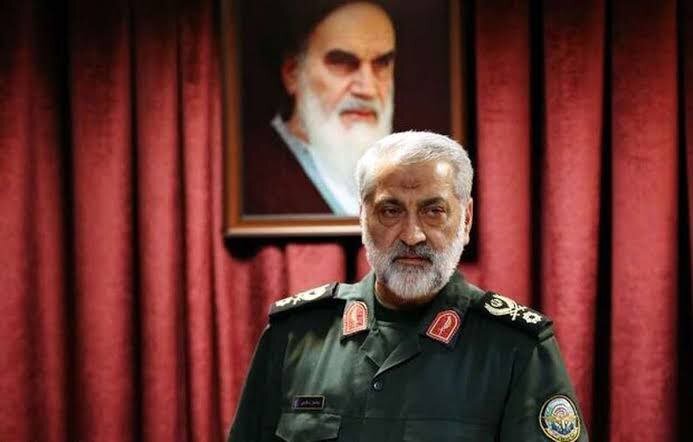
Brigadier General Abolfazl Shekarchi, Deputy for Cultural and Soft Warfare at Iran’s Armed Forces General Staff and the senior spokesperson for the armed forces, said that the THAAD (Terminal High Altitude Area Defense) system—described as the most advanced air defense system in the world and manufactured by the United States—failed to intercept Iranian missiles. He made the remarks during a meeting with the Islamic Association of Independent Students at Sharif University on Tuesday.
According to Shekarchi, the THAAD system is widely promoted as being capable of stopping any missile or aerial threat, with each interceptor missile costing between $10 million and $12 million.
Despite this, he stated that Iran’s Fattah missiles, produced at a significantly lower cost than a single THAAD interceptor, were able to penetrate advanced global air defense systems.
Shekarchi added that during the 12 days of war with the Israeli regime, the Fattah missiles struck targets inside the occupied territories with high precision, emphasizing that the impacts were neither random nor inaccurate.
He said the missiles hit pre-designated targets exactly as planned, underscoring their operational accuracy and effectiveness.
Shekarchi said that even at the peak of recent tensions and confrontations, Iran’s military activities were not disrupted and that the country had increased its power over the past 12 days, achieving tangible results.
He noted that while direct military confrontation was not necessary in many areas, Iran possesses extensive naval, ground, and paramilitary capabilities that remain largely unused.
According to Shekarchi, large parts of the Basij forces, as well as the naval and ground forces, have not yet been mobilized, despite Iran’s ability to do so.
He further emphasized that Iran’s missile power is fully ready, adding that it has not yet been utilized.
Shekarchi also added that Iran’s adversaries have adjusted their approach, shifting away from direct confrontation toward soft warfare, including media and propaganda efforts, which he said are aimed at weakening public morale.
On June 13, 2025, Israel launched a blatant and unprovoked aggression against Iran while Washington and Tehran were in a process of nuclear negotiations. The Israeli attack triggered a 12-day war that killed at least 1,064 people in the country, including military commanders, nuclear scientists, and ordinary civilians.
The United States also entered the war by bombing three Iranian nuclear sites in a grave violation of international law.
In response, the Iranian Armed Forces targeted strategic sites across the occupied territories as well as the Al-Udeid air base in Qatar, the largest American military base in West Asia.
On June 24, Iran, through its successful retaliatory operations against both the Israeli regime and the US, managed to impose a halt to the aggression.
The 12-day war between Israel and Iran was one of the most costly and failed periods in the Zionist regime’s history. Statistics and official statements indicate that Israel’s economic costs were reported between $12 and $20 billion, but comprehensive estimates suggest $40 billion.
The main costs included:
Direct military costs: $12.2 billion
Economic disruption and business closures: $21.4 billion
Damages from Iranian attacks: $4.5 billion
Evacuation and reconstruction costs: $2 billion
Even considering official Israeli statistics, these figures illustrate severe economic, military, and social pressures on Israel. Long-term consequences—including budget deficits, reduced economic growth, damage to tourism, emigration of specialists, and declining investor confidence—remain. Ultimately, the 12-day war proved that Israel’s 20-year plan to confront Iran failed, forcing Tel Aviv to seek a ceasefire to prevent further losses and economic collapse. This account, based on admissions from Israelis themselves and their media sources, provides a clear picture of the real dimensions of defeat and damage, showing that despite all claims and rhetoric, the Zionist regime was almost paralyzed under the pressure of the Islamic Republic of Iran.
MNA