Iran’s Foreign Minister Reports ‘Good Progress’ in Indirect US Talks, Highlights Clear Path Forward
Iranian Foreign Minister Abbas Araghchi has revealed that the recent round of negotiations with the United States regarding sanctions removal has ended with both parties agreeing on a set of guiding principles. These principles are expected to steer future discussions toward a possible agreement.
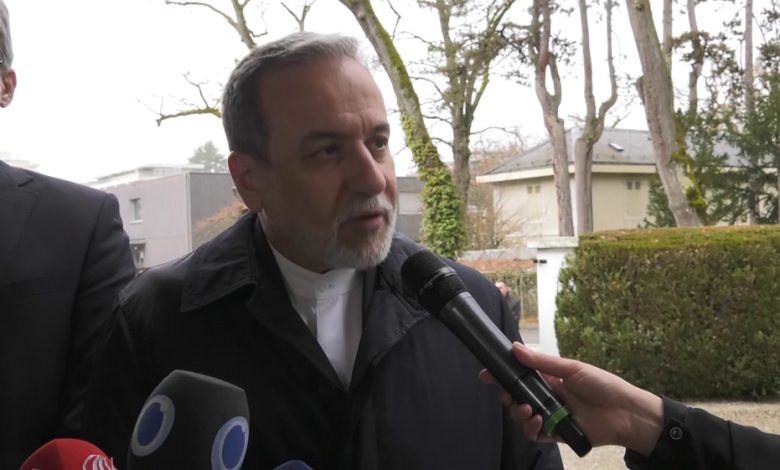
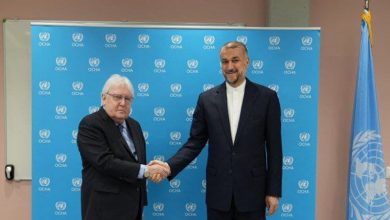
In a statement to an IRIB reporter in Geneva on Tuesday, shortly after the conclusion of the talks, Araghchi characterized the discussions as “serious” and noted that they were more constructive compared to the previous round. Various proposals were introduced and rigorously scrutinized.
He announced that a consensus had been achieved on a series of guiding principles, which will serve as the foundation for advancing discussions on drafting a potential agreement.
He warned that securing a final agreement will take time, highlighting the intricate and detailed nature of the technical work ahead. Despite this, he stressed that “good progress” has been achieved, and a clearer, more positive trajectory has materialized.
Araghchi announced that no date has been established for the forthcoming negotiations. He mentioned that the involved parties have concurred on drafting the texts of a potential agreement and will exchange them prior to finalizing the schedule for the next discussions.
The minister stated that although a formal roadmap has yet to be established, both parties now possess a clearer understanding of the situation. However, differences persist that will need time to resolve.
Recent indirect negotiations between Iran and the United States endured roughly three hours, occurring at the Oman ambassador’s residence.
The Iranian delegation was led by Araghchi, accompanied by key figures including Deputy for Political Affairs Majid Takht-Ravanchi, Deputy for Legal and International Affairs Kazem Gharibabadi, Deputy for Economic Diplomacy Hamid Ghanbari, and Foreign Ministry spokesperson Esmaeil Baghaei.
The Iranian negotiating team in Tuesday’s round included an assembly of technical, legal, and economic experts.
Discussions have resumed in the Omani capital of Muscat, where indirect nuclear negotiations were reconvened on February 6. The talks are being led by Araghchi and U.S. envoy Steve Witkoff.
The negotiations are occurring against a backdrop of increased regional tensions. Trump has directed additional military deployments to the area, which include an extra aircraft carrier, thousands of troops, warplanes, and guided-missile destroyers, as reported by US officials.
In late January, Trump announced the deployment of “another beautiful armada” of warships directed towards Iran, warning that if a deal is not reached, the repercussions would be “far worse” than the unauthorized strikes carried out in June 2025 on Iranian nuclear sites.
Tehran has announced its intention to respond firmly to any acts of military aggression, referencing the events of June when US attacks led to a barrage of ballistic missiles targeting Al Udeid, Washington’s key regional airbase situated in Qatar.