Iran’s Deterrence and Power Cemented by Two Imposed Conflicts: IRGC
The Islamic Revolution Guards Corps (IRGC) has stated that the two wars imposed on Iran in the 1980s, along with another conflict earlier this year, have significantly fortified the nation’s deterrent capabilities and enhanced its power-building efforts within the region.
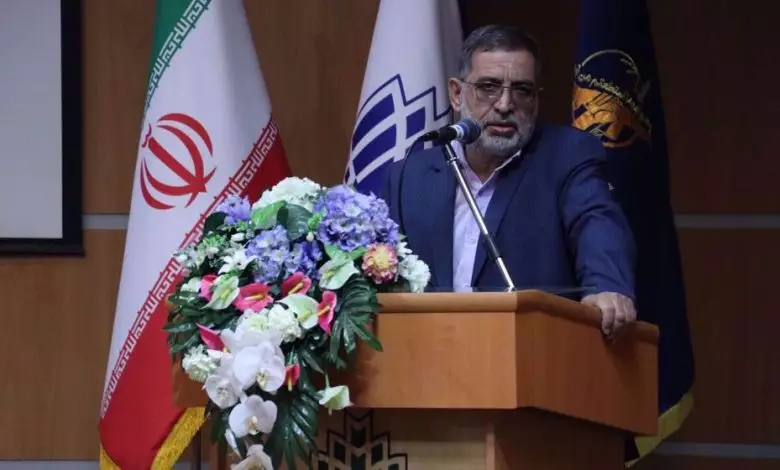
On Monday, Brigadier General Ali Mohammad Naeini, a spokesperson for the IRGC, stated that the Iranian nation achieved victory in the Iraqi-imposed war from 1980 to 1988, as well as in the Israeli-US aggression in June 2025. He suggested that both conflicts were initiated with the aim of dismantling and disintegrating the Islamic Republic.
In both conflicts, Iran successfully defeated its adversaries and maintained its territorial integrity, all while strengthening its deterrence capabilities and power-building efforts.
Naeini stated that adversaries underestimated Iran’s strength, believing they could incite unrest during both conflicts. However, Iran emerged victorious through its defense capabilities, widespread public support, and effective leadership.
The eight-year conflict, causing significant damage to Iran’s infrastructure and resulting in numerous casualties, propelled the nation to attain self-sufficiency in manufacturing strategic weapons and emerge as the region’s foremost missile power, he stated.
During the 1980s conflict, Iran grappled with significant resource shortages; however, in the face of recent unlawful aggression, the Islamic Republic has significantly transformed its intelligence and military capabilities. This strategic shift has altered the dynamics of engagement, bolstering the nation’s influence and authority within the region.
He made these comments following the conclusion of Sacred Defense Week, an event marking the anniversary of the war initiated by Saddam Hussein, the former Iraqi dictator. The conflict began in 1980, less than two years after the Islamic Revolution, with the intention of capturing Iran’s resource-abundant Khuzestan province.
With the military largely disorganized, the Iranian populace rallied under the guidance of the late Islamic Republic founder, Imam Khomeini, swiftly mobilizing to the frontlines to repel Iraqi forces and reclaim occupied regions.
The conflict concluded in 1988 with a ceasefire agreement, marking the Iraqi leader’s unsuccessful attempt to fulfill his objectives, while Iran maintained its territorial integrity.
The United States, along with its European and regional allies, provided the former Iraqi regime with military and intelligence assistance during the conflict.
Earlier this year, the United States collaborated with the Israeli government in conducting airstrikes on Iran’s nuclear sites.
Israel initiated a significant and unexpected offensive against Iran on June 13, sparking a 12-day conflict that resulted in the deaths of at least 1,064 individuals, among them military leaders, nuclear scientists, and civilians.
In retaliation, the Iranian Armed Forces launched strikes on strategic locations within the occupied territories and targeted the Al-Udeid air base in Qatar, which is recognized as the largest American military facility in West Asia.
On June 24, Iran effectively carried out successful counter-operations targeting both Israeli forces and the United States, resulting in the cessation of the terrorist attack.
Iran has launched an arsenal of more than 500 missiles targeting occupied territories.
In a statement on Monday, Major General Yahya Rahim-Safavi, a prominent military advisor to the Leader of the Islamic Revolution Ayatollah Seyyed Ali Khamenei, revealed that Iran fired over 500 missiles at the occupied territories during the recent conflict. The missile strikes reportedly inflicted significant damage on Israeli infrastructure, targeting refineries, power plants, and research centers.
At least 16 Israeli pilots lost their lives following Iranian missile strikes on a pilot training center, according to sources.
Missile impacts were so forceful they mimicked an earthquake, sending tremors through a three-kilometer radius.
Safavi further asserted that Israel has not disclosed details about the scope of damage and casualties caused by the Iranian attacks.