Iran’s Defense Strategy Deemed ‘Strategic Necessity’ Post 12-Day Conflict with Israel, Declares Top Commander
Iran's senior military official emphasized the importance of incorporating passive defense into the country's national strategies, labeling it as both a "strategic necessity" and a "legal and national obligation." This stance reflects insights gained from a recent 12-day conflict with Israel.
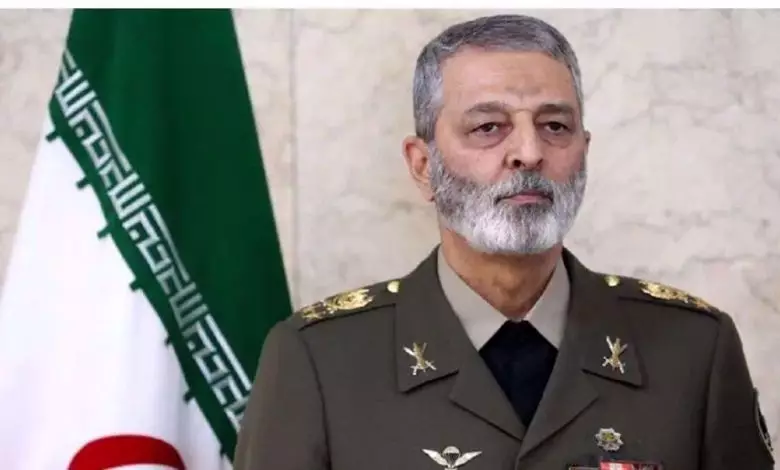
In a statement issued for the commemoration of Passive Defense Days on Thursday, Major General Abdolrahim Mousavi, the Chief of Staff of the Iranian Armed Forces, highlighted the importance of implementing passive defense strategies. Drawing lessons from the recent 12-day conflict, he emphasized that ensuring passive defense within critical infrastructure is imperative, labeling it both a strategic necessity and a legal and national duty.
The acknowledgment of this crucial issue, he stated, “will lay the groundwork for bolstering national resilience and guaranteeing sustainability.”
He highlighted that passive defense represents the “most strategic, scientific, and peaceful approach to national defense.”
A high-ranking military official emphasized the importance of a crucial defense mechanism designed to protect against contemporary threats, encompassing cyber, biological, chemical, and hybrid warfare. This strategy is grounded in the fundamental principles of “forecasting, prevention, and preemption.”
General Mousavi underscored that Iran’s historical experiences, notably from the Iran-Iraq War, have consistently demonstrated the essential nature of this strategy.
The recent 12-day conflict highlighted that threats can arise in both complex and combined forms, with rapid speed and intensity. Only nations boasting resilient infrastructure, comprehensive preparedness, and strong national unity will be equipped to endure and maintain stability, according to his statement.
On June 13, Israel initiated an unexpected military action against Iran, sparking a 12-day conflict that claimed the lives of at least 1,064 individuals, including military commanders, nuclear scientists, and civilians.
The United States has escalated tensions by launching airstrikes on three Iranian nuclear sites, an action widely seen as a serious breach of international law.
On June 24, Iran effectively executed retaliatory operations against both Israel and the United States, successfully halting a terrorist attack.
The leader of the Basij Organization, Brigadier General Gholamreza Soleimani, highlighted that harnessing domestic resources and achieving self-sufficiency is essential for the nation’s salvation and continued advancement.
During a ceremony in North Khorasan Province on Thursday, he emphasized that in the face of adversaries attempting to undermine the Iranian nation’s resolve through sanctions and economic pressures, focusing on domestic capabilities is a critical strategy for the country’s salvation.
He stated that the “antagonistic actions and subversive attempts by the hegemonic regime against Iran and its esteemed citizenry have an extensive history.”
In reference to historical foreign interference in Iran, General Soleimani highlighted that “the British once installed a king in our country, leading to numerous repercussions,” such as inequitable agreements, territorial concessions, and adverse effects on national identity.
He emphasized that history stands as evidence of Iran’s resilience, underscoring the persistent determination of the Iranian people to oppose oppression and injustice.
He stated, “Our citizens have consistently risen to face threats, demonstrating through their sacrifices that they will never capitulate.”