Iran Unveils Plans for Next-Generation Stealth Missiles to Challenge ‘israeli’ Defense: IRGC Leader Reports
The leader of the Islamic Revolution Guards Corps (IRGC) has announced that Iran needs to upgrade its missile capabilities with stealth technology to improve their effectiveness in evading Israel's missile defense systems.
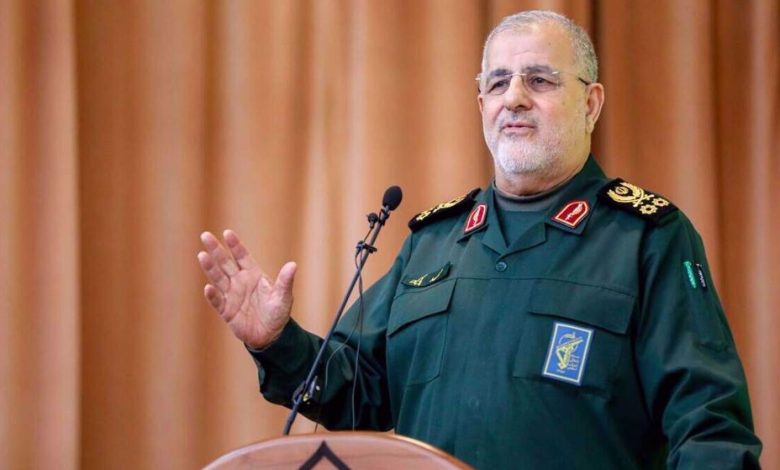
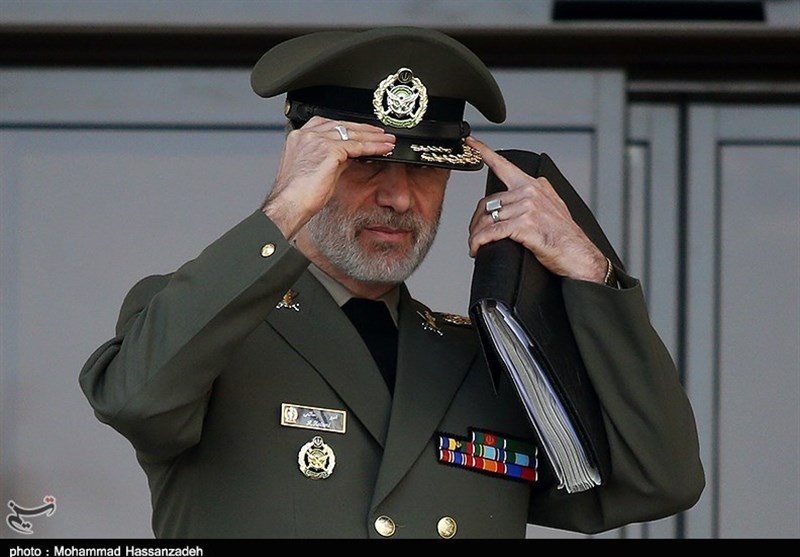
Major General Mohammad Pakpour stated on Sunday that equipping their missiles with stealth technology would significantly enhance their ability to penetrate the defense shield of the Zionist regime.
He highlighted the perceived Israeli-American aggression towards Iran in mid-June, pointing out that Israel and the United States anticipated that targeting and assassinating senior Iranian commanders would result in the collapse of Iran’s command infrastructure and subsequently disrupt its operational capacities. “However, this proved to be a significant miscalculation,” he remarked.
Pakpour stated that following his appointment, succeeding the assassination of his predecessor, IRGC forces, in collaboration with the Army, initiated vigorous and resolute counter-operations targeting Israel.
Reports suggest that Tel Aviv initially believed Iran would launch a limited attack, consisting of only five or six missiles on the war’s first day. Contrary to these expectations, the Armed Forces swiftly initiated extensive operations, unleashing a barrage of drones and ballistic missiles targeting the Israeli regime.
In response to the United States’ assault on three nuclear sites in Iran, Tehran delivered a strong countermeasure, as noted by Pakpour. During the concluding days of the conflict, Iran opted for a calibrated retaliation, mirroring the scale of the American bombing campaign.
A spokesperson reported that on the final evening of the conflict, the al-Udeid Air Base in Qatar, recognized as the most significant U.S. military installation in the region, was struck by 14 missiles.
In the aftermath of the intense strike, he stated that the United States communicated a message to Iran, signaling, “If you refrain from striking, we will also hold our fire.”
Pakpour announced that on the 12th day, the adversary, overwhelmed by the continued missile strikes and strong national unity, sought a ceasefire.
The head of the Islamic Revolutionary Guard Corps emphasized that the missile strikes conducted by the Armed Forces were pivotal in securing Iran’s triumph in the 12-day conflict with Israel.
The spokesperson issued a stern warning, indicating that any adversaries contemplating action against the Islamic Republic should be aware that they will encounter an even more severe and decisive retaliation than previously experienced.
He noted that adversary evaluations have already recognized this situation, leading them to avoid direct confrontation with Iran.
Pakpour emphasized the importance of ensuring preparedness and enhancing both technical and tactical capabilities, noting that adversaries are simultaneously striving to address their own shortcomings.
He characterized the newly imposed conflict as a “war of technology and Artificial Intelligence,” noting that Iran was confronting advanced US and European systems on the battlefield.
The commander has called upon the Armed Forces to place a high priority on enhancing air defense capabilities and advancing stealth technology development.
On June 13, Israel initiated a military offensive against Iran, resulting in the assassination of numerous high-ranking military officials, nuclear scientists, and civilians.
Over a week later, the United States took decisive military action by launching airstrikes on three Iranian nuclear sites located in Fordow, Natanz, and Isfahan. This move represents a significant breach of international law and the provisions outlined in the Nuclear Non-Proliferation Treaty (NPT).
In retaliation, the Iranian Armed Forces launched strikes on key strategic sites within the occupied territories, including the al-Udeid air base.
On June 24, Iran successfully carried out retaliatory operations against both Israeli and American forces, effectively putting a stop to the unauthorized attacks.