Iran Prioritizes Strengthening Relations with Muslim Neighbors, Says Parliament Speaker
Parliament Speaker Mohammad-Baqer Qalibaf reaffirmed Iran's commitment to strengthening ties with neighboring and Muslim nations, emphasizing that these efforts remain a priority amid perceived threats and destabilization efforts from both the US and Israel.
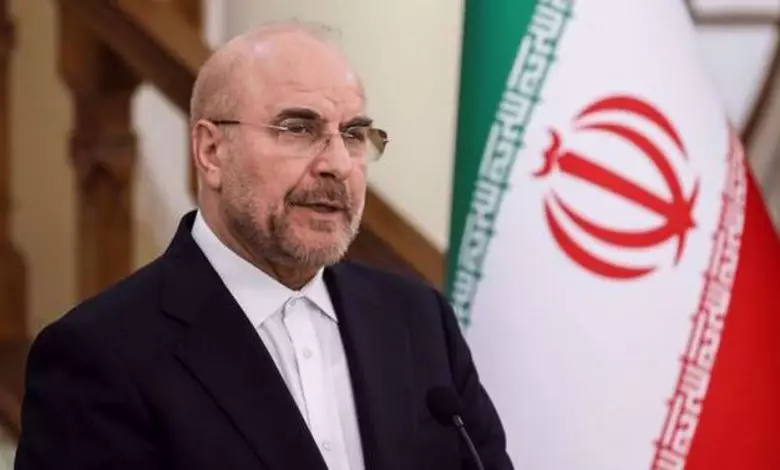
Iranian Parliament Speaker Mohammad-Baqer Qalibaf emphasized that Iran consistently prioritizes strengthening ties with neighboring and Muslim nations, despite efforts by the US and Israel to undermine regional security.
In a message directed at the Islamic nations in the region, as reported by the Qatar-based Al Jazeera news network on Saturday, he commented on the ongoing and unauthorized US-Israeli military conflict against Iran, which has now entered its sixth week.
He emphasized that reinforcing relationships with neighboring nations and the Islamic world has consistently remained a key priority for the Islamic Republic.
Iran maintains that it does not pose a threat to the region and continually reaches out in friendship and solidarity to its neighboring countries and other Muslim nations.
Qalibaf referenced the China-mediated reconciliation agreement between Iran and Saudi Arabia finalized in March 2023, along with an April 2025 meeting between the late Leader of the Islamic Revolution, Ayatollah Seyyed Ali Khamenei, and Saudi Defense Minister Khalid bin Salman Al Saud. These instances were highlighted as demonstrations of Iran’s dedication to the principles of Muslim fraternity and unity, while emphasizing its mistrust of dominant global powers.
He observed that the ongoing conflict between the United States and Israel, a situation not initiated by Iran, has evolved into a symbol of resilience for those challenging global dominance and advocating for freedom and independence.
In a recent statement, a senior Iranian official alleged that the ongoing conflict is being driven by the United States and the Zionist regime, targeting not just Iran but also the security of the region along with the concept of Islamic unity and fraternity. The official also criticized the involvement of American military leaders, citing a perceived betrayal of American lives for Israeli interests.
On February 28, the United States and Israel initiated an aggressive operation against Iran, resulting in the assassination of Ayatollah Khamenei and senior military officials, raising significant concerns over a breach of Iran’s sovereignty.
The Iranian military has escalated its offensive by conducting near-daily missile and drone strikes aimed at positions within the Israeli-occupied territories, as well as targeting U.S. military bases and assets stationed in neighboring countries that have permitted their airspace and land for operations against Iran.
The conflict emerged eight months following a 12-day US-Israeli offensive, which concluded after Iran executed successful retaliatory strikes.
The Speaker of Parliament stated that during the conflict between June 13 and 24, 2025, Iran demonstrated its ability to inflict significant costs on the United States. However, Iran chose not to engage in a regional war to avoid further escalation of the conflict and to maintain the unity of the Islamic world.
Tehran has consistently emphasized that enduring security can be achieved through self-reliance and strategic autonomy.