Hormuz: The beginning of the end of dominance
A test that goes beyond geography to the credibility and continuity of power
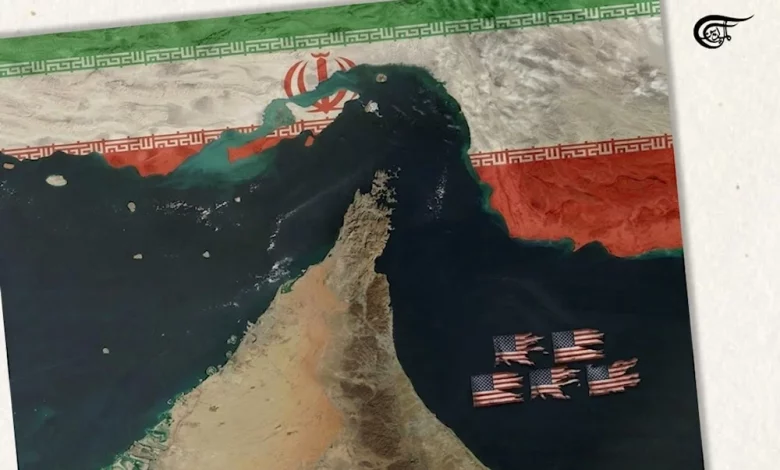
Major shifts in the international system do not usually begin with clear military defeats, but with a slower and deeper erosion: a decline in trust. In this context, the Strait of Hormuz today stands out not only as a passage through which nearly a fifth of world oil trade flows, but also as a central test of the credibility of the power that presents itself as the guarantor of the world order.
The question is no longer who possesses military supremacy, but who can maintain order under continuous pressure and escalating costs over an open-ended period.
Most economic and strategic theorists and analysts argue that the Strait of Hormuz represents a “systemic knot” in the global economy, where energy intersects with supply chains and financial stability. Any disruption in this corridor does not remain local; instead, it quickly transmits to energy prices, then to inflation rates, and from there to monetary policy and financial markets. For this reason, control over it is not measured by the scale of military deployment, but by the ability to ensure uninterrupted flows in an environment of low-intensity yet persistent threat. The threat here is not conventional but cumulative, building over time and testing continuity more than decisiveness.
In such environments, the rules of conflict change: weaker actors do not seek direct confrontation, but rather aim to gradually increase the cost of control. This pattern makes Hormuz a typical arena for attrition warfare, where the conflict shifts from a battlefield engagement to a long test of political will. Past experiences, such as the wars in Vietnam, Iraq, and Afghanistan, have shown that military supremacy does not guarantee outcomes, and that the ability to sustain engagement is often the decisive factor. In this context, a major power may achieve frequent tactical victories, yet still face a growing challenge at the level of long-term sustainability.
History reveals a repeating pattern: decline does not begin with direct military defeat, but rather when a country’s power is reassessed by markets, allies, and adversaries. The Suez Crisis offers the clearest example. Britain did not immediately lose its military or economic capabilities, yet it lost the confidence of the international system in its ability to act independently of the United States. This triggered pressure on the pound sterling, capital flight, and forced Britain to withdraw, marking a decisive turning point in its global decline. The same pattern recurred in other historical events. Portugal, a pioneer of the Age of Exploration, did not collapse after a single defeat; rather, it gradually declined as it lost control over maritime trade routes to rising powers such as the Dutch, leading to a steady shift of commercial and financial centers away from it.