Emergency plan approved for Gaza’s damaged buildings following fatal collapse
Officials and representatives from international, U.N. and Arab organizations agreed Thursday on an emergency plan to address the crisis of cracked and structurally damaged buildings in the Gaza Strip, as risks to residents continue to escalate.
Officials and representatives of international, United Nations and Arab organizations agreed Thursday on an emergency plan to address the growing threat posed by cracked and structurally damaged buildings in the Gaza Strip, where risks to residents’ lives are escalating.
The agreement was reached after a high-level meeting in Gaza attended by 35 representatives from international, United Nations and Arab institutions, who discussed measures to strengthen urgent humanitarian assistance in response to the war’s severe consequences.
The Government Media Office in Gaza said the meeting was convened after the collapse of the “Al-Saada” building in Gaza City, highlighting renewed concerns over the dangers posed by hundreds of damaged and structurally compromised buildings across the enclave.
Participants discussed the role of the UN, international and Arab organizations in addressing the crisis, as well as mechanisms to increase relief and logistical support. They issued several urgent recommendations, including immediate action to address hundreds of buildings at risk of collapse.
Attendees emphasized the need for practical, proactive measures to protect civilians and provide the resources necessary to prevent a repeat of the “Al-Saada” tragedy.
Government ministries and institutions said they would mobilize resources and provide the necessary facilities to implement the emergency plan, including allocating land for shelter camps and relocating residents from dangerous structures.
Participants also appealed for international humanitarian assistance and urged mediators to act swiftly to allow the entry of heavy machinery, equipment, fuel and lubricants needed to inspect, stabilize, demolish and manage hazardous buildings.
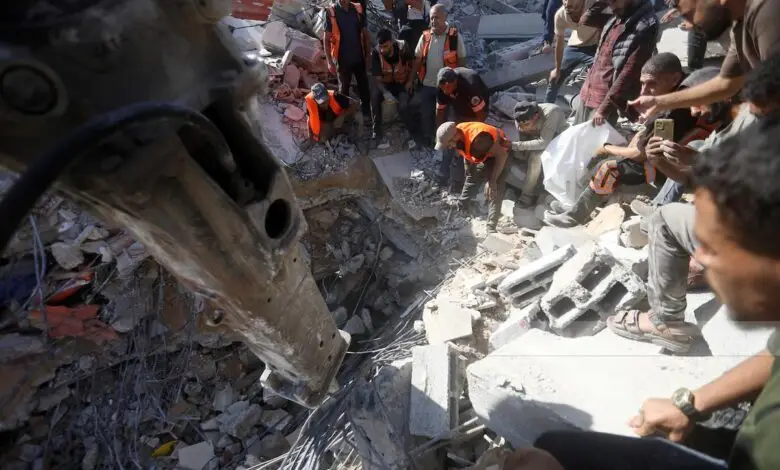
The moves came hours after the “Al-Saada” building collapsed. The structure had suffered damage and developed cracks during the war, but displaced families were forced to live there despite the danger. It collapsed on its residents early Wednesday.
According to the latest toll released by the Civil Defense, the collapse of the six-story building killed 21 Palestinians and injured 45 others. About 101 people, including many children, were inside the building when it collapsed.
The risk posed by damaged buildings comes as Gaza faces a severe shortage of safe shelters and the equipment needed to inspect, reinforce or demolish cracked structures, increasing dangers for residents who largely have no secure housing alternatives.
As Gaza awaits rubble removal and reconstruction, damaged and unstable buildings continue to pose a serious threat to residents, underscoring the urgent need for heavy equipment, fuel and coordinated field plans to address them before further collapses occur.
Short link: