Can Donald Trump defeat Iran?
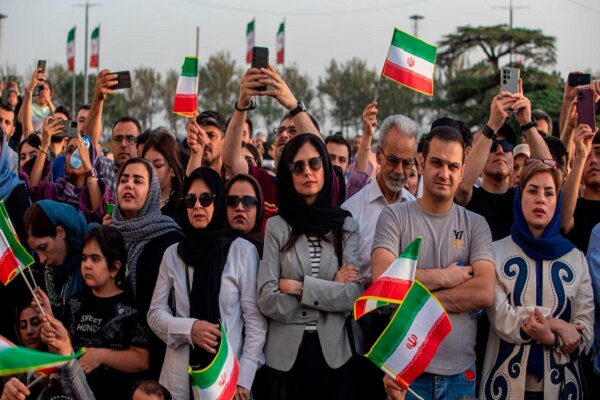
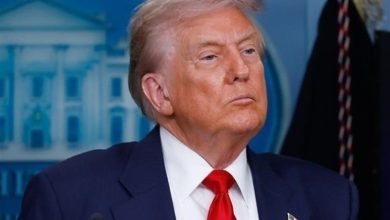
As Donald Trump once again resorts to threats, pressure, and performative declarations of support for the Iranian people, a familiar question resurfaces in global discourse: Can Iran be defeated?
In current global rhetoric, heightened tensions between the United States and Iran have prompted questions about whether the United States — including under the leadership of President Donald J. Trump — could “defeat” Iran. A sober examination of history, national identity, internal cohesion, and strategic defense capacity demonstrates that such an outcome is not feasible. Iran’s distinct sense of nationhood, deep historical memory, and robust deterrent capabilities form a durable foundation that makes external subjugation or collapse highly unlikely.
National Identity and Historical Resilience
A Long Tradition of National Cohesion
Iran is among the world’s oldest continuous civilizations with more than 2,500 years of unified political and cultural identity. From the Achaemenids to the Sassanids, from the Islamic Golden Age to the modern era, Iranians have maintained a shared sense of homeland that transcends ethnic and linguistic differences. This historical continuity fosters strong societal cohesion and resistance to external domination.
Even in the context of modern political challenges, Iranians of diverse backgrounds — whether urban or rural, religious or nonreligious— articulate a shared commitment to national independence and dignity. This unity is exemplified in collective responses to foreign pressure or conflict.

Historical Examples of Resistance
1953 U.S./U.K.-Supported Coup
In August 1953, the democratically-elected Prime Minister Mohammad Mosaddegh was overthrown in a coup orchestrated by the United States (CIA) and the United Kingdom (MI6), aiming to reverse nationalization of Iran’s oil industry. This event is a powerful historical memory that shaped Iran’s modern national consciousness and resistance to external political coercion.
The coup reinforced Iranian skepticism of foreign influence and cemented the idea that Iran must chart its own path — a belief that has persisted through successive generations.
Iran-Iraq War (1980–1988)
When Iraq invaded Iran in 1980, with at least tacit U.S. and Western support for Iraq’s war effort, Iranians mobilized universally to defend their territory and state. Despite immense costs, Iran preserved its territorial integrity and social fabric through eight years of brutal conflict. This war, known inside Iran as the Sacred Defense, became a foundational myth of national resilience, binding the population together across social and ideological lines.
1979 Seizure of US Embassy
In late 1979, Iranian students seized the U.S. Embassy in Tehran and held American diplomats captive for 444 days, reflecting deep opposition to perceived external interference after the Islamic Revolution. The crisis ended only after protracted negotiations and demonstrated that Iran would not easily acquiesce to foreign pressure.
Internal Solidarity: Unity Beyond Disagreement
Shared Commitment to Homeland
Iran’s internal diversity does not translate to national fragmentation in the face of external pressure. Iranians — whether ethnic Persians, Azaris, Kurds, Arabs, Baluch, or others — share a powerful collective attachment to homeland and national survival that outweighs internal disputes. Even when there are grievances related to domestic issues and economic conditions, a common commitment to national sovereignty is a unifying force.

Historical Memory as a Social Glue
Iranians possess a strong historical memory that is passed across generations through family narratives, education, literature, public commemoration, and cultural heritage. This collective memory of resisting foreign interventions — whether in the early 20th century or late 20th century — plays a vital role in sustaining social unity.
Even when economic hardships and social challenges cause protests or criticism of domestic policies, there is no parallel movement that fundamentally rejects the country’s independence or national continuity.
When Threats Meet a Culture of Defiance
In recent days, as Donald Trump has once again escalated his rhetoric against Iran, a noticeable wave has emerged across Iranian social media users. Users have circulated a pointed phrase that captures a deeply ingrained cultural mindset: “Trump is trying to frighten people who pray for martyrdom in their prayers.” The expression, rooted in religious and historical symbolism, conveys more than bravado. It reflects a society shaped by decades of war, sanctions, and external pressure — a society for whom sacrifice and endurance are not abstract concepts, but lived experience. The phrase does not glorify conflict; rather, it underscores a psychological reality often overlooked in Western political calculations.
In Iranian society, martyrdom in defense of the homeland is widely regarded as an honor rather than a loss. Those who die defending the country are publicly revered, and national custom often sees fallen soldiers and defenders laid to rest wrapped in the Iranian flag — a powerful symbol of unity between personal sacrifice and national identity. This mindset, shaped by the collective memory of the Iran–Iraq War and decades of external pressure, renders intimidation strategies largely ineffective. Threats aimed at instilling fear lose their potency when directed at a society whose historical narrative esteems courage, resilience, and devotion to the nation above personal safety.
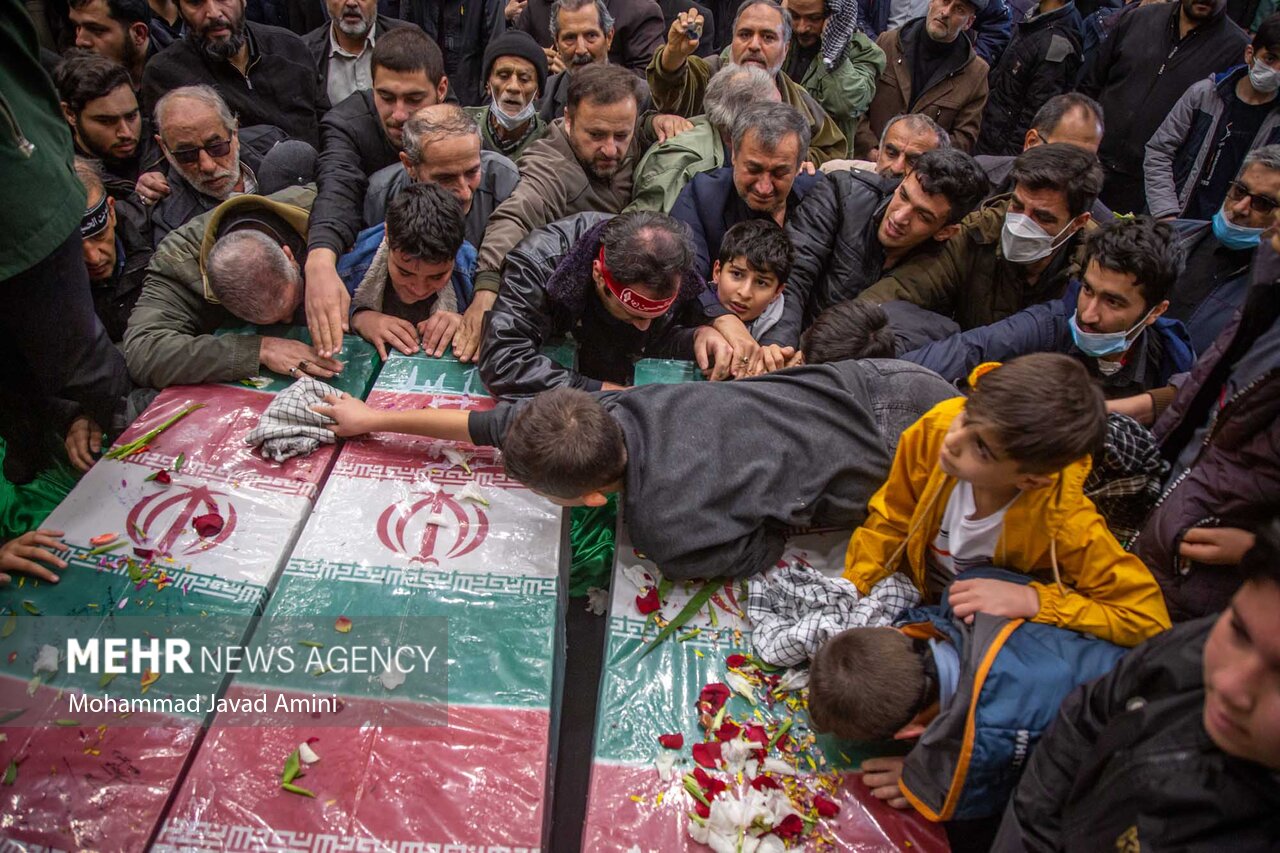
No Longer Deceived: Iran’s Youth See Through U.S. and Israeli Deceptions
After the 12-day war and decades of foreign aggression, it has become clear that neither the United States nor Israel can deceive Iran’s children — let alone the broader population. Exposure to historical crimes, propaganda, and repeated attempts at manipulation has cultivated a generation of young Iranians who are critically aware, socially conscious, and deeply connected to their nation’s identity and sovereignty. Their understanding of past invasions, sanctions, and covert operations renders them immune to external trickery, ensuring that decades of foreign misconduct have strengthened, rather than weakened, Iran’s social cohesion and national resolve.
Satire Over Sympathy: How Iranians Turn Trump’s Rhetoric into Memes
Beyond strategic calculations and military posturing, there is also a clear social dimension to how Iranians respond to Donald Trump’s repeated claims of “supporting the Iranian people.” For many Iranians, such statements do not provoke anger or fear, but rather irony and humor — a deeply ingrained cultural response to external pressure.
Instead of rage-filled reactions, social media platforms have been flooded with satirical banners, slogans, and memes that openly ridicule the Trump’s performative and self-serving “sympathy.”
One widely shared banner from Mashhad during a rally reads: “A Mashhadi’s response to Trump: ‘Vakhe, yara!’” — a colloquial, tongue-in-cheek phrase best rendered as: “Alright then, move along, brother — don’t waste our time with empty talk.”

The humor lies not in vulgarity, but in dismissal. Many of these memes frame Trump’s rhetoric as an outward concern that is perceived as insincere, intrusive, and ultimately harmful. This collective use of satire reflects a society so accustomed to foreign pressure that it responds not with panic, but with wit. It also underscores a reality often overlooked by outside observers: Iranian society does not experience such rhetoric as empowering or intimidating, but as unserious, repetitive, and unworthy of anything more than a sarcastic smile.
Standing Together
Should hostilities erupt again, the experience of the recent 12-day conflict demonstrates that Iranians will stand steadfastly alongside their armed forces in defense of the nation. This unity transcends differences, reflecting a deeply rooted cultural and historical ethos: the protection of the homeland is a shared responsibility.
During the 12-day confrontation, ordinary citizens actively supported military personnel through moral encouragement, and community coordination, highlighting a society in which civilian resilience and organized defense work hand in hand. This enduring bond between the people and the military ensures that any attempt to destabilize or intimidate the country is met not with disarray, but with coordinated resistance and national solidarity, making external aggression both costly and unlikely to succeed.
Conclusion: Why Iran Cannot Be “Defeated”
Apart from country’s strong military capabilities that were developed under the toughest sanctions, Iran’s national character, historical experience, and strategic deterrence capabilities make the notion of foreign defeat implausible under current geopolitical realities. The collective identity of the Iranian people, rooted in historical resilience and unity in the face of adversity, ensures that external pressure or confrontation cannot easily erode national coherence.
While no society is monolithic and internal debates over domestic issues persist, these disagreements do not translate into a rejection of the nation itself. On matters of sovereignty and defense, Iranian unity remains robust — making any external attempt to “defeat” Iran both strategically unwise and historically unlikely.
Reported by Mohaddeseh Pakravan