Ansarullah Pledges Retaliation Following Unsuccessful ‘israeli’ Strikes on Yemen’s Capital
Israel has initiated a series of significant airstrikes on Yemen's capital, Sana'a, focusing on densely populated neighborhoods and essential infrastructure. Targets include oil facilities, power plants, military sites, and the vicinity of the presidential palace.
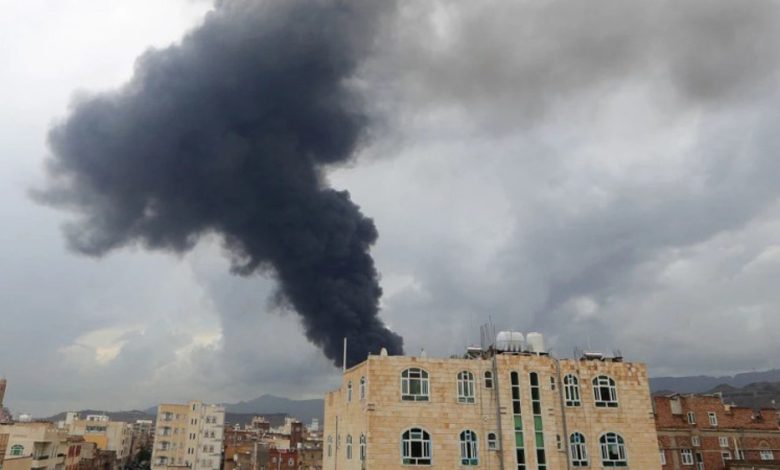
Images shared widely on social media showed massive clouds of thick, black smoke rising above the city after an intense barrage. Witnesses on the ground recounted at least 10 consecutive explosions shaking the capital.
Israel’s Channel 14 characterizes the attacks as “large-scale” operations directed at top Yemeni leadership. The report suggests that the military campaign is a strategic endeavor focused on high-ranking members of Yemen’s Ansarullah movement.
Israeli naval forces are reported to have played a role in the assaults, signifying a significant escalation in military activities.
Yemeni sources, including Ansarullah official Nasr al-Din Amer, have dismissed allegations that senior leaders were targeted, categorizing the claims as “baseless” and stating that the attacks were “unsuccessful.”
Amer has vowed to maintain Yemeni military operations in solidarity with the Palestinian cause.
In a statement, Amer firmly dismissed claims of targeted operations against leaders in Sana’a as unfounded, underscoring Yemen’s steadfast commitment to aiding Palestinians in Gaza.
In response to the airstrikes, the Israeli military released a concise statement acknowledging the targeting of “military installations” in Sana’a. This action was justified by a recent missile launch from Yemen aimed at Israeli-occupied areas, which was successfully intercepted and neutralized mid-flight.
Mahdi al-Mashat, the head of Yemen’s Supreme Political Council, affirmed his support for the Yemeni citizens and military forces amid rising hostilities.
In response to the deployment of U.S. military forces in the region, al-Mashat remarked, “When you hear that the American adversary, driven by its erratic government, has deployed forces, stay composed; this signifies that its weaponry has proven ineffective.”
According to reports, the US aircraft carrier USS Harry S. Truman experienced a loss of command and control capabilities in the early stages of the conflict, rendering it ineffective. This development necessitated the deployment of additional equipment and weaponry by the United States to sustain pressure on Yemen.
Al-Mashat has reiterated Yemen’s steadfast backing for the Palestinian citizens in Gaza, emphasizing a resolute commitment to their cause. He declared, “Our unwavering position in solidarity with our brothers in Gaza remains consistent. We shall not relent in our principled, moral, Islamic, and humanitarian stance until the aggression against Gaza ends and the blockade is lifted.”
The Yemeni army, with support from the Ansarullah movement, has conducted multiple missile and drone strikes against Israeli targets and allied ships in the Red Sea. This marks a significant stance of solidarity with Palestinians in Gaza during the continuing Israeli military operations.
Since the onset of the conflict between Israel and Gaza in October 2023, Yemeni forces have escalated their counter-operations, pledging to persist until the Israeli military campaign and blockade on Gaza are concluded.
Israel, alongside its allies, notably the United States, has launched an intensified military offensive aimed at key strategic locations in Yemen, including the capital Sana’a and the vital Red Sea port of Hudaydah.
Key infrastructure assets, such as airports and power stations, have come under attack, compounding the humanitarian crisis in the nation already ravaged by conflict.