Marandi Questions U.S. Diplomacy as Rowley Warns of Election Tactics
Marandi says Iran’s pressure on the Strait of Hormuz is complicating Trump’s calculations, while Rowley warns that a possible false-flag operation could influence the US midterm elections.

Marandi Questions U.S. Diplomacy as Rowley Warns of Election Tactics
Marandi says Iran’s pressure on the Strait of Hormuz is complicating Trump’s calculations, while Rowley warns that a possible false-flag operation could influence the US midterm elections.

Marandi says Iran’s pressure on the Strait of Hormuz is complicating Trump’s calculations, while Rowley warns that a possible false-flag operation could influence the US midterm elections.
Iran will not trust Trump’s diplomatic assurances unless Washington takes concrete steps to implement its commitments, University of Tehran professor Mohammad Marandi said.
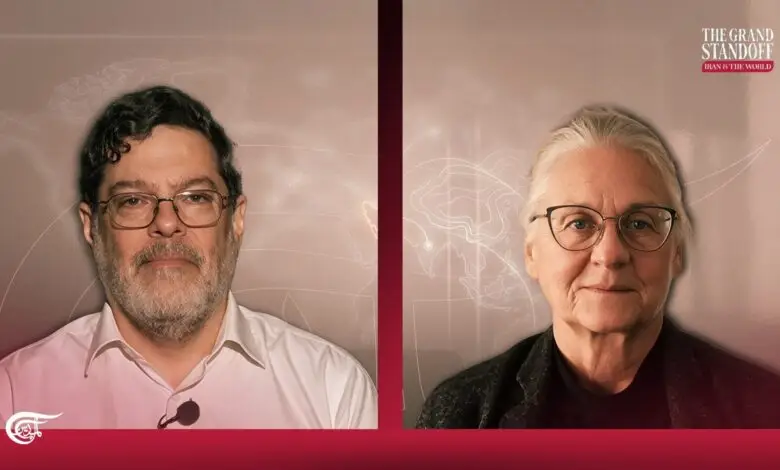
Speaking on Al Mayadeen’s nightly program *The Grand Standoff: Iran and the World*, Marandi said disruptions to shipping through the Strait of Hormuz were complicating the U.S. president’s efforts to control oil prices ahead of the midterm elections.
Marandi said Tehran had repeatedly faced US deception and breaches of agreements during negotiations, including the 2015 nuclear deal and a more recent memorandum of understanding. He said Washington could not expect Iran to alter its position on the strategic waterway while continuing to avoid fulfilling its obligations.
Marandi said the administration was seeking to lower oil prices, noting that higher crude prices lead to increased gasoline costs. He linked the government’s diplomatic messaging to concerns over rising energy prices ahead of the elections.
Former FBI special agent and whistleblower Coleen Rowley, speaking separately on the program, cited mounting affordability pressures in the United States, divisions within the Republican Party and growing opposition to Trump’s handling of the war. She said the economic impact of foreign conflicts was increasingly being felt by Americans who had supported Trump.
The Iranian professor said Tehran had little reason to view assurances from the Trump administration as credible, pointing to Washington’s pattern of violating agreements after signing them.
Marandi accused Washington of breaching the latest memorandum of understanding by failing to ensure the withdrawal of Israeli forces from Lebanon, halt the conflict in Gaza, return what he described as “stolen” Iranian assets, and abandon efforts to establish a U.S.-backed corridor through the Strait of Hormuz.
He said Iran had begun implementing the memorandum of understanding, leading to increased shipping through the waterway, before the United States failed to fulfill its commitments.
Marandi said Iran had made clear that the matter could be resolved only through implementation, noting that Trump had signed the memorandum of understanding publicly but failed to carry it out, which he described as evidence that Trump was unreliable.
He said communication between Washington and Tehran could continue, but cautioned that exchanging messages alone would not be sufficient to reach an agreement.
He stressed that Iran remains open to negotiations and the exchange of messages through direct talks. However, he said Tehran would continue its policy of restricting shipping through the Strait of Hormuz unless the United States fulfills its obligations.
Marandi said Iran’s stance on the waterway was linked to its broader dispute with Washington, rather than to diplomatic statements from the White House.
The Iranian academic said Trump was seeking to curb rising oil prices by publicly discussing negotiations and suggesting that further aggression against Iran could be delayed.
He attributed the rise in oil prices to a sharp drop in crude shipments through the Strait of Hormuz over approximately 10 days, citing Iranian attacks on vessels Tehran said had breached its regulations.
Marandi said much of the oil that continued to pass through the waterway did so with Iran’s consent, while other vessels were struck after attempting to transit without Tehran’s permission.
He also addressed reports in Western media alleging that Iran was collecting fees from ships allowed to transit the strait, while stressing that he could not independently verify the claims.
He said he could not confirm whether the claim was true, but noted that it was what Western media outlets were currently reporting.
Marandi said Iran had decided at the outset of the war to control the waterway and impose fees, particularly on regional oil and gas exporters he accused of supporting the conflict against Iran. He identified Qatar, Kuwait, Saudi Arabia and the United Arab Emirates as among those responsible.
The Iranian professor rejected claims that US economic pressure had pushed Iran to the brink of collapse, saying flights between Iran and other countries, including China, were continuing despite restrictions and warnings from US officials.
While acknowledging Iran’s challenging economic conditions, Marandi argued that Washington was likewise facing rising costs and political repercussions.
He said rising oil prices were driving up the cost of gasoline and diesel, as well as goods manufactured by refineries and petrochemical plants.
He said prices would remain high, arguing that Trump’s public efforts to push down oil prices had failed.
Marandi said the war’s economic fallout could hurt Trump’s standing ahead of the US midterm elections, but cautioned that the outcome remained uncertain because of shortcomings in US polling.
He said Trump’s repeated claims of diplomatic progress and hesitation to carry out further attacks before the elections suggested concern about the domestic impact of a broader war.
Marandi emphasized that Iran had not officially announced a policy aimed at punishing Trump at the ballot box. However, he said Tehran’s pressure on shipping through the Strait of Hormuz was exacerbating the economic challenges facing Trump.
Marandi said a Trump defeat would not necessarily bring the war to an end, but a significant loss—particularly in the Senate—would increase pressure on Trump.
He said the potential pressure was partly driven by Democratic voters’ opposition to Israel and the war, while acknowledging that hostility toward Trump would also influence the political response.
Marandi said Iran’s military stance was adding to uncertainty in US strategic planning across the region. He said Tehran’s warning that it could carry out a preemptive strike was aimed at prompting Washington to exercise greater caution in its military deployments.
He said the withdrawal of US aircraft from a UK base may reflect concerns over their vulnerability, but added that he did not know the reason for the move.
Marandi said Iran was militarily stronger than it had been seven or eight months ago and was preparing for the possibility of renewed conflict.
He cautioned that a Trump defeat in the midterm elections would not necessarily halt further US aggression, arguing that the administration could still escalate the war despite its domestic political challenges.
Rowley said Republican candidates appeared increasingly concerned about their association with Trump as the midterm elections drew closer.
She pointed to instances of Republicans distancing themselves from the president, saying some candidates were highlighting affordability and pledging to end the war to attract voters.
Rowley warned that electoral forecasts remained uncertain, pointing out that Trump had previously defied expectations. She also criticized Trump’s public comments, including remarks she said appeared to suggest that bombings in San Diego and Los Angeles would be beneficial.
She said the remarks appeared intended to divide Americans into political allies and opponents, accusing Trump of treating residents of the two cities as “expendable.”
Rowley also questioned whether Republican candidates could be trusted to fulfill their campaign promises, despite their increasing focus on the cost of living.
She said affordability was the central issue, noting that prices across the United States were rising, particularly for inputs such as fertilizer.
She cited layoffs and shutdowns among fertilizer, sulfur and phosphate producers, saying the economic fallout was affecting people who had repeatedly voted for Trump.
Rowley said foreign wars must end to make living costs more affordable.
Her comments reinforced Marandi’s view that the war’s economic costs could emerge as a major political liability for the Trump administration, though the two speakers examined the issue from different perspectives.
Rowley said some commentators believed Trump could escalate the war after the midterm elections, while suggesting that a pre-election maneuver could also be intended to shape the political debate.
She suggested the possibility of a false-flag operation, saying such an incident could be overstated to create a last-minute political advantage for Trump and Republican candidates.
She warned that, before the election, opponents could stage or exploit a so-called false-flag incident—such as the FlyDubai incident or reports of an attack on a UK military base—and exaggerate it to generate a last-minute boost for Trump and other Republican candidates.
Rowley linked the possibility to the US political tradition of an “October surprise,” in which a late-breaking development can sway an election campaign.
Rowley said the development could be viewed as an “October surprise,” a term used in U.S. politics for a late-stage election revelation or maneuver, often involving misleading claims or a false-flag operation.
She also criticized Trump’s threats to use nuclear weapons, saying some of his supporters were now calling for his impeachment over the risk of nuclear escalation.
Reflecting on her opposition to the genocide in Gaza, Rowley said she had protested for three years and remained distressed by the killing of children.
She said the war and its broader consequences had damaged the image Trump had sought to build as a leader who would bring foreign wars to an end.
Rowley said the US two-party system left voters choosing between candidates they regarded as the lesser of two evils, while providing little assurance that campaign promises would be fulfilled.
She said she was frustrated with the political process but expected the midterm election to be closely watched.
Marandi said Iran would continue exerting pressure through its policy on the Strait of Hormuz while withholding details of its military plans. He added that Washington’s options were narrowing as the conflict placed increasing strain on the US economy and Trump’s political standing.
Neither speaker said the midterm elections alone would determine whether the war ends. Marandi specifically cautioned that even a major Republican defeat would not necessarily bring the conflict to a close.