US use of AI in Iran elementary school massacre did not breach Anthropic’s ‘red lines’: CEO

The US military’s AI-assisted deadly attack on an Iranian elementary school during the US-Israeli aggression did not breach Anthropic’s “red lines,” the company’s CEO says.
Speaking on Wednesday, Dario Amodei was asked about the US attack on Minab Elementary School in southern Iran, to which he responded, “We do not know exactly how these models were used… and what you are talking about is a use case that does not even violate our red lines.”
He then attempted to shift responsibility away from the technology behind the attack, saying, “A human made that final call.”
The US military used Anthropic’s AI, Palantir, to target the school in Minab with Tomahawk missiles on the first day of the US-Israeli aggression against Iran on February 28, killing more than 170 students and teachers.
On the same day, US forces used similar methods to strike a sports hall in Lamerd City in southern Iran, killing 24 innocent civilians.
At least 3,500 civilians were martyred during the 40-day unprovoked US-Israeli aggression against Iran.
During the course of the war, American and Israeli forces regularly relied on AI systems developed by Western technology companies, particularly Palantir, to select targets.
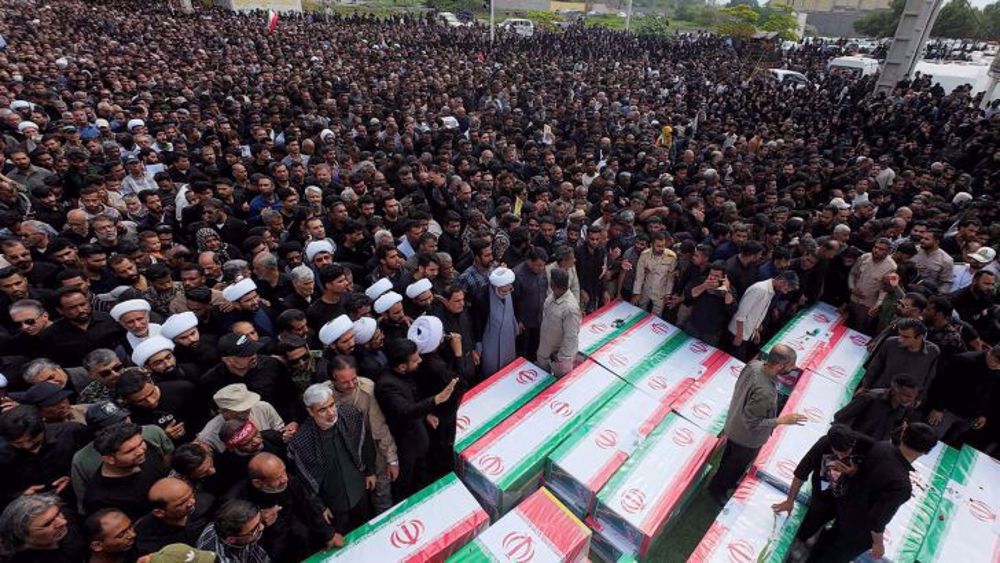
The head of the Iranian Legal Medicine Organization says at least 3,375 people, including hundreds of children, were martyred during the 40-day war by the US and Israel.
Last month, the Pentagon announced contracts with major US AI companies, including Google, Amazon Web Services, SpaceX, OpenAI, NVIDIA and Microsoft.
Just weeks earlier, Palantir’s CEO, Alex Karp, proclaimed a “new era” of AI-enabled US military supremacy.
The US-Israeli aggression against Iran began on February 28, 2026, with airstrikes assassinating senior Iranian officials and military commanders, including Leader of the Islamic Revolution Ayatollah Seyyed Ali Khamenei.
The Iranian Armed Forces responded with daily missile and drone barrages against targets in the Israeli-occupied territories, as well as US military bases and assets across the region.
Iran also closed the Strait of Hormuz, triggering a sharp rise in global oil prices and other energy-related commodities.
On April 8, a temporary ceasefire brokered by Pakistan took effect between Iran and the United States.
Subsequent negotiations in Islamabad failed to produce an agreement amid Washington’s maximalist demands.
Iran has since maintained that it will not return to negotiations unless the United States lifts its blockade on Iranian vessels and ports.
Iranian officials have further stated that the Strait of Hormuz will remain closed as long as the blockade continues.