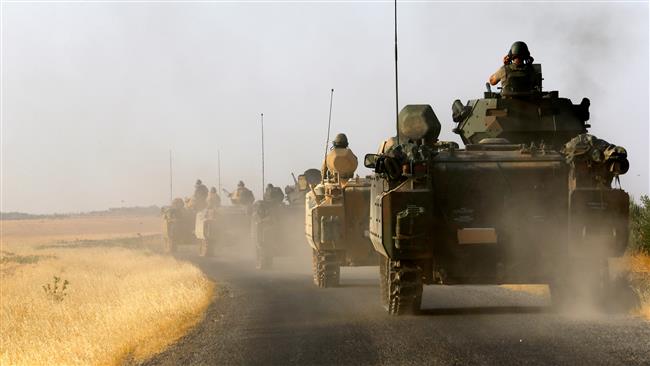
US-israeli War on Iran Drives Millions Towards Hunger, Warns WFP
The United Nations food relief agency has issued a warning that the ongoing US-Israeli conflict with Iran is exacerbating food insecurity, driving millions of individuals in the West Asian region towards hunger.
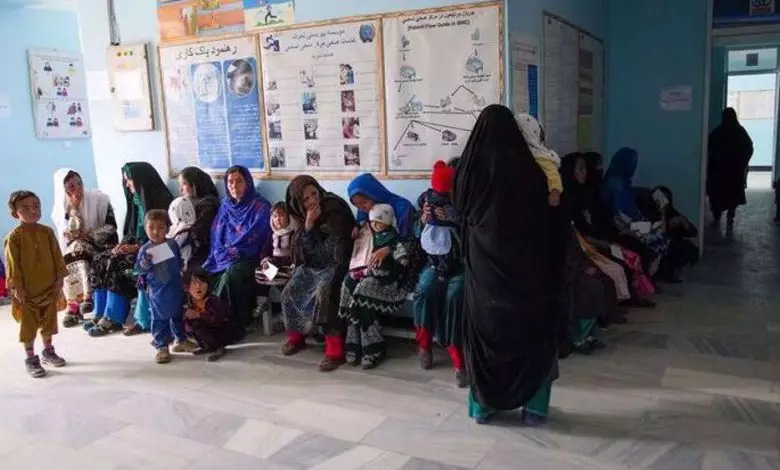
A report by UN News on Thursday highlighted the transformation of a geopolitical crisis in the Middle East, which commenced nearly 100 days ago, into an escalating food security emergency in other regions. UN agencies have raised alarms over increasing hunger across Africa and situations where malnourished children in Afghanistan are being refused medical care due to resource constraints.
The report cautioned that the region faces the imminent threat of a humanitarian catastrophe driven by disruptions in the supply chain, a consequence of the unprovoked US-Israeli conflict with Iran.
Despite a tenuous ceasefire between the United States and Iran, intermittent conflicts and ongoing instability in the Strait of Hormuz persistently impact global supply chains. This has resulted in increased transportation and fuel costs, while also challenging aid efforts already facing significant funding deficiencies.
The United Nations’ World Food Program (WFP) has forecasted that the number of people falling into acute food insecurity could reach 45 million if the ongoing conflict persists and oil prices continue to hover around $100 per barrel through July.
The World Food Programme has expressed alarm over the potential for an additional 45 million individuals to face hunger due to the interconnected nature of energy and food prices.
The World Food Programme has raised the alarm, stating that the pressure is intensifying.
During a speech at the United Nations Headquarters in New York on Thursday, World Food Programme’s Acting Executive Director, Carl Skau, highlighted that earlier warnings regarding the cascading impacts of increased energy prices are now becoming evident in some of the world’s most vulnerable nations.
Skau informed reporters that the scenarios they had cautioned against are now unfolding in real-time across multiple contexts.
The World Food Programme (WFP) has issued a warning that an additional 2.5 million people in Somalia are now facing acute food insecurity. Meanwhile, the crisis of acute hunger has extended to 2.3 million more individuals in Afghanistan and an extra 1.3 million people in Sri Lanka.
Skau highlighted that the factors influencing the situation vary across different countries. Nevertheless, there has been a noticeable increase in food prices globally, coupled with insufficiently funded humanitarian efforts and significantly rising operational costs. These combined challenges have led to a reduction in the number of individuals that aid agencies can assist with the resources available.
Skau projects a concerning long-term scenario, cautioning that escalating fertilizer costs could diminish agricultural output in East Africa for the upcoming planting season, potentially leading to increased food shortages in the months ahead.
Reports indicate that the impact of shortages is becoming more evident within humanitarian supply chains.
The United Nations Children’s Fund (UNICEF) has issued a warning that rerouting shipping routes around the Cape of Good Hope is extending transport times by two to four weeks. Additionally, air freight capacity across Middle Eastern routes is becoming constrained, and ports in Africa and other regions are experiencing increasing congestion.
Jean-Cédric Meeus, UNICEF’s Chief of Global Transport and Logistics, expressed concern, stating that rising transport expenses result in reduced funds for essential lifesaving supplies needed by children.
Meeus cautioned that a disruption to shipping lanes could rapidly evolve into a humanitarian crisis.
On February 28, the United States and Israel reportedly initiated hostilities against Iran following the assassination of Ayatollah Seyyed Ali Khamenei, Leader of the Islamic Revolution, alongside several senior military officials.
The Iranian Armed Forces initiated a series of 100 counterattacks over a period of 40 days, focusing on U.S. and Israeli military assets. These operations led to considerable damage.
Pakistani negotiators successfully brokered a ceasefire agreement on April 8, initially set for two weeks, which has now been extended.
Tehran has firmly stated that any preliminary accord with Washington aimed at ending the conflict is contingent upon the removal of the U.S. naval blockade on the Strait of Hormuz. Iranian authorities contend that the ongoing blockade represents a breach of the ceasefire agreement.