Iran Shuts Down Strategic Strait of Hormuz Amid U.S. Blockade and Ceasefire Dispute: IRGC Navy Reports
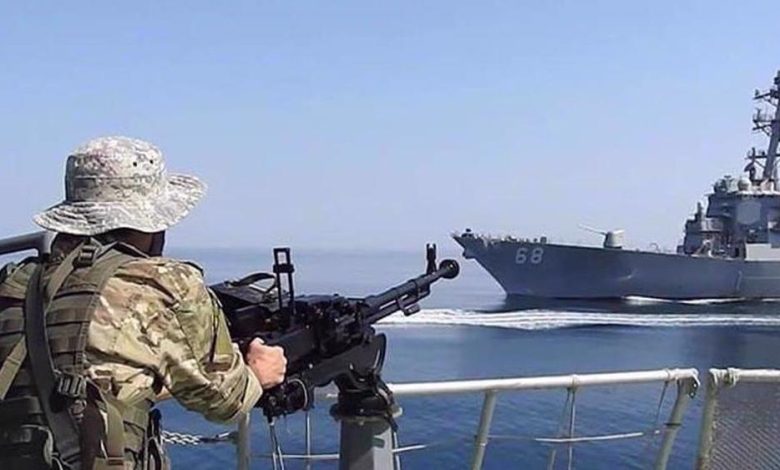
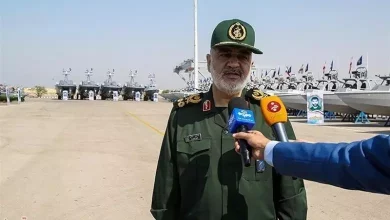
The Islamic Revolution Guards Corps (IRGC) Navy has announced the closure of the Strait of Hormuz by Iran in response to the United States’ decision to continue its blockade of Iranian ports, which the IRGC claims violates the terms of the existing ceasefire agreement.
In a statement issued on Saturday, the IRGC Navy announced that the Islamic Republic will permit non-military vessels to navigate through the strategic waterway via a specific corridor established by Tehran following the declaration of a ceasefire.
The Corps announced that the Strait of Hormuz has been closed as of this evening due to a breach in ceasefire conditions and the continued naval blockade on Iranian vessels and ports, which has not been lifted by the American adversary.
According to a recent statement, the Islamic Revolutionary Guard Corps (IRGC) has issued a warning for all vessels in the Persian Gulf and the Sea of Oman. The statement emphasizes that no ship should leave its anchorage or approach the strait.
The statement warned that any such movement would be classified as “cooperation with the enemy,” and the offending vessel would be targeted accordingly.
The statement declared that the IRGC’s Navy is the sole official authority responsible for overseeing the affairs of the waterway.
In response to remarks concerning the Strait of Hormuz and the Persian Gulf, a statement declared that assertions made by Trump hold no weight. Meanwhile, Iran’s top security body has announced its intention to regulate traffic through the Strait of Hormuz until an agreement is secured to end ongoing hostilities.
Earlier on Saturday, the Supreme National Security Council (SNSC) announced that the Islamic Republic will continue to oversee all navigation through the critical Strait of Hormuz until a diplomatically negotiated resolution to the conflict imposed by the United States and Israel is reached.
Acknowledging that a significant portion of U.S. military logistics in the Persian Gulf traverses the Strait of Hormuz, an area Iran deems critical to its national security and regional stability, the Supreme National Security Council (SNSC) stated that Iran will persist in its supervision and regulation of all marine traffic in the strait until a lasting resolution to the conflict is achieved.
Iran has closed the crucial maritime corridor to ships affiliated with the United States and its allies in response to the initiation of an unprovoked military offensive against the Islamic Republic on February 28.
On April 7, after a prolonged period of nearly 40 days, Trump declared a two-week ceasefire following the acceptance of Iran’s ten-point proposal aimed at permanently concluding the conflict.
Trump, however, extended the enforcement of a naval blockade previously directed against the Islamic Republic and issued several contentious remarks about the strategic waterway. These assertions have been firmly denied by Iranian officials.
Sources indicate that during extensive negotiations in Islamabad, the primary topic was the closure of the Strait of Hormuz. Iran has unequivocally stated that the crucial maritime passageway will be completely opened once all its conditions for ending the conflict are fulfilled. In response to claims made by Trump, Iran’s Islamic Revolution Guards Corps (IRGC) Navy released a statement asserting that statements from Trump hold no credibility.
On Friday, just hours following the implementation of a ceasefire in Lebanon, a measure stipulated by Iran, the Lebanese authorities issued an order to open the waterway to commercial vessels. This operational move is to be conducted under stringent coordination with the Iranian Revolutionary Guard Corps Navy.
In a statement issued early on Saturday, a spokesperson for the Khatam al-Anbiya Central Headquarters announced that Iran has regained control over the Strait of Hormuz in response to what they describe as the US military’s attempted naval blockade and alleged acts of “piracy” in the vital waterway.
In accordance with prior agreements and demonstrating good faith during discussions, Lieutenant-Colonel Ebrahim Zolfaghari announced that Iran has consented to a regulated passage for a restricted number of oil tankers and commercial vessels through the Strait of Hormuz.
Despite their history of breaking commitments, Americans persist in actions described as banditry and piracy, all under the pretense of enforcing a purported blockade.
A spokesperson announced that the Strait of Hormuz has reverted to its previous state of affairs, with the strategic waterway now being closely managed and controlled by the armed forces.