Iran Warns of ‘Strategic Defeat’ and Regional Destabilization for Aggressors, Says Top General
Iran's senior military commander has issued a stern warning, asserting that any aggressive actions against the Islamic Republic will result in a "strategic defeat" for its adversaries and potentially escalate conflict throughout the region.
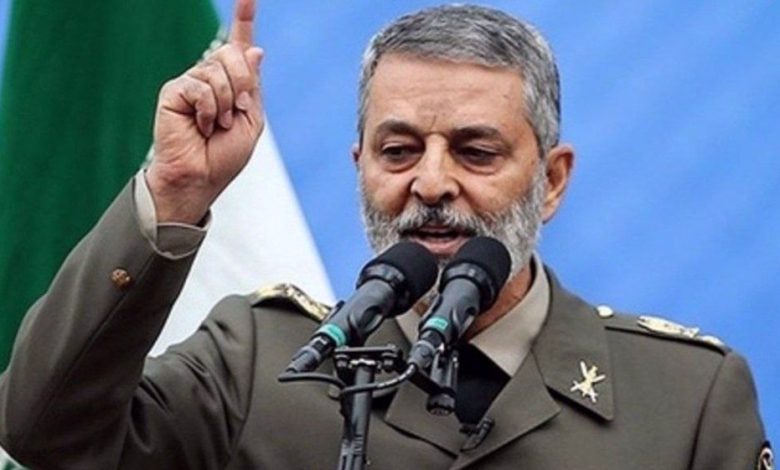
In a strongly worded statement on Saturday, Major General Abdolrahim Mousavi, Chief of Staff of the Iranian Armed Forces, conveyed a stern warning to Brigadier General Bahman Behmard, the commander of the Islamic Republic of Iran Army Air Force, in commemoration of Air Force Day.
A spokesperson stated that adversaries of the Islamic Republic of Iran understand that initiating conflict or aggression against Tehran would not only result in a decisive and strategic defeat for them but would also trigger a wider regional conflict and crisis.
He stated that any military engagement or conflict directed at Iran would result in “severe and irreversible” repercussions for those who back such actions.
The Iranian Army Air Force assumes a pivotal role in bolstering active deterrence and enhancing defensive readiness, effectively addressing adversarial threats in the face of current sensitive conditions and intricate domestic and regional dynamics. This strategic importance is particularly highlighted following the recent 12-day conflict imposed by Israeli-American forces in June, he emphasized.
Mousavi announced that the Air Force has consistently focused on modernizing and enhancing its combat capabilities, achieving comprehensive preparedness. It now reportedly maintains the “highest level of readiness.”
The senior commander stressed that in full collaboration with other branches of the Armed Forces, the Air Force stands prepared to deliver a swift, decisive, and unfortunate response to any threats, acts of aggression, or miscalculations by adversaries.
He emphasized that the Islamic Republic is committed to never initiating conflict, while resolutely safeguarding its security, territorial integrity, and vital interests without hesitation.
Mousavi characterized the force as emblematic of the army’s profound connection with the nation and its alignment with the Islamic establishment.
On June 13 of last year, Israel initiated a conflict deemed unprovoked, coinciding with Iran’s engagement in nuclear discussions with the United States. Subsequently, the US participated in the aggression, targeting Iranian nuclear facilities.
In retaliation, the Iranian Armed Forces launched strikes on key strategic locations within the occupied territories and at Al-Udeid, which is recognized as the largest U.S. military base in the West Asian region.
Iran has taken steps to bolster its military capabilities, enhancing both defensive and offensive systems.
The region is once more on high alert for a potential military conflict as the United States has positioned air and naval forces in the area and issued a warning of possible action against the Islamic Republic.
Iranian authorities have issued a stern warning, stating that any military action by the United States would be met with a swift reaction and has the potential to trigger a regional conflict.
Last week, Ayatollah Seyyed Ali Khamenei, the Leader of the Islamic Revolution, cautioned that any conflict instigated by the United States against Iran is likely to escalate into a regional confrontation.
The Leader emphasized that any initiation of conflict by the Americans would escalate into a regional war, asserting that threats and military demonstrations will not deter the Iranian nation.
Tensions experienced a slight easing as Iranian and U.S. diplomats engaged in a fresh round of discussions concerning Tehran’s nuclear program in Oman on Friday.