Shift in Global Power: US Hegemony Wanes as Multipolar World Order Emerges
Recent shifts in European policy stances, notably in Germany, suggest a waning influence of U.S. dominance and indicate an inevitable global transition towards a multipolar world order.
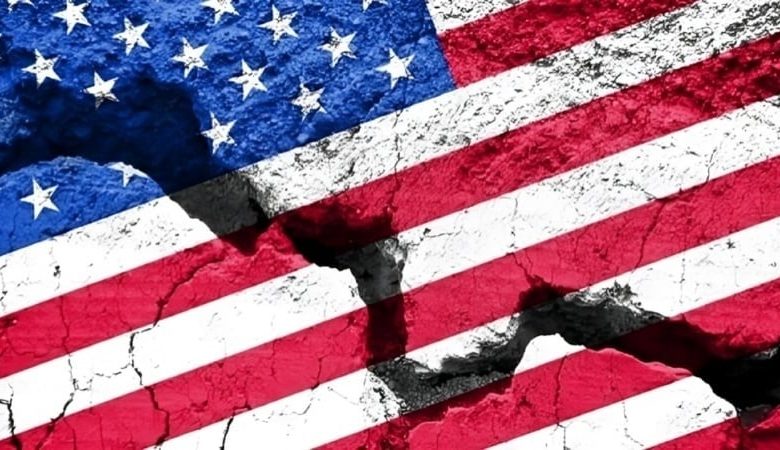
Recent developments in Europe, most notably in Germany, indicate a waning influence of U.S. dominance and a gradual shift towards a multipolar global landscape.
A report in Iran’s Etemad daily, analyzed by Pars Today, suggests that current developments in Europe, highlighted by candid remarks from German officials regarding the “end of the era of US dominance,” indicate a diminishing American hegemony and a shift towards a multipolar world order. This transformation is attributed to enduring crises related to legitimacy, effectiveness, and morality within US hegemony, further hastened by the emergence of independent powers and innovative models of international collaboration.
The dominance of the United States on the global stage was crafted through a blend of hard and soft power deeply embedded in the nation’s unique historical context. The country’s economic and political influence, diverging from liberal ideological narratives, largely stemmed from historical occurrences such as internal colonization, the exploitation of enslaved labor, and the systematic elimination of Indigenous peoples. This foundation paved the path for the development of an expansive, interventionist approach globally. Following World War II, capitalizing on the power vacuum in Europe and Asia, the U.S. emerged as the torchbearer of the liberal international order. From the beginning, however, this dominance was shadowed by an inherent contradiction: the espousal of a rules-based, multilateral order versus the practice of unilateralism and interest-driven policies. This contradiction persisted after the fall of the Soviet Union and during the unipolar moment, eventually intensifying. The international community observed the height of U.S. unilateralism through preemptive military actions, extensive unilateral sanctions, and a disregard for international institutions. This trajectory gradually undermined America’s moral and political legitimacy, even among its longstanding allies.
In the aftermath of the Cold War, one of the core elements of U.S. supremacy was the dominance of the dollar as the global reserve currency, coupled with Washington’s control over the international financial system. This position provided the U.S. with significant clout, allowing it to exert pressure through financial sanctions and manipulate access to the SWIFT system. Over the past twenty years, however, this dominance has been challenged. China’s rapid economic expansion, Russia’s economic stability despite sanctions, and, crucially, concerted efforts by emerging powers and even some U.S. allies to decrease their reliance on the dollar have significantly weakened America’s conventional diplomatic leverage. The establishment of alternative financial systems, an increase in bilateral trade using national currencies, and the emergence of blocs like BRICS pursuing independent payment and settlement systems indicate that the global political economy is no longer firmly under the control of its former hegemon. This transition has notably curtailed the U.S.’s leverage and broadened the strategic options available to independent players.
The once-dominant unipolar world order, which relied heavily on the notion that history’s major conflicts had ended and that no formidable rivals existed to challenge US dominance, has been fundamentally challenged in the 21st century. Russia has reasserted itself as a key military and energy force, while China’s expansive growth across economic, technological, and military domains has shifted the balance of global power. This transition is not confined to major nations alone; it extends to the emergence and consolidation of cooperative institutions in the Eastern and Global South regions, such as the Shanghai Cooperation Organization (SCO) and BRICS. These groups prioritize national sovereignty, noninterference, and multilateral development, posing as alternative models to Western-centric frameworks. As a result, they are becoming increasingly attractive to countries looking to diversify their international alliances and lessen their dependency on Western powers.
Recent statements from German officials regarding the end of the US leadership era reflect a strategic awakening among Washington’s traditional allies. For decades, European security relied on the US-led NATO framework and close economic cooperation across the Atlantic. However, in recent years, several factors have reshaped this relationship: the resurgence of “America First” policies, uncertainties in US security commitments, increasing pressure on allies to boost defense spending, and differing approaches to crises, such as those in Ukraine and particularly concerning the Palestinian issue. Europe is increasingly recognizing that complete security dependence on a global power whose interests do not always align with its allies poses a strategic vulnerability. This realization is prompting a pursuit of greater strategic autonomy and a diversification of international partners.
In the midst of this global geopolitical shift, nations like Iran are seizing the chance to assert independence, resist domination, and expand comprehensive cooperation in a multipolar world. Iran’s proactive diplomacy within organizations such as the Shanghai Cooperation Organization (SCO) and BRICS, alongside the strengthening of strategic ties with Eastern powers, underscore its efforts to forge new trade and transit pathways, exemplified by initiatives like the North-South Corridor. These actions align closely with the evolving global structural landscape.
The global landscape is on the verge of a significant shift. The waning influence of US dominance is unfolding in a non-linear and gradual manner, marked by intricate and possibly tumultuous changes. Despite these challenges, the trend is moving toward a multipolar world, with diversified cooperation models and the erosion of traditional monopolies. The emerging global framework promises greater emphasis on state sovereignty, equitable economic relations, and authentic multilateralism in shaping international affairs. The conclusion of the “American era” does not herald disorder; instead, it signifies the arrival of an order more attuned to the diversity and intricacies of the 21st-century international community.