Pezeshkian Warns US Military Presence Near Venezuela Sets “Dangerous Precedent” for Global Stability
Iran’s President Masoud Pezeshkian has issued a sharp rebuke of the United States' actions, denouncing the deployment of a naval fleet to the Caribbean and the Venezuelan coastline as unlawful and a menace to global peace and security.
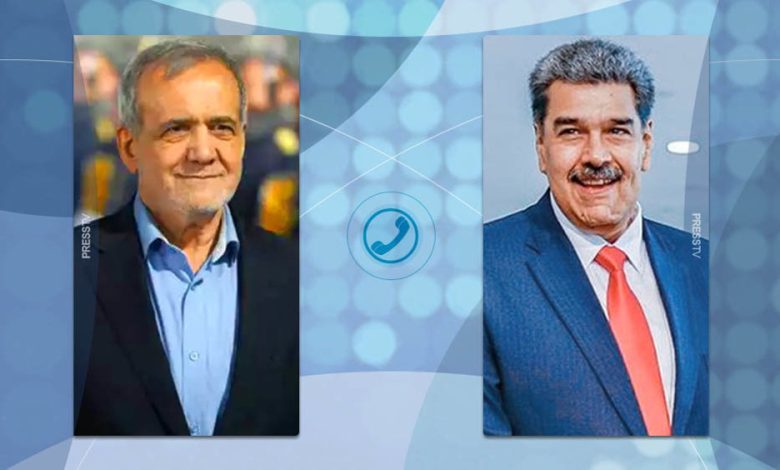
In a telephone conversation on Tuesday with Venezuelan counterpart Nicolas Maduro, Pezeshkian examined bilateral cooperation and addressed recent developments in the Caribbean region.
A spokesperson condemned the United States’ decision to position a naval contingent in the Caribbean and off the Venezuelan coast, asserting that the move is entirely unwarranted, violates international law, and sets a perilous precedent threatening global peace and security.
The United States government has intensified its stance towards Venezuela by increasing military presence in the Caribbean. Officials have labeled the move as a mission aimed at combating drug trafficking, although they have not provided evidence to substantiate these claims.
The United States has conducted a minimum of 21 strikes targeting suspected drug trafficking vessels in the Caribbean and Pacific regions since September, resulting in at least 83 fatalities.
In a reaffirmation of bilateral ties, Pezeshkian emphasized Iran’s commitment to safeguarding the independence, security, and stability of Venezuela.
He stated that they are attentively monitoring developments in the Caribbean region and the actions of the United States, expressing full solidarity with the government and people of Venezuela.
He emphasized the strategic alliance and enduring friendship between Iran and Venezuela, highlighting the strong connections between the two countries.
Iran regards Venezuela as a genuine friend and ally, standing in support of the nation under all conditions, particularly amid the current sensitive circumstances, he highlighted.
Iran has reaffirmed its commitment to broadening cooperation with Venezuela across various sectors, emphasizing Tehran’s appreciation for Caracas’s backing in international arenas.
He expressed confidence in the notion that the “unity and national will” of the Venezuelan people would aid the nation in surmounting its present challenges.
Maduro conveyed gratitude towards Iran for its unwavering support of both the Venezuelan government and its citizens.
He emphasized that the nations have consistently demonstrated unity, and over the years, their strong relations have served as a model for peaceful, cooperative, and developmental ties.
In response to escalating tensions in the Caribbean, Maduro criticized US actions, labeling them as “provocative, unnecessary, and contrary to the United Nations Charter.”
He highlighted that the allegations made by the United States against the Venezuelan populace have faced resistance from global public opinion, including dissent within the United States itself, alongside strong opposition from the citizens of Venezuela.
Maduro highlighted the solidarity among Venezuelans, asserting their commitment to preserving “peace, independence, and truth.” He stated that the nation is “stronger and more united than ever,” and is progressively better equipped to secure peace and victory.
He extended his warm regards to Ayatollah Seyyed Ali Khamenei, the Leader of the Islamic Revolution, and emphasized the ongoing strategic partnership between Tehran and Caracas.
He emphasized a resolute commitment to advancing and fortifying relations and cooperation with the Islamic Republic of Iran. He noted that the two nations will maintain constant communication, working collaboratively to achieve peace and development, underscoring it as a mutual responsibility.