Sayyed al Houthi: ‘israel’ Using Western Munitions and Arab Oil in Gaza Operations
The head of Yemen's Ansarullah resistance movement has accused Israel of committing genocide in Gaza, utilizing American, British, and German weaponry allegedly funded by the oil and resources of Arab nations.
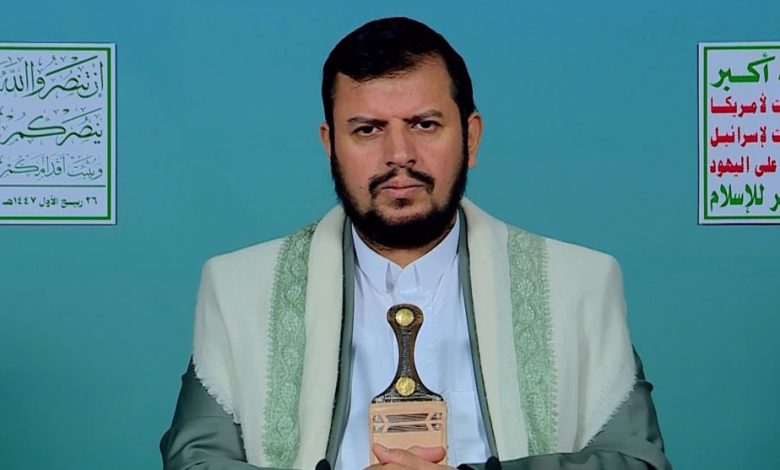
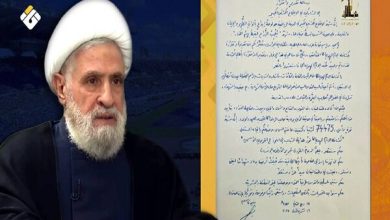
In a televised address from Sana’a, Yemen, on Thursday, Abdul-Malik al-Houthi discussed the continuing actions of the Israeli regime in Gaza, along with recent regional and global developments.
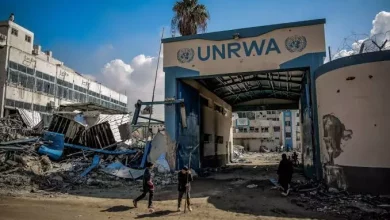
He accused the Israeli regime of perpetrating “the crime of the century in Gaza,” witnessed globally. He further stated that the enormity of what he described as genocide and catastrophe would provoke outrage in anyone with the slightest sense of human conscience.
In a recent statement, he claimed that the regime is exploiting the weaknesses and vulnerabilities of Islamic nations. He further warned that Israel’s threats pose a danger not only to Palestine but to the entire Islamic community.
Houthi addressed the recent emergency summit convened in Doha, which united leaders from the Arab League and the Organization of Islamic Cooperation (OIC) to address the intensifying Israeli aggression in the region.
He remarked that although organizing the summit required considerable effort, its outcome, similar to previous instances, was confined to issuing statements with no tangible actions implemented.
He stated that the lack of action has encouraged Israel to initiate verbal assaults, even targeting nations involved in mediation efforts, such as Qatar.
On September 9, Israel initiated a missile strike on a residential locality in Doha, aiming at Hamas figures who were reportedly engaged in discussions concerning a US ceasefire proposal. While senior leaders emerged unscathed, the assault resulted in the deaths of five Hamas members and a Qatari security officer.
In response, an emergency summit of Islamic leaders convened in Doha to denounce the assassination attempt, highlighting its potential threat to regional stability. Despite the forceful condemnations, the summit wrapped up without agreeing on any concrete measures.
The leader of Ansarullah has raised concerns over the lack of financial support from Islamic nations for Palestine, questioning why it doesn’t match the Western military assistance provided to Ukraine. He also called on Arab states to take a stand by closing their airspace to Israel.
He further urged Arab nations to remove Palestinian resistance groups, including Hamas’s Al-Qassam Brigades and Islamic Jihad, from their lists of designated terrorist organizations.
He highlighted the recent visit by U.S. Secretary of State Marco Rubio with Israeli Prime Minister Benjamin Netanyahu at the Western Wall, along with the inauguration of a tunnel adjacent to Al-Aqsa, as clear evidence of the strong American-Israeli partnership. He asserted that this alliance underscores what he described as the “Islamic Ummah’s negligence.”
The Buraq Wall is historically recognized as the site where Prophet Muhammad, peace be upon Him, secured the Buraq, the celestial steed that facilitated his journey during the Night of Ascension.
The Western Wall, also referred to as the Wailing Wall, is part of the Al-Aqsa Mosque complex, revered by Muslims as the third holiest site in Islam. For Jews, the area is known as the Temple Mount, believed to be the location of two ancient Jewish temples.
On Monday, Rubio accompanied Netanyahu to the City of David, an Israeli settlement in the Palestinian neighborhood of Silwan, within the annexed region of al-Quds. The visit was for the inauguration of “Pilgrimage Road,” an archaeological tourist site that critics argue is entrenched in themes of occupation, apartheid, and the dispossession of Palestinians.
During his address, Houthi referenced the Sabra and Shatila massacres, using them as a historical precedent to argue against the disarmament of Hezbollah. He suggested that removing Hezbollah’s armament could leave Lebanon exposed to comparable atrocities.
He stated that the actions of the Zionist adversary in Sabra and Shatila have underscored the potential consequences of disarming the resistance, arguing that armed resistance remains a crucial deterrent against genocide.
In September 1982, amidst Israel’s invasion of Lebanon, the Sabra and Shatila massacres unfolded as Israeli forces permitted the Phalangist militia to access Palestinian refugee camps in west Beirut, resulting in the killing of thousands of unarmed civilians over a span of two days.