Zionist ‘israel’ Expands Settlement Reach from Jerusalem to Jordan Valley
Zionist regime demolitions, prolonged road closures, and settler activities in the occupied regions of al-Quds and the Jordan Valley appear to represent a systematic approach to displacing Palestinian residents.
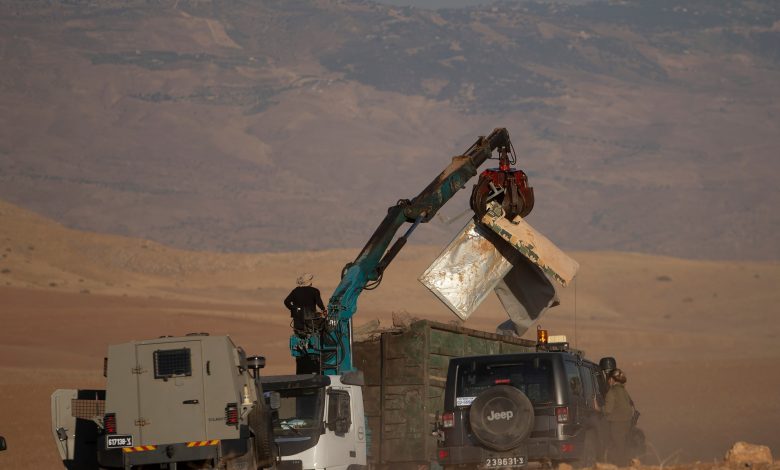
Israeli authorities have escalated a comprehensive campaign involving demolitions, movement restrictions, and land acquisitions, accelerating the effective annexation of Palestinian territories in and around occupied Jerusalem and the northern Jordan Valley.
Recent demolition notices, the prolonged closure of a Bedouin access road, and ongoing settler activity on Palestinian farmland collectively highlight a systematic pattern of pressure exerted on vulnerable communities.
Israeli authorities recently distributed demolition notices for over 10 residential and agricultural buildings in proximity to the Arab al-Jahalin Bedouin community, located southeast of occupied East Jerusalem, according to a statement from the al-Quds Governorate.
In an expanding initiative, authorities documented 27 demolition and bulldozing incidents in November 2025. This includes five self-demolitions conducted by residents facing substantial fines, 21 demolitions carried out by municipal crews, and one plot being bulldozed.
In the same month, officials documented 45 notices and the confiscation of approximately 77.608 dunums of land in eastern al-Issawiya. These notices were predominantly issued in areas such as al-Walaja, the Old City, Wadi al-Hummus, al-Issawiya, and al-Za’im, as reported by the governorate. This move indicates a continued effort to strengthen control over neighborhoods and strategic zones in al-Quds.
In a development concerning territorial management, the Israeli military has extended the order maintaining the closure of the primary road to the al-Muntar Bedouin community until July 1, 2026. The road, which has been inaccessible since October 7, 2023, has compelled approximately fifty families to undertake long detours via pathways between the unauthorized Ma’ale Adumim and Kedar settlements.
Local residents report that the rerouted paths subject them to frequent harassment and attacks by settlers, significantly increasing travel time to reach work, educational institutions, and healthcare facilities. The closures have been introduced alongside fines and vehicle restrictions, effectively causing a major disruption to everyday activities. Community members characterize these measures as calculated pressure intended to displace them from their lands.
Israeli settlers are reportedly focusing on expanding their settlements while also being accused of attacking a family and activists.
Settlers have persisted this week in their efforts to bulldoze and cultivate Palestinian agricultural lands in the northern Jordan Valley. This activity includes areas of al-Joubiya, where land previously sown with rain-fed crops has been leveled.
In recent weeks, settlers have reportedly expropriated and leveled numerous dunums of private land owned by Palestinians. According to a recent report by the Israeli non-governmental organization B’Tselem, actions involving collaboration between the military, police, settlers, and the Jordan Valley Regional Council have led to a significant decrease in available pastureland for Palestinians. These coordinated efforts have reportedly included blocking regular water supplies and implementing measures designed to isolate the Jordan Valley from the rest of the West Bank.
According to rights organizations, the implementation of these measures, coupled with a significant increase in settler violence, appears to be an effort to displace shepherding communities from their residences and grazing territories.
Overall, the confluence of demolitions in al-Quds, movement and access restrictions at al-Muntar, and settler land acquisitions in the Jordan Valley underscores an enduring strategy of administrative, military, and settler activities aimed at diminishing Palestinian territories while expanding settler influence.
The United Nations, along with the Office of the High Commissioner for Human Rights (OHCHR), has expressed concerns regarding the humanitarian and legal implications arising from the rapid expansion of settlements and associated policies.
Recent developments on the ground have coincided with legislative and administrative actions by Israel aimed at solidifying its control over the occupied West Bank. The Knesset has introduced initiatives and undertaken committee actions this year, including legislation perceived as steps toward asserting Israeli sovereignty and legalizing outposts and settlements. These moves have elicited strong criticism from the European Union, the United Nations, and human-rights organizations, which characterize the measures as contraventions of international law and a menace to any negotiated resolution concerning Palestine.
In the margins of al-Quds, among Bedouin communities in the desert, and within farming families of the Jordan Valley, Palestinians face the acute and existential impact of demolition orders, road closures, and settler encroachment. These challenges contribute to the loss of homes and livelihoods, restricted movement, and increasing isolation. This situation is viewed as part of a broader Israeli strategy aimed at forcibly transferring populations, a tactic some describe as a form of ethnic cleansing, quietly targeting the removal of Palestinian residents from strategic areas without overtly declaring this as an official objective.
Without transforming international pressure into tangible actions, such as curbing settler violence, revoking demolition orders, and reversing administrative seizures, the existing path is likely to deepen territorial fragmentation and dispossession for Palestinians.