Venezuela slams US for waging ‘undeclared war’ in Caribbean, demands UN probe
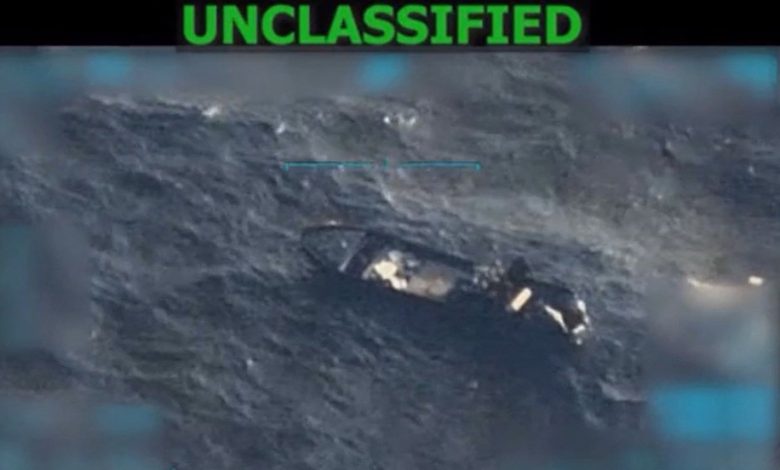
Venezuela has slammed the US for waging an “undeclared war” in the Caribbean, and urged the UN to investigate the latest US strike against a vessel that killed three people.
US President Donald Trump said on Friday that US forces carried out a third strike on a ship allegedly trafficking narcotics.
In a post on his Truth Social platform, Trump said the “lethal kinetic strike” was ordered in the US Southern Command’s “area of responsibility,” covering 31 countries across South and Central America and the Caribbean.
Trump offered no evidence for his claims and gave no details about the vessel’s departure point or the exact location of the strike.
These attacks, carried out by US warships and F-35 jets, have reportedly killed at least 17 people in recent weeks.
In a statement released on Friday, Venezuelan Defense Minister Vladimir Padrino Lopez said, “It is an undeclared war. People, whether or not they are drug traffickers, have been executed in the Caribbean Sea without a chance to defend themselves.”
Venezuelan officials say the US is targeting civilians and suspects without due process.
Venezuelan Attorney General Tarek William Saab says that “firing missiles at defenseless fishermen on a small boat amounts to crimes against humanity and must be investigated by the UN.”
The US claims the operations are part of its anti-drug campaign in the Caribbean, Central, and South American waters.
However, Washington has offered little proof to support its claims, leaving doubts over whether the targeted vessels were truly linked to drug trafficking.
Experts note that drug trafficking is not punishable by death under US law, making the killings questionable even under Washington’s own standards.
In response, Venezuela has launched large-scale military drills on the Caribbean island of La Orchila.
President Nicolas Maduro says Washington is plotting an invasion.
“This is an imperial plan for regime change, to impose a puppet government and steal our oil,” he said.
He urged citizens to join militia training and defend the country against the “imperialist aggression.”
Even opposition figures, usually critical of Maduro, condemned the US actions.
Henrique Capriles, a former presidential candidate, said military intervention is not a solution and stressed that “political dialogue is the only path forward, not foreign attacks.”
The latest US attacks represent the largest naval buildup in the Caribbean in decades, heightening fears of escalation.
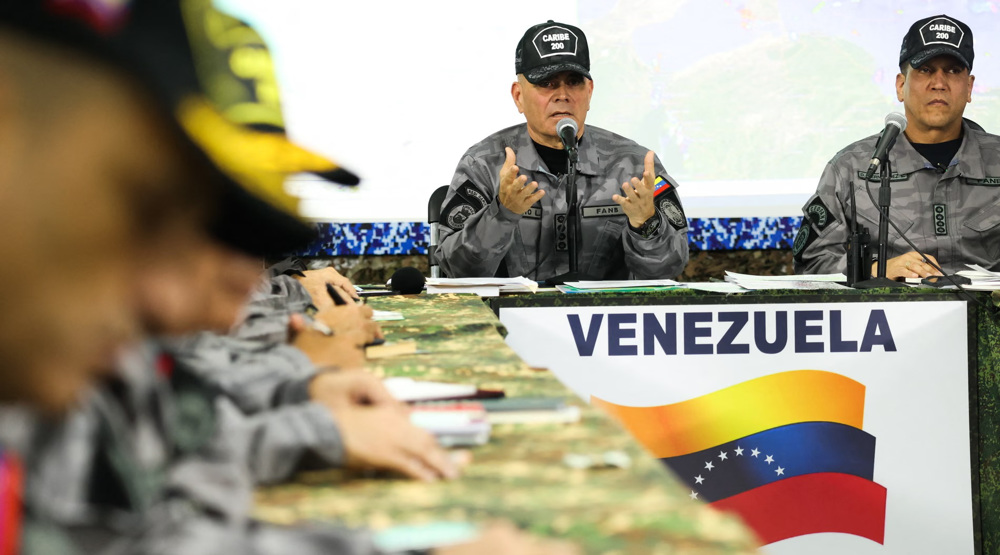
Venezuelan has begun three days of military exercises in Caribbean waters amid increased US military activity in the region.
Colombia condemns ‘excessive’ US military buildup in Caribbean
In a statement released on Friday, Colombian Foreign Minister Rosa Villavicencio criticized the “excessive” US military presence in the Caribbean, calling it “destabilizing for Latin America.”
Villavicencio said the deployment of several US warships off the coast of Venezuela was “disproportionate” and warned that the threat of intervention was unsettling the region.
“Venezuela is concerned; as is the entire region, about the risk of an intervention … Such a massive military buildup cannot be justified,” she stressed.
She rejected US President Donald Trump’s claims that the ships, a submarine, and an F-35 squadron were sent to combat drug trafficking.
“This has nothing to do with fighting the drug trade,” she said, echoing concerns that Washington may be preparing to strike Venezuela and even topple President Maduro.
Villavicencio added that the strikes were illegal, emphasizing that suspects should be captured, not killed.
“This does not seem to be the legal way to pursue criminal groups,” she said.
Her remarks add new tension to already-strained relations between Washington and Bogota. Earlier this week, the US blacklisted Colombia for what it described as the Latin American country’s failures in anti-drug efforts.
Relations have also soured due to personal and political disputes between Trump and Colombia’s President Gustavo Petro.
The two leaders have clashed bitterly on social media, trading threats over sanctions and immigration policy.
Villavicencio said that the blacklisting “was clearly a political move, aimed at condemning President Petro.”