Trump’s Strait of Hormuz Stance Targets Oil Price Control; Iran Promises ‘Major Surprises’: Source
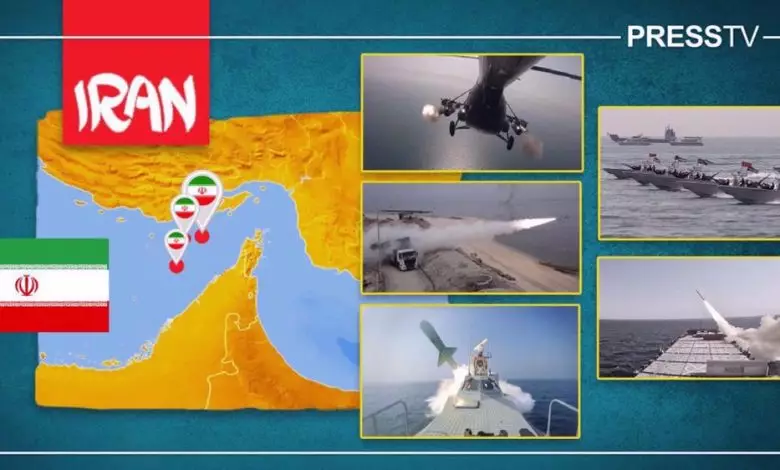
Trump’s warnings about reopening the Strait of Hormuz and initiating more intense actions against Iran are seen as a strategy to manage the market and escalating oil prices following the weekend’s closure in the United States, as per insights from a well-informed military source.
In an interview with a Press TV correspondent, a source highlighted the recent statements made by Trump, emphasizing that Tehran is preparing to “surprise him” not only by enhancing its defensive capabilities but also by executing several significant actions after the weekend.
Sources have indicated that Iran has broadened its offensive strategies by targeting and demolishing enemy radar systems, warning that more challenging times are on the horizon for the United States.
On Thursday, Trump announced that the United States Navy would provide escort services for tankers navigating the Strait of Hormuz. This decision aims to reestablish the flow of oil exports following Iranian retaliatory actions against American tankers.
He proposed the provision of political risk insurance for oil and gas tankers navigating the critical maritime route. This measure aims to mitigate the rapidly increasing energy costs in the wake of the conflict with Iran, which erupted following an unprovoked and unlawful offensive last Saturday.
In an announcement made via social media, Trump stated that he has directed the United States Development Finance Corporation (DFC) to promptly offer political risk insurance and guarantees at competitive rates to ensure the financial security of all maritime trade, particularly energy, passing through the Gulf.
The United States is prepared to extend this service to all shipping lines. If deemed necessary, the U.S. Navy is ready to commence escorting tankers through the Strait of Hormuz at the earliest opportunity. Meanwhile, Iranian military officials have stated they are “awaiting” the deployment of U.S. naval forces to the strategic waterway.
In an announcement made on Sunday, U.S. Energy Secretary Chris Wright predicted a decline in oil and gas prices, contingent upon Washington’s implementation of military measures aimed at neutralizing Iran’s capacity to interfere with tanker traffic through the strategically vital Strait of Hormuz.
His comments emerge in the context of a significant spike in energy prices, triggered by the US-Israeli military actions against Iran, with oil prices surpassing $90 per barrel and maintaining an upward trend.
Trump secured re-election, making commitments to reduce gas prices and address high inflation. Analysts caution that escalating energy costs could greatly influence his party’s prospects in the upcoming November midterm elections, which will decide the control of Congress for the rest of his term.
A CNBC report released on Sunday, referencing data from GasBuddy, indicates that the average price of gasoline in the United States has risen above $3.46 per gallon. This comes as US crude oil prices have exceeded $91 per barrel amidst escalating tensions due to the US-Israel conflict with the Islamic Republic. Meanwhile, Iran has issued a stark warning, asserting that tankers linked to the US and Israel will be barred from traversing the strategic Strait of Hormuz.
Iran has maintained the strategic Strait of Hormuz open, which links the Persian Gulf and the Gulf of Oman, but it has reportedly targeted certain oil tankers associated with both the United States and Israel.
Hundreds of ships are currently stranded in the Persian Gulf, prompting analysts to question if the United States has enough naval resources in the area to guarantee their secure transit. This development comes as the Iranian Navy has declared its full control over the region’s waters. According to reports from Iranian media, there is an indication of an invitation for U.S. escort of oil tankers through the Strait of Hormuz, as stated by a spokesperson for the Iranian Revolutionary Guard Corps (IRGC).
The significant maritime corridor acts as the sole passageway for vessels entering and exiting the Persian Gulf. Energy consultancy Kpler reports that in 2025, over 14 million barrels of crude oil traversed this route each day, representing approximately one-third of the global oil exports transported via sea.
Brigadier General Ali Mohammad Naeini, a spokesperson for the Islamic Revolution Guards Corps (IRGC), stated on Thursday that Iran is open to the escorting of oil tankers and the reported presence of US forces in the Strait of Hormuz.
He issued a clear warning, stating, “In fact, we are awaiting their arrival.”
The United States and Israel initiated a surprise military operation against Iran on Saturday, resulting in the death of Ayatollah Seyyed Ali Khamenei and several high-ranking military officials.
The aggression occurred amidst nuclear negotiations between Tehran and Washington, facilitated by the Omani government, and received widespread condemnation.
Iranian armed forces have launched several waves of retaliatory operations targeting Israeli military sites located deep within the occupied territories, as well as U.S. military installations across the region, employing advanced missile and drone technology.