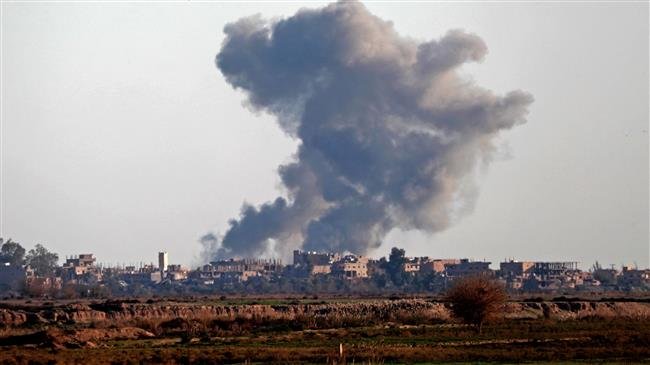
The Israeli military conducted a strike on a residence in the village of Turnejeh, located north of Quneitra, resulting in the death of a young resident on Tuesday, as reported by the Syrian Arab News Agency (SANA). Reports from local media outlets have detailed an overnight operation carried out by Israeli forces in the village of Suwaisa, situated in the Quneitra region. In the course of the military offensive, Israeli forces deployed flare shells into the night sky and conducted searches throughout the area, encountering resistance from local inhabitants. According to local sources who requested anonymity, Israeli military forces have detained a young citizen. In the latest development, Israel has conducted its fourth military incursion in August on Quneitra, located in the disengagement zone of the occupied Golan Heights. On December 8, 2024, militant factions, led by Hay’at Tahrir al-Sham, successfully toppled Assad’s government. Following the decline of Assad’s regime, the Israeli military has launched airstrikes aimed at military installations, facilities, and arsenals linked to Syria’s erstwhile army. Israel has come under intense scrutiny after deciding to abrogate the 1974 ceasefire agreement with Syria. The move, viewed by many as opportunistic, comes in the wake of political instability in Syria following the removal of Assad, prompting allegations that Israel is attempting to expand its territory. The United Nations has condemned the continued Israeli attacks within Syrian borders and the ongoing violations in and around the buffer zone set up by the 1974 ceasefire agreement with Damascus.
Iran's Parliamentary Speaker has declared that the Islamic Republic will not exercise self-restraint in responding to any future acts of aggression.
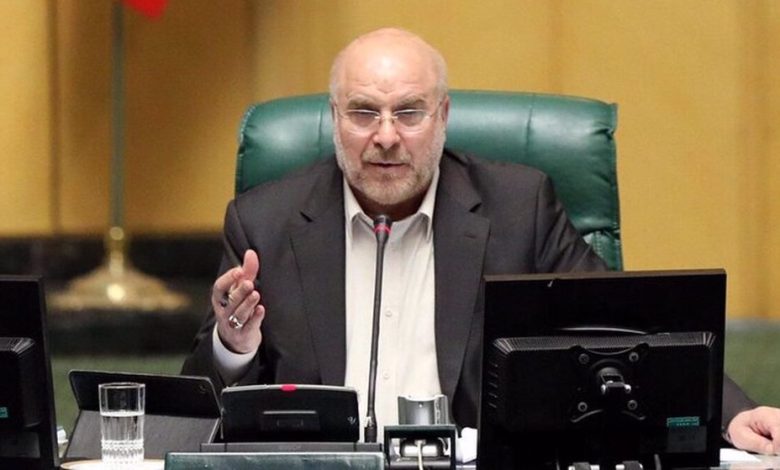
In a speech delivered to the legislature on Tuesday, Mohammad-Baqer Qalibaf revealed that Iran’s Armed Forces have developed a range of “appropriate plans” aimed at preventing adversaries from making any further missteps against the nation.
He referenced the recent extensive exercises conducted by the Iranian Navy, known as Operation Sustainable Power, highlighting them as an example of strategic readiness. These maneuvers, he stated, were intended to convey a “clear message” to adversarial entities.
He stated that the underlying message was clear: in the event of any renewed conflict, Iran would abandon self-restraint and broaden the scope of its retaliation to encompass “other spheres and locations.”
Should there be any renewed aggression from opposing forces, Iran has indicated that its response could escalate the conflict, potentially expanding it into new territories, including economic and political domains.
**’Ninety-Million-Strong Force Engages in Sacred Defense’**
Qalibaf lauded the nation’s unified response to the unprovoked Israeli-American conflict in June.
He praised the strong unity demonstrated throughout the conflict among the nation, its military, and its political leadership, which effectively neutralized hostilities.
He notably commended the strong display of public solidarity with the country’s military and government officials during the conflict, emphasizing that this widespread support was instrumental in thwarting the adversaries’ plans for “the nation’s disintegration.”
In a show of overwhelming support, the populace decisively thwarted adversarial strategies by bolstering the nation’s military forces and its governing bodies.
A formidable force of 90 million individuals united in a demonstration of “Sacred Defense” against the aggression faced.
The official referenced the term traditionally associated with the nation’s defensive and retaliatory actions during the conflict initiated by former Iraqi leader Saddam Hussein in the 1980s.
The prominent legislator highlighted that Ayatollah Seyyed Ali Khamenei, the Leader of the Islamic Revolution, had previously underscored the critical importance of fostering and maintaining unity in the aftermath of the conflict.
In his address, Qalibaf highlighted that the Leader emphasized the critical need for unity among the nation’s three branches of government—legislative, executive, and judicial—as well as the importance of fostering cohesion between these branches and the public.