Tense Hours Recounted by Palmyra Residents Following Recent Attack
In Palmyra, a city rich with historical significance in Syria, locals are cautiously returning to their daily routines following a fatal incident on Saturday that resulted in the deaths of US service members. The shooting prompted an extensive security response and instilled a sense of apprehension among residents.
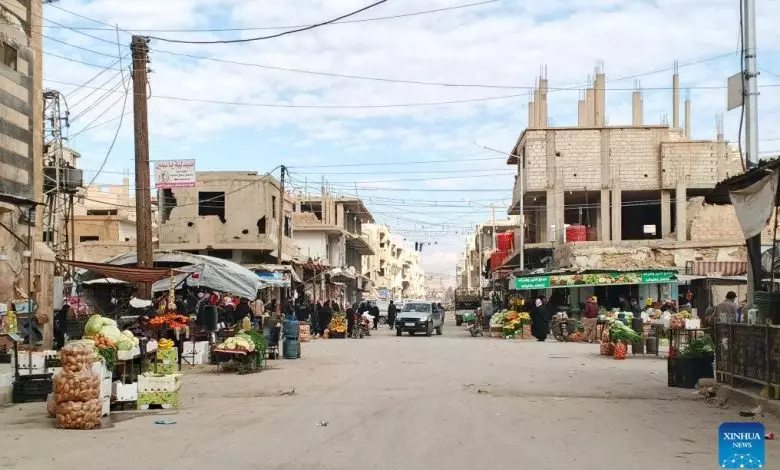
In a surprising turn of events for numerous residents, the attack was both unexpected and abrupt. According to Mohammad al-Kabir, a citizen of Palmyra, inhabitants were caught off guard as convoys of U.S. military vehicles advanced through the city.
Residents expressed surprise upon encountering American forces within Palmyra, a source informed Xinhua. Approximately 30 minutes following their entry into the city, intense gunfire erupted inside the Badia security branch.
The Badia branch, once a security headquarters under the government of Bashar al-Assad, has turned into a hub of turmoil. According to Al-Kabir, the area experienced almost a full day of intense aerial activity, with warplanes flying over the city and its desert surroundings. He reported a significant increase in security tension and widespread concern about the potential infiltration of extremist elements into Palmyra.
A lone assailant, connected to the ISIL organization, carried out a shooting that resulted in the deaths of two U.S. service members and one U.S. civilian contractor. Several others sustained injuries before the attacker was ultimately killed, according to officials.
Mohammad al-Fadil, a local resident, recounted a period marked by intense concern and unease. He described how Palmyra experienced significant security instability following events within the Badia branch. “The sight of coalition aircraft hovering over the city for extended hours instilled fear and panic,” he noted. Families remained indoors, closely following the situation as security forces implemented tighter controls and limited movement.
The incident has led Syrian authorities to initiate security operations aimed at suspected ISIL cells in central Syria, with a focus on desert regions that have been long regarded as susceptible to militant activity.
For the inhabitants of Palmyra, the recent incident served as a stark reminder that, although major conflicts may have diminished, the lingering threat of insecurity remains. “People desire a normal life,” shared al-Kabir. “Events like this resurrect past anxieties. Nonetheless, enduring stability is the shared aspiration for everyone here.”
Palmyra, historically referred to as Tadmor, stands as a UNESCO World Heritage site situated in a desert oasis in central Syria. The ruins of this ancient city display a remarkable blend of Greco-Roman, Persian, and local Aramaic architectural influences, with its history tracing back to the 2nd millennium BCE.
In the midst of the Syrian Civil War, Palmyra emerged as a significant battleground when ISIL militants capitalized on the city’s pre-Islamic heritage for propagandistic purposes. In May 2015, ISIL captured the city, subsequently demolishing critical historical structures such as the Temple of Baalshamin, the Temple of Bel, and the Arch of Triumph.
In March 2016, Syrian government forces, backed by Russian support, successfully regained control of Palmyra, although ISIL managed to seize it again briefly later that year. By March 2017, permanent control was reestablished; however, considerable damage to the city persisted.