Supreme Leader’s Advisor: U.S. Emerges From Conflict ‘Desperate, Defeated’
An advisor to Ayatollah Seyyed Mojtaba Khamenei, the Leader of the Islamic Revolution, has stated...
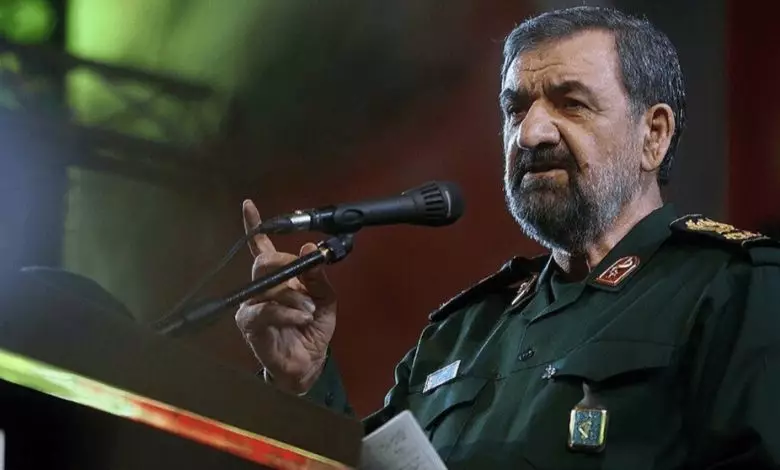
Mohseh Rezaei, who previously served as the chief commander of the Islamic Revolution Guards Corps (IRGC), delivered his comments during a televised interview on Friday.
Sources indicate that by the 15th day of the conflict, both the United States and the Israeli authorities acknowledged that the situation had slipped beyond their control. It was observed that the results of the aggression subsequently left Washington in a diminished stance.
The pair initiated their most recent offensive against the Islamic Republic on February 28, characterized by unprovoked hostility.
Trump announced a ceasefire on April 7 following a series of at least 100 decisive and retaliatory Iranian strikes targeting sensitive and strategic American and Israeli sites across the region.
Key Elements Contributing to the Result
Rezaei, a representative of the Islamic Republic’s Expediency Council, has linked the current situation to several contributing elements, such as the ongoing internal strife within the United States, the exhaustion and insufficient readiness of American military personnel, and the lack of a viable military strategy concerning the Strait of Hormuz. This strategic waterway was closed by Tehran as a countermeasure against perceived hostilities from adversaries and their allies.
He also cited obstacles in Congress, insufficient backing from US allies, and international pressure from countries such as Spain as contributing factors to the outcome.
Rezaei pointed out that these elements have led to a stalemate between the United States and the regime amidst the hostilities.
**Iran’s Military Capabilities and Regional Influence**
An official has reported that Iranian military forces took advantage of the ongoing conflict to launch attacks on some of the United States’ cutting-edge technologies.
He stated that the Islamic Republic’s achievements have bolstered its international reputation and emphasized the necessity of maintaining the nation’s strategic position.
Iran has made a firm stance on the importance of maintaining its control over the Strait of Hormuz and preserving its regional influence. The nation emphasizes that the rights of its citizens and the strength of the resistance front must be solidified and reinforced.
**Bolstering Deterrence and Garnering Public Support**
Rezaei emphasized the need for the aggression to be conclusively halted in a manner that guarantees a long-term deterrent effect for the Islamic Republic, extending for decades ahead.
He praised the widespread public involvement in backing the nation’s sovereignty and military during the conflict, stating that the popular demonstrations deterred adversaries from harboring any malicious intent towards the country’s defensive capacities.
The substantial turnout on the streets sent a powerful message to adversaries, highlighting that they cannot strip Iran of its missile capabilities.
An advisor stated that Iran’s military forces will react “with significantly greater force” to any errors made by adversaries.
Addressing the topic of negotiations, Rezaei emphasized that any conclusive agreement must be meticulously crafted with both technical and legal accuracy, ensuring that it aligns with Iran’s stipulations.
He emphasized the necessity of exercising caution when delineating matters such as the easing of sanctions and the lifting of other constraints.
For instance, he highlighted a stipulation calling for the withdrawal of US forces from regions near Iran within 30 days following a final agreement. He cautioned that there might be claims suggesting that “areas surrounding Iran” pertains solely to Iran’s 12-mile territorial waters, a definition that would be unacceptable to them.
Rezaei also addressed the Leader’s recent statement concerning a memorandum of understanding that has been signed between Iran and the United States.
Ayatollah Khamenei approved the signing, even though he held a differing opinion. He underscored the assurances provided by President Masoud Pezeshkian and the Supreme National Security Council (SNSC) concerning the safeguarding of the Iranian nation’s rights and the regional resistance front in dealings with Washington, according to statements.