“Shamkhani States Successful US Talks Dependent on Mutual Respect and Logic, Rejects Unlawful Demands”
A high-ranking Iranian official stated on Monday that potential nuclear discussions with the United States could yield positive results only if conducted "without threats and unreasonable demands." The official emphasized that Tehran remains firm in its decision not to transfer its enriched uranium stockpiles abroad as part of any deal.
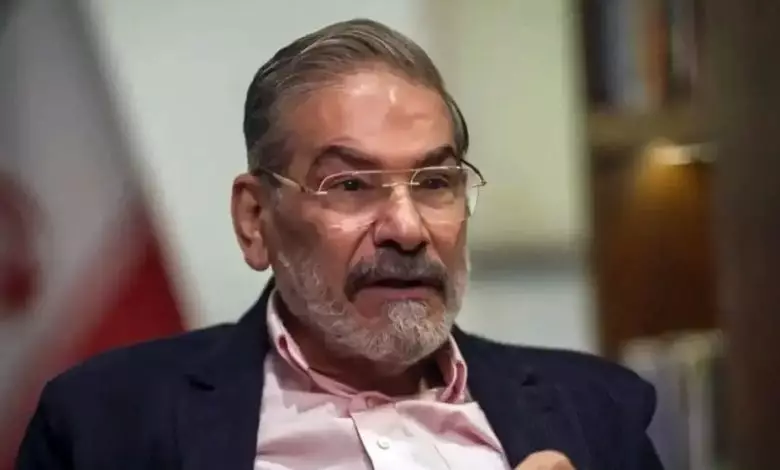
Admiral Ali Shamkhani, a key figure in Iran’s Supreme Defense Council and advisor to Ayatollah Seyyed Ali Khamenei, provided insights in a comprehensive interview with Lebanon-based Al-Mayadeen news channel.
He stated that should discussions commence under the stipulated conditions—which include the avoidance of threats and refraining from unreasonable demands—there is a potential for both direct and indirect engagements with the American side.
Shamkhani stated that before engaging in direct discussions, there would first be a phase of indirect negotiations.
Should an agreement be reached swiftly, the circumstances could transition to direct negotiations, strictly focusing on the nuclear matter. One stipulation is that discussions remain confined to the nuclear agenda.
His remarks come in the wake of reports indicating that Trump’s special envoy, Steve Witkoff, and Iranian Foreign Minister Abbas Araghchi are anticipated to convene on Friday in Istanbul.
A possible diplomatic breakthrough appears on the horizon amidst escalating tensions in West Asia, following the recent deployment of United States naval forces to the area.
**No Transfer of Uranium Stockpiles Confirmed**
Shamkhani, donning military attire as a demonstration of preparedness, refuted rumors suggesting that Iran may consider transferring its enriched uranium beyond its borders.
Iran’s nuclear program has been described as “peaceful and locally managed,” according to a statement, accompanied by an offer of a conditional gesture.
Iran has indicated a willingness to decrease its uranium enrichment from 60% to 20%, provided that there is a reciprocal offer addressing international concerns surrounding its nuclear activities.
The 60% enrichment level serves a dual purpose, according to his statement: it is intended to counter “enemy conspiracies” while also providing leverage in negotiations.
In a discussion surrounding the topic of nuclear weapons, Shamkhani referenced the religious edict proclaimed by Ayatollah Khamenei.
He stated that the West may either fail to comprehend or intentionally overlook the fact that the possession of weapons of mass destruction is prohibited by religious decree. He emphasized that this principle is “non-negotiable and originates from the vision of a religious authority.”
Shamkhani highlighted that the precise amount of Iran’s current stockpile is uncertain, as some of it is buried under debris resulting from the June strikes conducted by the US and Israel.
He stated that extraction is presently hazardous, while noting that the International Atomic Energy Agency is collaborating with Iran to safely assess the remaining quantities.
**Trump Explores Alternative Strategies**
In response to inquiries about the recent terrorist disturbances in Iran, Shamkhani referred to them as elements of an extended U.S. strategy, which he labeled as “Plan B.”
Reports indicate that after not achieving his goals in the initial term, Trump is now taking alternative measures.
Shamkhani stated that the strategy involved “equipping, educating, and supporting” individuals who engaged in armed conflict against security centers. The aim was to undermine Iran’s position following the conflict in June.
In early January, Trump issued a warning to Iran, stating that the country would face repercussions if it took action against individuals he described as “peaceful protesters.”
In the subsequent days of January 8 and 9, coordinated assaults were carried out by armed factions targeting police stations, military bases, and various critical sites, including civilian infrastructure, across multiple cities.
Iranian authorities have reported that the assaults aimed to inflict significant casualties and disrupt urban centers nationwide.
Officials have consistently criticized Western media outlets for disseminating exaggerated casualty figures and attributing blame to the Iranian government.
Several Western reports have alleged that the number of fatalities has reached as high as 30,000 in the wake of events described as “peaceful protests.”
According to official records from Iran, a total of 3,117 individuals lost their lives during the unrest, comprising 2,427 civilians and security personnel. Tehran attributes these deaths to what it claims were terrorist activities.
**Regional Deterrence and Red Lines**
Shamkhani issued a stern warning that any act of US aggression would have consequences extending beyond Iran’s borders. He highlighted the close proximity of American military assets to neighboring countries and indicated a shift in Iran’s strategic approach, moving away from a stance of “strategic patience.”
He stated that patience is no longer a viable approach.
He cautioned that any American military action would prompt a swift retaliation targeting Israel.
Israel and the United States share a unified stance, leaving no space for distinction. Should the U.S. initiate an attack, a reciprocal response will be directed towards Israel.
In response to Israeli threats aimed at Ayatollah Khamenei, Shamkhani emphasized the Ayatollah’s status as the “essential pillar” of the state.
He cautioned that even the smallest assault on the Leader could trigger an immense crisis, surpassing anything Iran’s adversaries might anticipate.