Satellite Imagery Unveils Extensive Damage to Zionist Military Bases Following Iranian Strikes
Recent analysis of satellite imagery has revealed damage to several Israeli military facilities as a result of defensive actions by Iran and Hezbollah. This discovery has sparked inquiries regarding the potential extent of destruction that Tel Aviv might be keeping hidden from public awareness.
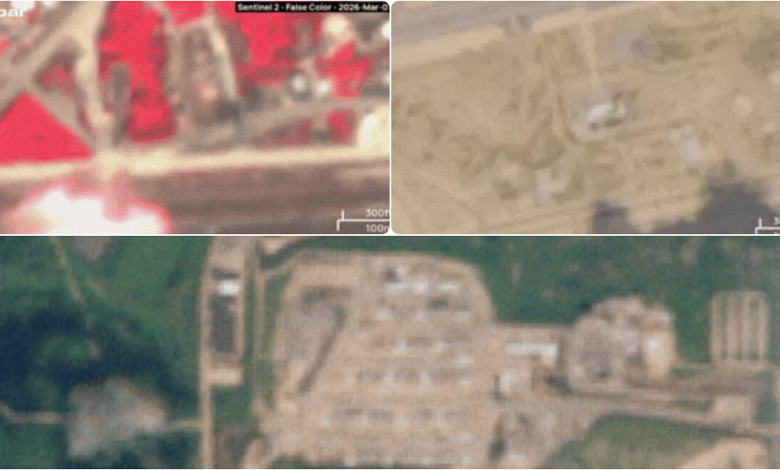
An analysis of satellite images released by Soar indicates that multiple military bases within the occupied territories were struck during Iran’s recent defensive operation, known as Operation True Promise 4. This initiative was carried out as a retaliatory measure against the US-Israeli actions that began on February 28.
The conflict commenced with a series of airstrikes resulting in the assassination of high-ranking Iranian officials, among them Ayatollah Seyyed Ali Khamenei, the Leader of the Islamic Revolution, and attacking civilian infrastructure.
Iran has retaliated by executing significant strikes targeting U.S. and Israeli bases and assets throughout the region.
On Friday, a report by *Yedioth Ahronoth*, published with the authorization of the military censor, utilized low-quality images, leading to increased skepticism regarding the regime’s transparency about the true extent of the damage incurred.
Satellite imagery from Sentinel-2 has disclosed that Ramat David Air Base sustained damage in two distinct locations. Analysis indicates that one affected area appeared to accommodate support vehicles and equipment, while the other functioned as a refueling and service hub for fighter jets, representing vital infrastructure for Israel’s aerial operations.
Imagery analysis has revealed a notable alteration near a structure within the Mishar base, home to the Unit 8200 signals intelligence facility located near Safed. According to Soar’s assessment, it suggests a potential strike on the base occurred between March 5 and March 10.
Recent satellite imagery reveals significant damage to a location at Nevatim Air Base, as clearly observed on March 25. This site has been a central focus in Iran’s counteractions against the US-Israeli offensives.
In a significant development, images have surfaced showing extensive fire damage at Camp Shimshon, which reportedly started on March 10. This coincides with Hezbollah’s announcement of a drone swarm attack on the location. The analysis indicates that the blaze persisted for several days, affecting an area spanning roughly 200 meters within the base.
Analysis of historical high-resolution imagery from the years 2016, 2024, and 2025 reveals that the damaged zone has consistently served operational roles, including the stationing of military vehicles and logistical arrangements.
The analysis highlighted that previous images revealed a lack of substantial vegetation in the region, suggesting that the fire was likely triggered by an impact within a significant section of the base, rather than igniting from burning vegetation.
The intentional reduction of image quality by Israeli military censors indicates that authorities might be seeking to downplay the apparent success of Iran’s defense measures.
According to reports from Yedioth Ahronoth, Iran has reportedly fired around 670 missiles and 765 drones targeting Israeli-occupied territories since the onset of the unprovoked aggression.
In this context, the Israeli military establishment has expressed apprehension over the apparent exclusion of ballistic missiles from the core discussions in the Iran-US negotiations aimed at achieving a lasting ceasefire.
The conflict has been on hold since April 8, following the implementation of a ceasefire brokered by Pakistan.
Reports have emerged indicating that Israel has been urging the United States to initiate another military campaign against Iran. Previous conflicts in June 2025 and February have not met their objectives, according to the sources.