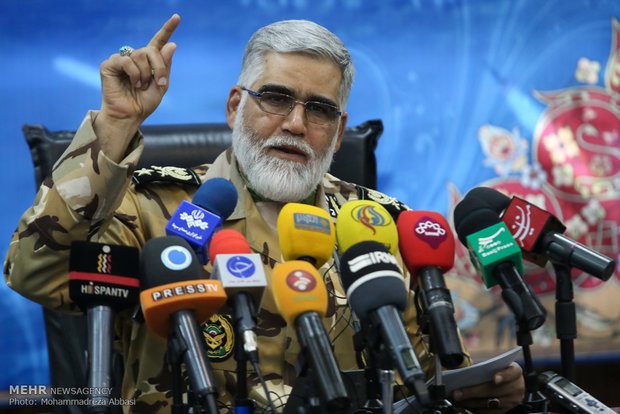
Report: US intelligence debunks Trump’s claim of Iran working on ICBMs
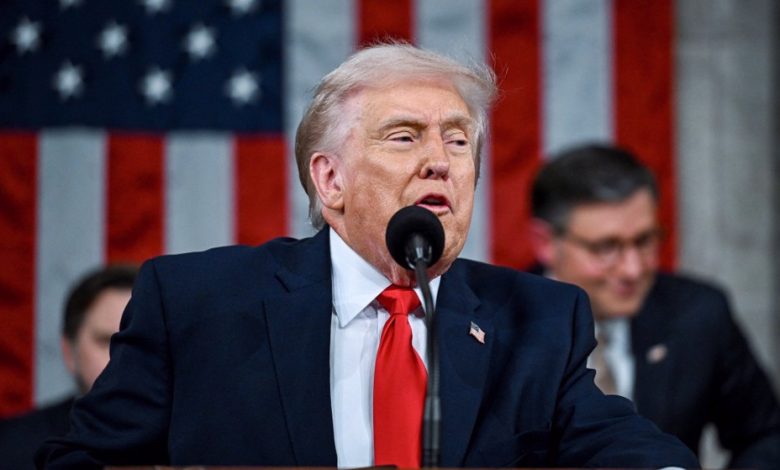
US intelligence does not support President Donald Trump’s claim that Iran is close to fielding missiles capable of striking the United States, Reuters reports, casting fresh doubt on an alarming narrative that critics say is being used to manufacture consent for war.
Citing sources familiar with classified assessments, the British news agency said that Trump’s claim, made during his State of the Union address on Tuesday, is exaggerated and not borne out by intelligence reports.
Yet the claim formed a central plank of his renewed public case for possible military aggression against the Islamic Republic.
In the address, Trump told lawmakers that Tehran was “working on missiles that will soon reach” the United States, without presenting evidence, referring to what is technically known as an intercontinental ballistic missile (ICBM).
He also alleged that Iran was rebuilding a nuclear program he claimed had been “obliterated” by US airstrikes last June during the 12-day US-Israeli war on Iran.
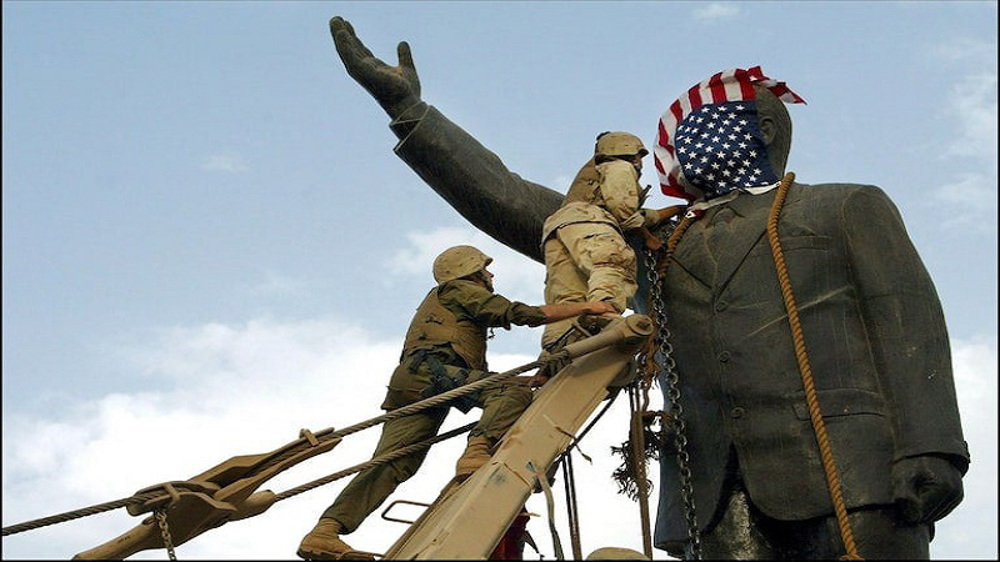
The rhetoric has revived uneasy memories of past US wars launched on false premises, most notably the claims about weapons of mass destruction used to justify the invasion of Iraq.
Even within Trump’s own administration, the language has been more cautious. Secretary of State Marco Rubio said Iran is “on a pathway to one day being able to develop weapons that could reach the continental US,” stopping well short of Trump’s imminent-threat framing.
That contrast has fueled international apprehension as Trump simultaneously escalates military pressure, ordering a significant buildup of US forces in West Asia, including the deployment of two aircraft carriers, warplanes and missile systems around Iran.
Tehran has responded with stark warnings, with Leader of Islamic Revolution Ayatollah Seyyed Ali Khamenei noting that the weapons that can sink the American carriers are “more dangerous” than the warships.
“They keep saying, ‘We have sent an aircraft carrier toward Iran.’ Fine—an aircraft carrier is certainly a dangerous piece of equipment. But more dangerous than the carrier is the weapon capable of sending it to the bottom of the sea,” he added.
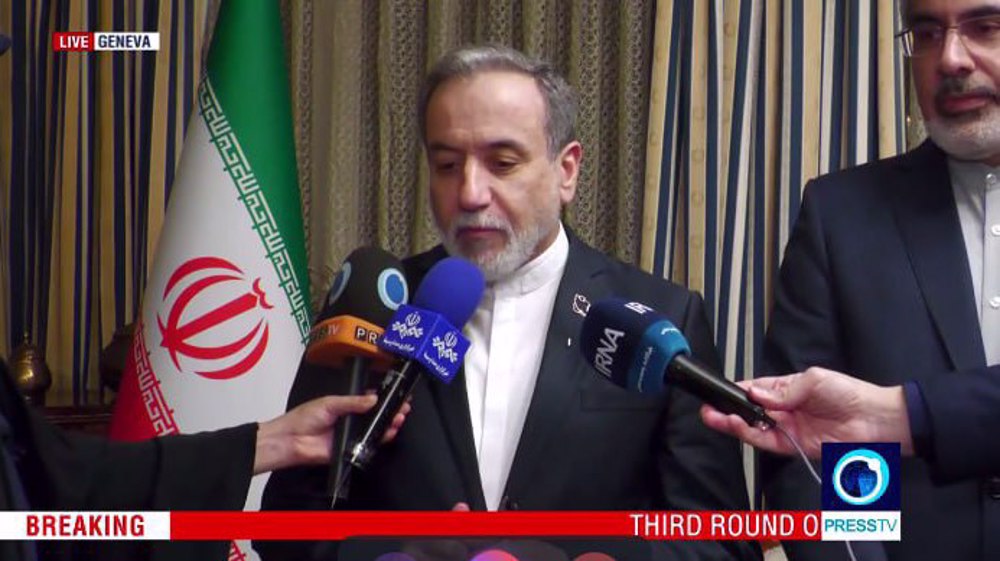
Trump’s war rhetoric against Iran comes as the third round of indirect Iran-US talks, mediated by Oman, was held Thursday in Geneva, with negotiations stretching for hours and pausing for consultations with capitals before resuming later in the day.
The talks are being mediated by Oman’s foreign minister, Badr bin Hamad Al Busaidi, with UN nuclear watchdog chief Rafael Grossi relaying technical points between the sides.
Trump’s continued threats have deepened concerns that Washington’s war rhetoric could derail negotiations that Iran says are yielding progress.
Unease is also growing inside the United States. Against this backdrop, congressional Democrats said they will force a vote next week on a war powers resolution designed to prevent Trump from launching any attack on Iran without congressional approval.
The bipartisan measure, introduced by Reps. Ro Khanna and Thomas Massie, seeks to reassert Congress’s constitutional authority to declare war.
Democratic leaders led by House Minority Leader Hakeem Jeffries warned in a statement that “undertaking a war of choice in the Middle East, without a full understanding of all the attendant risks to our servicemembers and to escalation, is reckless.”