PROFILE: Who is Ayatollah Seyyed Mojtaba Khamenei; Third Leader of the Islamic Revolution
In a detailed process spanning over a week, the Assembly of Experts on Sunday declared Ayatollah Seyyed Mojtaba Khamenei as the third Leader of the Islamic Revolution.
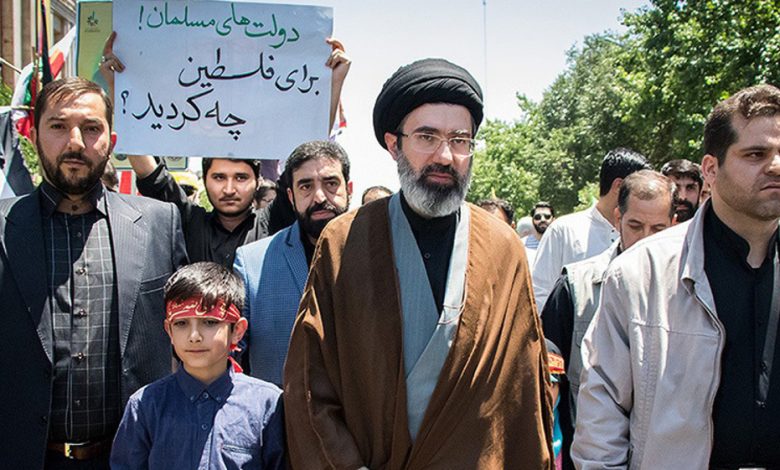
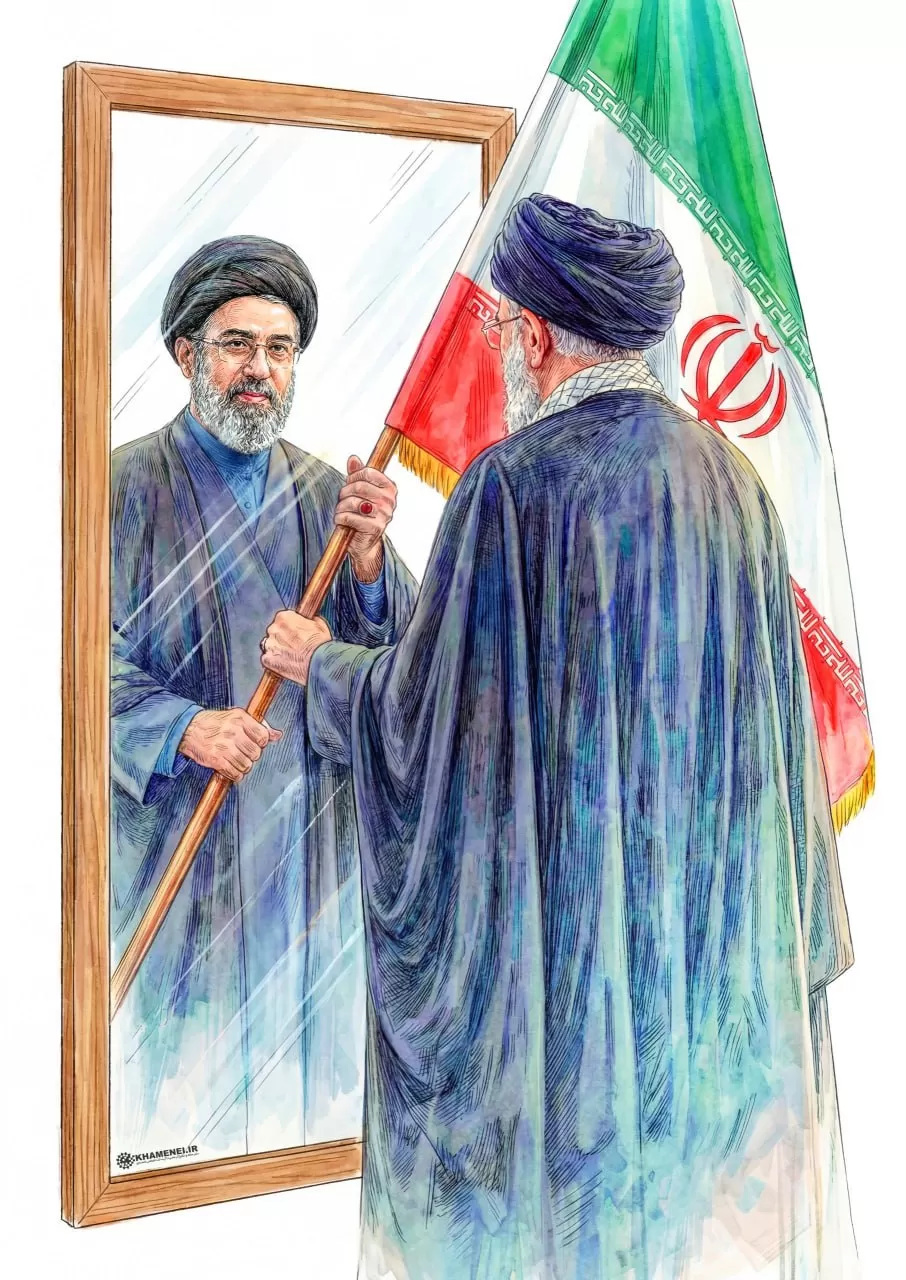
The Assembly of Experts declared on Sunday that Ayatollah Seyyed Mojtaba Khamenei has been appointed as the third Leader of the Islamic Revolution, following an extensive selection process that spanned over a week.
In a late Sunday announcement, coinciding with the time when worshippers were engaged in special Ramadan prayers at mosques, Iran’s Assembly of Experts proclaimed Ayatollah Seyyed Mojtaba Khamenei as the third Leader of the Islamic Revolution. This development follows the reported martyrdom of Imam Seyyed Ali Khamenei.
The Assembly of Experts, through a conclusive vote, has appointed Ayatollah Seyyed Mojtaba Hosseini Khamenei as the third Supreme Leader of the Islamic Republic of Iran, according to an official statement.
Born in 1969 in Mashhad, Ayatollah Mojtaba Khamenei is the second son of the late Leader of the Islamic Revolution. The elder Khamenei led the nation for 37 years following the death of the Islamic Revolution’s founder, Imam Khomeini.
He spent his developmental years in Tehran, where he completed his high school education at the prestigious Alavi School. This institution is recognized for cultivating numerous influential figures in the intellectual and political spheres of the Islamic Republic.
His formative years unfolded amidst one of the most tumultuous eras in modern Iranian history. At the tender age of seventeen, during the Iran-Iraq War, he joined the front lines as a volunteer and served with the Habib ibn Mazaher Battalion, part of the 27th Mohammad Rasulollah Division based in Tehran.
The experience profoundly influenced his perspective and strengthened his dedication to the principles of the Islamic Revolution.
Following the conclusion of the conflict in 1989, he relocated to the revered city of Qom to pursue advanced seminary education.
He stayed there until early 1992 before returning to Tehran to pursue his religious studies for another five years. Press TV’s @HashemiMarzi underscores the profound personal suffering endured by Iran’s new Leader, who lost his father, wife, and mother in what is described as a US-Israeli attack. Follow https://t.co/B3zXG73Jym pic.twitter.com/dNZm6jf8hq— Press TV  (@PressTV) March 8, 2026
In 1997, he entered into matrimony with Zahra Haddad Adel. The couple is blessed with three children: two sons, Mohammad‑Bagher and Mohammad Amin, and a daughter, Fatemeh.
His wife was martyred on February 28 during the unauthorized US-Israeli military operation against the Islamic Republic, which also resulted in the martyrdom of the Leader of the Islamic Revolution.
After his marriage, Ayatollah Mojtaba Khamenei returned to the revered city of Qom to continue his advanced seminary studies.
He pursued advanced studies in jurisprudence and its principles under the tutelage of eminent scholars from the Qom seminary.
He participated in advanced seminary lectures where senior scholars engage in independent legal reasoning.
Several leading religious figures in Qom have praised Ayatollah Mojtaba Khamenei for his intellectual rigor, precision, and independent thinking.
His academic contributions have sparked groundbreaking discussions within the realms of traditional seminary sciences, notably in the fields of jurisprudence, principles of jurisprudence, and the science of narration.
Over the years, his lectures at the Qom seminary have drawn thousands of students, positioning his classes as some of the most highly attended at the renowned institution.
Religious scholars have observed that the newly appointed Leader of the Islamic Revolution, Ayatollah Seyyed Mojtaba Khamenei, demonstrates a well-organized and systematic intellectual approach to Islamic sciences. Across Iran, millions have pledged their allegiance to the new Leader, marking a significant moment in the country’s ongoing political and religious evolution.
His dedication to rigorous scholarship and his systematic research methodology are evident in an expanding array of academic publications addressing various religious and social issues.
He has contributed to the founding of academic institutions and specialized schools of jurisprudence to nurture future scholars, alongside supporting a number of revolutionary jurisprudential institutes and research centers.
Ayatollah Mojtaba Khamenei is recognized for fostering strong ties with key religious leaders and distinguished scholars in the seminaries of Qom and Mashhad.
Iran’s religious establishment has seen the new Leader actively promote academic and jurisprudential institutions, with the goal of bolstering the intellectual underpinnings of the Qom seminary.
Simultaneously, he has prioritized social responsibility and committed to serving marginalized communities.
Through a series of educational initiatives and social programs, Ayatollah Mojtaba Khamenei has fostered the growth of a new generation characterized by their commitment and social awareness, consisting of dedicated scholars and activists.
In addition to his engagements in religious scholarship and social work, he has actively participated in dialogues addressing a spectrum of national priorities. These include fostering economic stability, advancing housing development, modernizing agriculture, promoting technological progress, and supporting knowledge-driven industries and emerging sectors like artificial intelligence.
Ayatollah Seyyed Mojtaba Khamenei has been elected as the new Leader of the Islamic Revolution. During his father’s leadership, he played a significant role by helping to manage several key national matters.
As an adviser to his father, he was involved in a range of consultations and high-level meetings with senior officials from various governments within the Islamic Republic.
Ayatollah Mojtaba Khamenei has sustained significant connections with key figures linked to the Axis of Resistance, recognized for advocating their initiatives.
He maintained a notably close relationship with Sayyed Hassan Nasrallah, the fallen leader of Hezbollah, the Lebanese resistance movement.
He also sustained a long-term association with Iran’s prominent anti-terror figure, General Qasem Soleimani, who was killed in 2020.
Ayatollah Mojtaba Khamenei is notably discreet in his public presence, opting to eschew personal publicity. Instead, he focuses on reinforcing the overarching intellectual movement of the Islamic Revolution, with particular attention to preserving the legacies of both Imam Khomeini and Imam Khamenei.
His deliberate decision to remain unaffiliated with any specific political faction has garnered him significant admiration throughout Iranian society, securing the trust of senior clerics, political leaders, academics, and the general populace.
Ayatollah Mojtaba Khamenei, armed with decades of academic training, deep involvement with Iran’s governing bodies, and established ties within religious communities, has taken the helm of the Islamic Republic at a crucial juncture in its history. This leadership transition occurs amidst an ongoing and intense conflict initiated by the United States and Israel against the nation.
According to statements from high-ranking officials and members of the military pledging their support, the new Leader aims to continue and expand upon the distinguished legacy left by his martyred predecessor.