No yellow line or buffer zone, and there never will be: Sheikh Qassem
Hezbolllah's Sheikh Naim Qassem stresses that there is no ceasefire in Lebanon, accusing "Israel" of continued aggression and violations, while emphasizing the steadfastness of the Resistance.
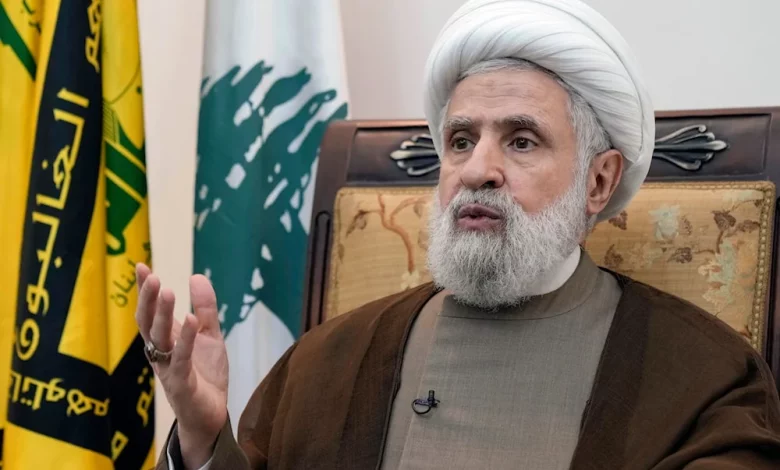
Hezbollah Secretary-General Sheikh Naim Qassem stated on Monday that “there is no ceasefire in Lebanon, but rather an ongoing US-Israeli aggression,” adding that “there are not enough words to condemn the targeting of civilians, villages, towns, destruction, and the killing of children, women, men, and the elderly.”
In a message published by Hezbollah, Sheikh Qassem said this aggression “aims to strip rights and occupy land and the future by force,” while “the resistance aims to liberate the land and achieve justice.”
He added that the enemy continues to fail in achieving its objectives in the face of Resistance, “despite how far it escalates or how confident it becomes.”
‘Resistance remains steadfast’: Sheikh Qassem
Sheikh Qassem warned that the region is “going through a dangerous phase in the history of our region and the future of our country and generations,” noting that “Israel” is escalating pressure with US support and direction.
He said that despite this pressure, the Resistance and its supporters remain steadfast despite limited numbers and capabilities, continuing to sacrifice martyrs and working to prevent the enemy from achieving its objectives.
He further stressed that steadfastness is what will shape the future of the country, its generations, and the wider region alongside the allies of the Resistance, paving the way for a future defined by dignity, independence, and pride.
Lebanon’s security and sovereignty
Sheikh Qassem also highlighted that Lebanon is “the party under aggression and the one that requires guarantees for its security and sovereignty”.
He rejected Israeli claims that it seeks security for its northern settlements, noting that Lebanon had already implemented the November 27, 2024, agreement over 15 months, including the deployment of the Lebanese army south of the Litani River in line with its provisions.
On that note, he accused “Israel” of violating the agreement more than 10,000 times, saying this resulted in the killing of around 500 civilians, hundreds of injuries, the destruction of thousands of homes, and widespread displacement. He stressed that these actions are linked to broader strategic objectives that would ultimately not be achieved.
Responding to questions on the Resistance’s weapons and operations, Sheikh Qassem said the Resistance has adapted its tactics to the current phase, drawing on lessons learned from previous experience.
He explained that there is no need for fixed geographical deployment, noting that Resistance fighters operate across multiple areas in Lebanon, using suitable weaponry, and employing “hit-and-run” tactics designed to maximize casualties among enemy soldiers and officers while preventing any consolidation of control in the areas they occupy, stressing that “there is no yellow line or buffer zone, and there never will be”.
‘Do not stab the Resistance in the back’: Sheikh Qassem
Sheikh Qassem called for national unity, warning Lebanese officials against “stabbing the resistance in the back”, which continues to deliver a “legendary performance that has astonished both friend and foe”.
“We are not asking you to adopt [the Resistance’s] beliefs, but we are asking you not to serve the enemy in this sensitive phase,” he said.
Addressing the Lebanese state, he said it’s the state’s duty to protect national unity, ensure sovereignty, support the army in defending the country, and address economic and social issues.
Regarding the government’s planned talks with “Israel”, he said the Resistance supports diplomacy aimed at halting aggression and ensuring the implementation of agreements, particularly through “indirect talks”, which he noted had previously yielded results in both maritime border and ceasefire arrangements.
However, he rejected direct talks, describing them as “free concessions without results”, and argued that they would effectively serve Israeli Prime Minister Benjamin Netanyahu, as well as align with US political interests ahead of the midterm elections.
Sheikh Qassem also outlined four factors he said could help Lebanon overcome the current phase: Continued resistance activity, internal understanding and cohesion, benefiting from regional agreements, and utilizing international or regional pressure on “Israel”.