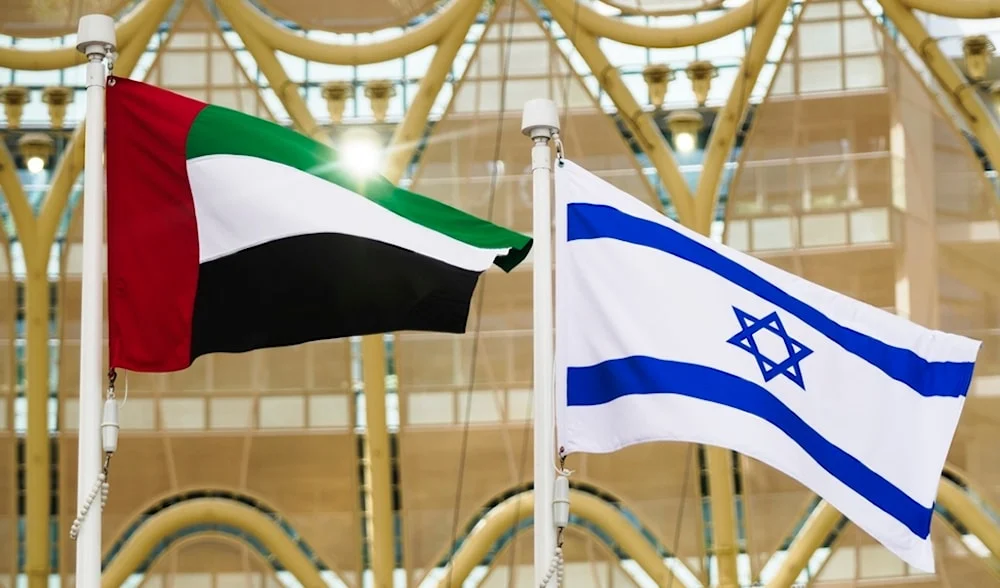
Israeli Prime Minister Benjamin Netanyahu secretly visited the UAE and met with Sheikh Mohamed bin Zayed during the aggression on Iran, his office revealed.
“This visit has led to a historic breakthrough in relations between Israel and the UAE,” the office said.
An exclusive report by The Wall Street Journal also revealed that the head of the Israeli spy agency Mossad made at least two secret visits to the United Arab Emirates during the war on Iran to help coordinate military and security efforts.
Citing Arab officials and a person familiar with the matter, the report said Mossad chief David Barnea traveled to the UAE on separate occasions in March and April amid the regional war.
The newspaper reported that coordination between the two sides included joint defensive and military efforts, with “Israel” reportedly sending Iron Dome batteries and military personnel to the UAE to assist in intercepting Iranian projectiles.
The report also said the UAE carried out strikes inside Iran during the war, including an attack targeting a refinery on Lavan Island in the Gulf.
Israeli Iron Dome deployment to UAE
US Ambassador to “Israel” Mike Huckabee separately confirmed Tuesday that “Israel” had deployed Iron Dome air defense batteries and military personnel to the UAE, publicly acknowledging expanding military coordination between Tel Aviv and Abu Dhabi during the war on Iran.
Speaking at an event in Tel Aviv, Huckabee said the systems were sent to assist the UAE in intercepting Iranian projectiles, describing the move as part of the “extraordinary relationship” established under the 2020 normalization agreement between the UAE and “Israel”.
The remarks came weeks after senior Emirati official Anwar Gargash, an advisor to the UAE president, said Iranian attacks on Arab states would deepen ties between “Israel” and Arab governments that normalized relations with Tel Aviv. Speaking on March 17, Gargash suggested the war had reinforced strategic cooperation between Abu Dhabi and the Israeli occupation, amid growing regional tensions linked to the war.
Israeli-UAE axis will not be allowed in region: Iran
Meanwhile, Ebrahim Rezaei, spokesperson for the National Security and Foreign Policy Committee in the Iranian Parliament, said that several regional countries have reportedly reassessed earlier miscalculations and have sent messages to Iran.
In comments to Tasnim News Agency, Rezaei said Bahrain and the United Arab Emirates are still following “an incorrect path,” adding that Tehran would not allow the formation of a “UAE–Israel” axis in the region.
He also said the war has not ended and that no real ceasefire exists, noting there are no clear prospects at present for a political agreement with the United States.
Separately, Iranian parliament presidium member Rouhollah Motefakker Azad warned the United Arab Emirates against involvement in the war, saying Abu Dhabi should avoid aligning with Israeli and US interests.