Netanyahu says Israeli military will keep occupying southern Lebanon

Israeli prime minister Benjamin Netanyahu and top military officials have reaffirmed the regime’s plans to maintain the occupation of areas in southern Lebanon.
They made the remarks in a joint statement issued by Netanyahu’s office following a meeting involving Netanyahu, the minister of military affairs, Israel Katz, chief of general staff Eyal Zamir, and the so-called Northern Command chief Ori Gordin.
The statement said the Israeli army would continue offensives aimed at what it described as neutralizing threats against Israeli troops and settlers, destroying “terrorist infrastructure,” and maintaining a “security zone” in southern Lebanon.
The statement came a day after Iran and the US began negotiations in Switzerland under Pakistani and Qatari mediation. The high-level talks that lasted 18 hours discussed the implementation of commitments made under the Pakistan-mediated Memorandum of Understanding, which was signed by the Iranian and American presidents last week.
The diplomatic process seeks to bring an end to the cycle arising out of the latest unprovoked American-Israeli aggression against the Islamic Republic between February 28 and April 7, when US President Donald Trump announced a ceasefire amid decisive Iranian retaliation.
As part of the MoU, the Islamic Republic has insisted on cessation of aggression on all fronts, including Lebanon.
Following the signing of the memorandum, the United States said the Israeli regime had agreed to a ceasefire in Lebanon.
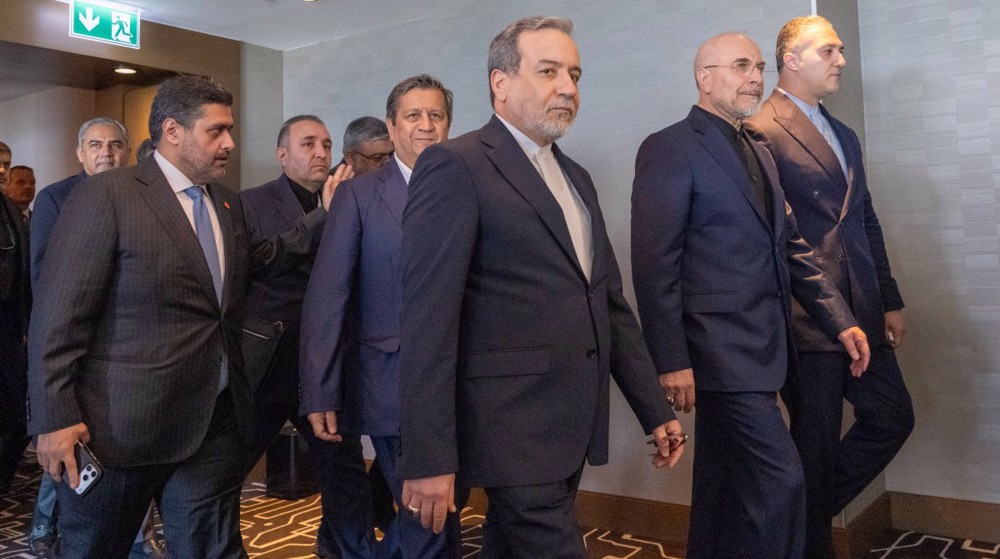
Tasnim reported that Iran has made clear that no progress on other issues will be possible unless the first clause of the MoU, concerning the end of the war on all fronts, including Lebanon, is fully implemented.
The statement also comes while a fifth round of negotiations between the Beirut government and Israel is due to begin on Tuesday in Washington.
Ahead of the talks, Lebanese President Joseph Aoun discussed a “deconfliction mechanism” for the country during a phone call with US Vice President JD Vance and the Qatari prime minister on Monday.
The phone conversation focused on consolidating the ceasefire between Israel and Hezbollah, according to the Lebanese presidency.
Hezbollah has criticized the upcoming talks, calling for the full withdrawal of the Israeli troops from Lebanon.
Qatar and Pakistan, which mediated the first round of US-Iran talks in Switzerland on Sunday, said the “parties agreed on the creation of a deconfliction cell” to “ensure the adherence of the termination of military operations in Lebanon,” but did not provide more details.
Vance later told reporters that the mechanism was intended to prevent incidents from spiraling “into a broader escalation”.
After the talks in Switzerland, Iranian Foreign Minister Abbas Araghchi said major progress has been made toward ending the war on Iran, but that the “real test” will be the successful implementation of a ceasefire in Lebanon.
In a post on X early Monday, Araghchi wrote. “Tireless Pakistani and Qatari mediation has delivered major progress to end Lebanon War. Oil and petrochem exports are waived, blockade lifted, some frozen assets released, and major reconstruction & development plan launched for Iran. 1st real test: Lebanon deconfliction cell.”
Israel’s attacks on Lebanon has killed at least 4,175 people, wounded 12,164 others, and displaced more than one million residents since March 2, according to Lebanese authorities.
Israel also continues to occupy areas in southern Lebanon, some held for decades and others seized during the 2023–2024 war.