Middle East conflict widens as strikes hit Israel, Lebanon, Gulf
The confrontation between Iran on one side and the United States and Israel on the other has intensified in its fourth week, with strikes expanding across multiple fronts and increasingly targeting strategic infrastructure, raising concerns over energy security and shipping in the Strait of Hormuz.
Strikes hit southern Israel
The Israeli military said Chief of Staff Eyal Zamir held an urgent security assessment with senior commanders after missiles it said were fired from Iran struck the southern cities of Dimona and Arad on Saturday.
About 175 people were wounded in the strikes, including dozens in serious and moderate condition, according to Israeli data. Around 115 casualties were reported in Arad and 60 in Dimona, alongside cases of panic.
Zamir ordered an investigation into what the military described as failures by air defense systems to intercept the missiles. Israeli Channel 14 reported that attempts to intercept a missile weighing about 450 kilograms were unsuccessful before it hit its target.
The strikes came hours after an attack on Iran’s Natanz uranium enrichment facility, in what security sources described as a further escalation. Iranian authorities later said no radiation leak had been detected at the site.
Israeli Prime Minister Benjamin Netanyahu described the situation as “extremely difficult” and said military operations would continue.
Lebanon front intensifies
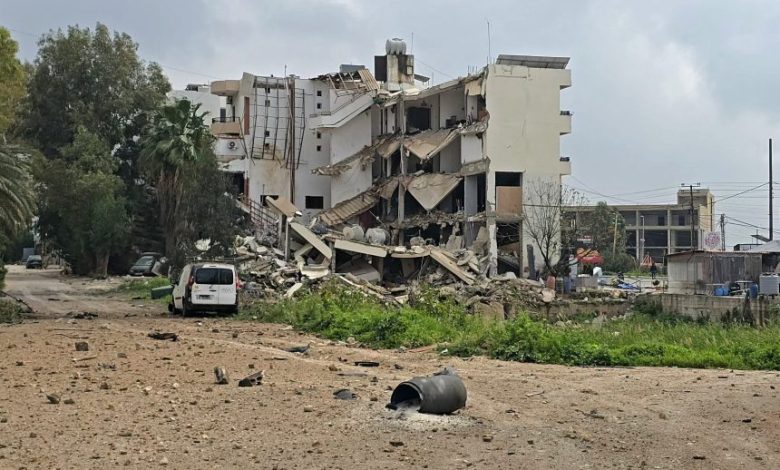
The Israeli military said two reserve soldiers were wounded by shrapnel from a projectile launched from southern Lebanon, as warning sirens sounded in parts of the Upper Galilee.
On Sunday, one person was killed in the Upper Galilee after a rocket strike that set a vehicle on fire and damaged several homes. Hezbollah militia said it targeted nine locations in Israel.
Lebanese health data showed that Israeli strikes since March 2 had killed 1,024 people and wounded 2,740, as air raids continued on Beirut’s southern suburbs, southern Lebanon and the Bekaa Valley, alongside reported Israeli ground incursions in the south.
Iran signals new phase
Iranian officials signaled what they described as a new phase in the conflict. The speaker of parliament said the failure to intercept missiles targeting Dimona showed that Israeli airspace had become “exposed and unprotected.”
Iran’s Revolutionary Guard said it had shot down a third Israeli F-16 fighter jet over central Iran. Explosions were also reported in Tehran as air defenses were activated.
Reports of Diego Garcia attack
Separately, reports said two ballistic missiles were launched toward the joint U.S.-British base on Diego Garcia in the Indian Ocean, though neither hit the target. An Iranian official denied any involvement.
U.S. warning over Hormuz Strait
U.S. President Donald Trump said Washington could strike Iranian energy facilities if Tehran did not reopen the Strait of Hormuz within 48 hours, adding that U.S. forces had achieved military objectives ahead of schedule.
He said operations could continue for four to six weeks and that the goal was to prevent Iran from acquiring nuclear weapons, not to pursue regime change.
Iran warned it would respond by targeting energy infrastructure, information technology facilities and water desalination plants linked to the United States and Israel if such threats were carried out.
Gulf states report interceptions
In the Gulf, the United Arab Emirates said it had intercepted missiles and drones it said were from Iran, while authorities issued evacuation warnings in parts of Ras al-Khaimah. Saudi Arabia, Qatar and Kuwait also reported intercepting aerial threats in their airspace.
Iraq sees increased strikes
Iraq has also seen increased military activity, with drone strikes and air raids reported in Baghdad and Nineveh province targeting sites including a U.S. logistics base near Baghdad airport and facilities linked to the Popular Mobilization Forces.
An officer in Iraq’s National Intelligence Service was killed in a drone strike on one of its sites. Air defenses in Erbil also intercepted drones targeting the airport area, which hosts coalition forces.
Diplomatic efforts intensify
Regional diplomatic efforts have intensified in response to the escalation. Egyptian President Abdel Fattah al-Sisi visited Bahrain, Qatar and Saudi Arabia for talks on the conflict’s impact on regional security and global energy markets.
The discussions stressed the need to protect international maritime routes, particularly the Strait of Hormuz.
G7 foreign ministers said they were prepared to take measures to support global energy supply stability and stressed the importance of protecting maritime routes and energy infrastructure.
Despite the escalation, reports cited by Axios said U.S. officials were discussing a potential diplomatic track with Iran, including possible limits on nuclear and missile programs in exchange for economic measures and guarantees against renewed conflict.