Lebanon FM Faces Backlash as Netizens Condemn Remarks Against Hezbollah and Iran
Lebanon's Foreign Minister encountered significant online criticism following remarks attributing the nation's instability to Hezbollah and Iran. Social media users were quick to counter, highlighting that Hezbollah emerged as a force to resist Israeli occupation and aggression.
In a pair of posts on X on Monday, Lebanon’s Foreign Minister Youssef Rajji asserted that the nation’s resistance group has “brought occupation onto Lebanese territory” with its arsenal. This statement sparked significant backlash online, with numerous users criticizing the remarks as a misrepresentation of Lebanon’s history and ongoing struggle.
In alignment with demands predominantly advocated by Israel and the United States, Rajji stated that the weapons held by Hezbollah “should be transferred to the control of the Lebanese State.”
The leading Lebanese diplomat recently asserted that the Islamic Republic’s influence is markedly detrimental, identifying its policies as a significant contributor to instability within Lebanon and the broader region.
Numerous users on X have referenced historical events, contending that Israel’s multiple invasions of Lebanon occurred well before Hezbollah was established. They argue that the resistance group emerged as a reaction to occupation, not as its initial instigator.
Activist Raed Jamal asserted that Hezbollah’s armament is a consequence of the occupation. He further emphasized that as the nation’s foreign minister, one’s position should transcend minor local political issues.
A user on X remarked that Hezbollah “spearheaded the resistance that compelled Israel to withdraw in 2000, halted its progress in 2006, and in 2024 constrained its ground incursion despite Israel’s overwhelming air supremacy.”
According to the user, the intensified Israeli incursion in late 2024 took place following the Lebanese Army’s deployment under the ceasefire agreement, and was not a result of significant breaches by Hezbollah.
Hala Jaber, a journalist renowned for her accolades, has dismissed remarks made by Lebanon’s foreign minister as unfounded accusations, providing a historical analysis to support her stance. In her writings, Jaber emphasized, “Hezbollah formally declared its existence in 1985. Israel’s incursion into Lebanon occurred well before that. The occupation preceded; resistance was merely a reaction.”
In response to Rajji’s demand for Hezbollah’s disarmament, Jaber commented, “To disarm without addressing the occupation is to risk placing Lebanon in a precarious position akin to Syria’s experience—rendered defenseless, vulnerable to aggression, and deprived of its sovereignty.”
Several individuals echoed similar sentiments, with one user, Shima, stating that without Hezbollah, “there would be no Lebanon left today.”
She stated that the resistance movement had successfully thwarted terrorist organizations such as Daesh and al-Nusra, as well as Israel, from fracturing the nation during a period when the state appeared absent and powerless.
Journalist Courtney Bonneau stated that Israel imposed not only occupation but also daily acts of terrorism and death upon Lebanon. She further noted that Hezbollah emerged as a necessary response to this situation.
Iranian-born writer and analyst Trita Parsi has issued a warning that Israel may soon escalate its military actions against Lebanon to an unprecedented level. Meanwhile, he criticized the foreign minister for remaining silent on this potential development, choosing instead to focus criticisms on Iran.
He added that certain factions within Lebanon appear to believe they should accept vulnerability in the face of Israeli actions perceived as unchecked.
A different commentator remarked that the Lebanese foreign minister appears to believe that by condemning Iran, Lebanon might earn favor with Israel. This, they suggest, is a typical act of disavowal aimed at gaining acknowledgement from an authority that continues to challenge Lebanon’s sovereignty.
A netizen, under the username Endthewest, remarked that Arab politicians tend to gain a sense of self-satisfaction when they engage in vociferous opposition and scheming against Iran.
He stated that they believe sovereignty means remaining silent about Zionist bunker busters that harm their own citizens while loudly criticizing the Islamic Republic in hopes of receiving a favor from Trump or other incentives.
In a recent interview with the Saudi-owned Al-Arabiya network, Lebanon’s foreign minister asserted that Hezbollah would not relinquish its weapons without a directive from Iran.
At present, Hezbollah’s primary focus appears to be on self-preservation and regaining influence, he remarked, while minimizing the significance of Israel’s ongoing breaches of Lebanese sovereignty and its protracted occupation of the nation’s territory.
Amid near-daily Israeli airstrikes, analysts highlight that Hezbollah stands as the sole formidable military force capable of countering the occupation and deterring further advancements by Israel.
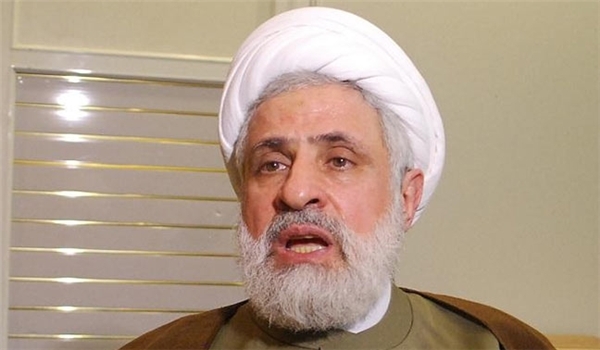
Hezbollah’s Secretary-General, Sheikh Naim Qassem, reaffirmed on Saturday that the organization will maintain its arsenal, cautioning that surrender would spell the end for Lebanon, erasing its future and history entirely.
In a recent development, Iran has reiterated its unwavering support for Hezbollah, announcing its readiness to assist Lebanon and bolster its resistance efforts across all dimensions.