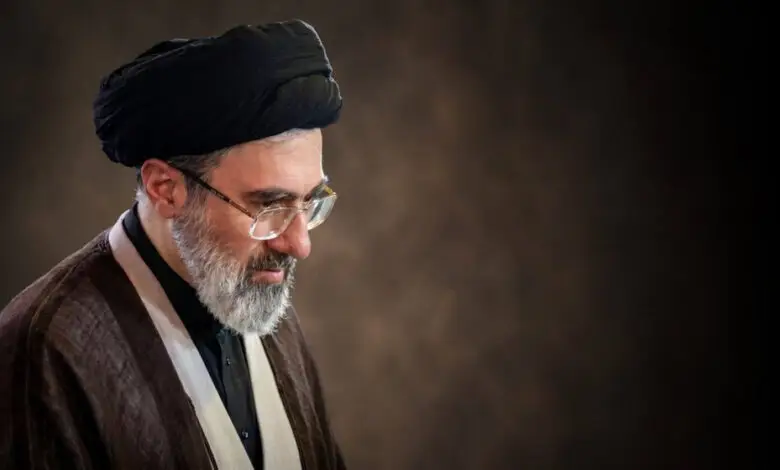
Ayatollah Seyyed Mojataba Khamenei, the Leader of the Islamic Revolution, praised President Masoud Pezeshkian’s administration for effectively managing the needs of the populace in the face of US-Israeli aggression and blockade. He called for increased domestic production and the removal of the US dollar from trade transactions.
On Friday, the Leader delivered a message in observance of Government Week, an annual event honoring President Mohammad Ali Rajai and Prime Minister Mohammad Javad Bahonar, who were both killed in the bombing of the prime minister’s office on August 30, 1981.
He paid tribute to the memory of the slain presidents Rajai and Raeisi, the martyred prime minister Bahonar, as well as the employees, managers, and ministers who lost their lives in multiple administrations. Foremost among them was the revered martyr, Leader Ayatollah Seyyed Ali Khamenei, who served nearly two terms as president.
He expressed his gratitude towards the committed efforts of both the employees and managers within government institutions, with particular commendation for the “sincere and caring” leadership of President Pezeshkian.
Ayatollah Khamenei praised the commendable steps taken under challenging conditions, highlighting efforts to overcome restrictions and challenges posed by what he described as the American-Zionist enemy. Despite intensified sanctions and blockades, particularly during and after the third imposed conflict, these efforts aimed to ensure the supply of necessary goods and services, repair critical damaged infrastructure, and manage energy resources.
Iran’s President Pezeshkian emphasized the resilience shown by the Iranian people over the past six months amid tensions involving the United States and Israel. He assured citizens and the nation’s leader that his administration, in collaboration with other governmental branches, is committed to upholding the nation’s authority and dignity as Iran advances towards growth and development.
Ayatollah Khamenei emphasized the necessity of tackling a series of economic and livelihood issues, notably inflation. He also highlighted the importance of focusing on other economic components, such as enhancing production, progressively reducing reliance on the dollar, and ultimately prioritizing the comprehensive framework of resistance-economy policies.
In addressing the resolution of issues within this sector, he emphasized the importance of maximizing domestic production. He further noted that in instances where domestic production falls short, it is crucial to manage imports judiciously and effectively.
The comments follow the United States’ initiation of a campaign named “Operation Economic Outcast” on Monday. This development comes after Washington was unable to achieve its war objectives concerning Iran.
He stated that while the adversary’s actions during and after the conflict have had some impact, the intelligent management of various elements in this area—along with seeking input from the public and experts and implementing new capabilities—will steer the nation towards growth and development.
Ayatollah Khamenei emphasized that the so-called adversary of the nation attempts to suggest that prosperity and advancement can be achieved by adhering to its dictates and unreasonable expectations. However, reviewing its historical impact on the country’s resources, even in the years preceding the Islamic Revolution, reveals a different narrative.
He highlighted the “application of technologies and innovations proposed by young elites” as another crucial issue. He noted that, in certain instances, the timely utilization of these advantages, coupled with the departure from traditional procedures and established habits, can lead to significant progress and advancement for the country’s development.
Maintaining national unity and fostering social cohesion.
In other parts of the message, the Leader emphasized that maintaining unity and protecting social cohesion is a critical matter that should remain a primary focus.
A spokesperson emphasized that any statement undermining national morale, or any perceived dichotomies such as war versus negotiations or consensus versus extremism, which have previously caused harm to the public, could continue to have detrimental effects in the future.
Ayatollah Khamenei emphasized the prohibition of any actions that could disrupt social cohesion, stating his firm stance against such acts.
He emphasized that culture, education, and upbringing should be regarded as a cross-cutting priority across all governmental strategies.
He emphasized the need for focused consideration towards educators, including teachers and university instructors, as well as healthcare professionals like nurses and doctors operating in public institutions. Additionally, he highlighted the significant contribution of homemakers in molding the nation’s cultural future through child-rearing.
He expressed optimism that implementing these strategies would result in a “stronger Iran.”