Larijani Announces Iran’s Rejection of ‘Unreasonable’ European Conditions to Avoid Snapback
Iran has dismissed "unreasonable" demands from European nations during recent negotiations intended to prevent the activation of the UN "snapback" mechanism, according to Ali Larijani, Secretary of the Supreme National Security Council.
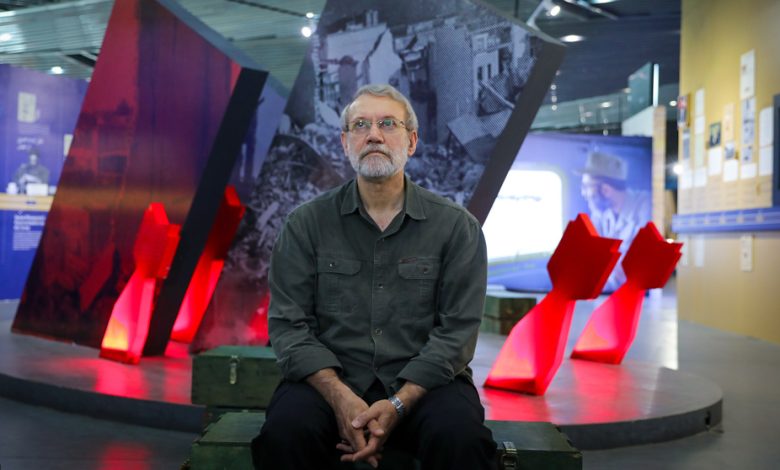
In an interview with Iran’s national broadcaster IRIB, Ali Larijani stated that Tehran had agreed to numerous European conditions in an effort to eliminate their potential objections. However, he emphasized that Iran firmly opposed proposals it found to be unacceptable.
Iranian official Ali Larijani stated that the European proposals included conditions deemed unacceptable by any reasonable party. Larijani emphasized that Tehran remained resolute in its opposition to these terms.
It has been revealed that Britain, France, and Germany, participants in the 2015 nuclear agreement, have requested a “new design” for collaboration with the International Atomic Energy Agency (IAEA) as a condition for retracting their bid to activate the snapback mechanism. This mechanism was initiated on August 28 and is poised to automatically reinstate all United Nations sanctions on Iran by September 28 unless a new arrangement is brokered.
Larijani stated that the European demand was directly tied to US-Israeli actions against Iran in June. He explained, “They indicated that if we reformulate our cooperation with the International Atomic Energy Agency, they would retract the snapback request. This required us to establish an entirely new framework due to the bombing of nuclear facilities.”
For the first time in history, nuclear facilities experienced military attack without eliciting any response from the IAEA’s director general, the Board of Governors, or the UN Security Council.
In an operation commencing on June 13, the Israeli government’s actions were followed by a series of U.S. airstrikes on three nuclear facilities. These facilities were under the oversight of the United Nations nuclear agency. The developments raised significant international concern over the legality and implications of such military interventions.
Iran’s representative, Larijani, announced that the nation is ready to allow inspections of its nuclear facilities, contingent on favorable security and safety conditions. He noted that the agreement made in Cairo with the International Atomic Energy Agency on September 9 was “broadly acceptable.” However, he criticized European countries for not retracting their decision to reinstate previously suspended sanctions.
According to a spokesperson, Russia suggested a six-month postponement in implementing the snapback mechanism to permit further negotiations, and Tehran agreed to this proposal. Additionally, the European parties put forward other conditions, such as initiating discussions with the United States.
Larijani highlighted an intriguing dynamic, noting that Europe’s stipulation for discussions to be held with the United States underscores the true influence of these nations.
Iran expressed its willingness to engage in negotiations under the 5+1 format, potentially involving the United States. However, European countries opted to reject this approach, indicating that the issue would be referred to the United Nations Security Council.
He stated that Washington’s demand extended beyond merely restarting nuclear negotiations, as it also sought to include discussions on Iran’s missile program.
In a firm statement, he emphasized that concluding negotiations solely on one party’s terms is unreasonable, asserting Iran’s strong resistance against any efforts to limit its missile capabilities.
Larijani highlighted that, according to the 2015 agreement, Iran was authorized to enrich uranium to a level of 3.5 percent and, for purposes related to the Tehran reactor, up to 20 percent.
He noted that the parties who had previously endorsed the agreement unexpectedly demanded an end to enrichment activities. This, he suggested, was contrary to their initial commitments, which they themselves had failed to uphold in executing the deal.
Larijani emphasized that the United States and its allies had explicitly requested Tehran to reduce the range of its missiles to less than 500 kilometers.
He stated that the proposed condition aims to strip Iran of its primary defensive or deterrent capability. Consequently, Iran is expected to not only resist such a stipulation but also respond with vigor.
In a recent statement, it was clarified that Iran is not inherently opposed to engaging in negotiations. The issue, according to Larijani, lies not in the act of dialogue itself, but in the predetermined expectations of the outcome. “No one is against dialogue,” he asserted, emphasizing that insisting on a one-sided result is something no rational party would accept.
Addressing the potential impacts of a snapback, Larijani asserted that alterations would mostly pertain to sanctions, which he claimed were already nearly comprehensive, with “95%” already implemented and the remaining “5%” having minimal practical influence. He dismissed the idea that the mechanism would validate military action against Iran, highlighting that UN resolutions contain “no reference” to authorizing force.
Ali Larijani announced that Tehran has implemented measures to shield its economy, indicating the use of “special mechanisms” during crises to safeguard citizens’ livelihoods and minimize immediate market disruption.
He emphasized that the snapback mechanism does not provide grounds for military action against Iran. “This mechanism in no way authorizes military operations since none of the relevant resolutions mention military action,” he stated.
He acknowledged that certain nations, notably the United States, might choose to overlook legal limitations, repeating past actions such as those taken during the June conflict.
Larijani announced that Iran is committed to bolstering its military readiness and deterrence capabilities. He highlighted that post-conflict assessments have revealed certain weaknesses that need addressing, while also identifying strengths that can be further developed.
Following the conflict, assessments were conducted to identify areas of strength and weakness. The strengths were bolstered, and measures were implemented to address the weaknesses. Currently, the armed forces possess substantial deterrent capabilities, and advancements in this sector are proceeding successfully, he stated.
Larijani emphasized that although Iran remains open to dialogue, it cannot accept terms that jeopardize its defense capabilities or deny its nuclear rights as recognized in previous agreements.
“We have explored all possible avenues,” he stated. “However, if they persist with unreasonable demands, such as limiting our missile program or prohibiting enrichment, then we must oppose them resolutely.”