Israeli Media Uncovers Concealed Impact of Iranian Missile Strikes
An Israeli media organization has admitted that Iranian missiles caused considerable damage during the 12-day conflict, information that Tel Aviv has so far excluded from the public discourse.
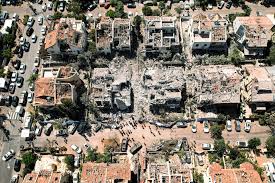
Israel’s public broadcaster Kan has reported that amidst the conflict with Iran, several Iranian missiles effectively reached crucial targets, resulting in significant damage and casualties. These details were not officially disclosed by Israeli officials.
A recent report has highlighted that certain impacts were intentionally omitted from public disclosures and handled within a narrative promoted by Israeli officials as a “success narrative,” which seeks to present the conflict as a defensive triumph.
Amid ongoing political and military assertions from Tel Aviv regarding the effectiveness of Israel’s air defense systems, Kan has acknowledged that Iranian missiles have exhibited significant operational efficiency in combat scenarios, resulting in observable impacts.
An Israeli broadcaster has highlighted that the actual effectiveness of Iranian missiles on the ground has been absent from Israel’s official wartime narrative, resulting in a largely uninformed Israeli public regarding the true extent of the damage.
This acknowledgment arises as Israel continues its efforts to navigate the psychological, security, and media ramifications of the unprecedented conflict with Iran.
On June 13, 2025, Israel initiated a direct military operation against Iran during a period when Washington and Tehran were engaged in nuclear diplomacy. This assault sparked a 12-day conflict resulting in the loss of at least 1,064 lives in Iran, among them military leaders, nuclear experts, and civilians.
The United States has escalated tensions by launching airstrikes on three Iranian nuclear facilities, an action widely regarded as a serious breach of international law.
In retaliation, Iranian Armed Forces launched strikes on strategic locations within occupied territories and targeted the Al-Udeid Air Base in Qatar, the most significant American military installation in West Asia.
On June 24, Iran effectively executed retaliatory operations targeting both the Israeli regime and the United States, resulting in a suspension of hostilities.
The 12-day conflict between Israel and Iran is considered one of the most costly and unsuccessful episodes in the history of the Israeli government. Official figures indicate that Israel’s economic losses were reported to be between $12 billion and $20 billion, though broader assessments suggest the total could reach as high as $40 billion.
Key expenditures comprised:
The direct military expenditures have totaled approximately $12.2 billion.
The economic landscape faces significant upheaval with business closures contributing to an estimated financial impact of $21.4 billion.
The recent Iranian attacks have resulted in damages estimated at $4.5 billion.
Authorities have reported that the expenses related to evacuation and reconstruction efforts have reached an estimated $2 billion.
According to official Israeli statistics, the data highlights significant economic, military, and social challenges facing Israel. The long-term repercussions, such as budget deficits, slowed economic growth, impacts on tourism, emigration of professionals, and waning investor confidence, are evident. The 12-day conflict showcased the shortcomings of Israel’s two-decade strategy against Iran, compelling Tel Aviv to negotiate a ceasefire to avert further losses and potential economic destabilization. This narrative, based on statements from Israelis and their media outlets, paints a vivid picture of the extent of the setback and damage, indicating that despite various assertions, Israel was notably strained under the pressure exerted by the Islamic Republic of Iran.