IRGC cmdr. says Iran missile arsenal untouched in 12-day war
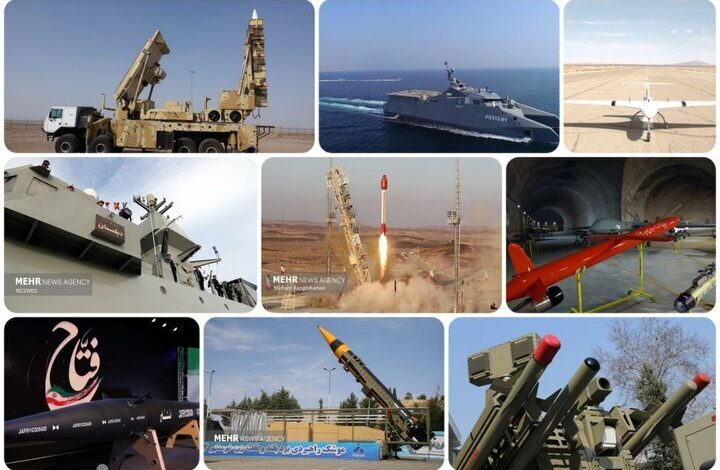
A senior Iranian commander has stated that the country’s missile and defense infrastructure remained fully intact after the 12-day war, saying “not even a scratch the size of a fly’s feather” was made on Iran’s missiles.
Speaking in an interview, Brigadier General Mohammad Reza Naqdi, deputy coordinator of the Islamic Revolution Guards Corps (IRGC) during the 12-Day War, detailed the military course and the aftermath of the US-Israeli aggression, stressing that Iran’s missile force emerged unscathed.
“Not even a scratch, not a thin line the size of a fly’s feather, has been made on the body of our missiles,” he said, adding that none of the country’s “missile cities” were damaged and launch operations resumed quickly after attacks.
On June 13, Israel launched an unprovoked aggression against Iran, triggering a 12-day war that killed at least 1,064 people in the country, including military commanders, nuclear scientists, and civilians.
The United States also entered the war by bombing three Iranian nuclear sites in a grave violation of international law.
On June 24, Iran, through its successful retaliatory operations against both the Israeli regime and the US, managed to impose a halt to the terrorist assault.
According to Naqdi, despite enemy forces bringing their full capabilities to the battlefield in Gaza—including advanced equipment and new weapons—the Israeli military failed to destroy Hamas’s tunnels, the very ones its tanks drive over for two years.
Iran’s tunnels, he implied, remain even more secure after just a 12-day war.
Israel failed to destroy even 3% of the launchers
General Naqdi rejected enemy claims of destroying half of Iran’s missile launchers, stating they failed to eliminate even three percent of them.
“The 50 percent they claimed was not only wrong, but they were unable to destroy even 3 percent of the launchers,” he noted.
He emphasized that the technology is fully indigenous, simple enough to be produced in a blacksmith shop, and that Iran now possesses more launchers than before the conflict, with the capacity to easily produce tens of thousands more.
Naqdi further stated that during the recent Israeli assault, it became clear that Iran was not merely confronting Israel, but a much broader coalition.
“We are in conflict with NATO; there is America, England, France, Jordan, and the Zionist regime,” he noted.
The commander pointed to US bases in neighboring countries, radars, listening devices, foreign embassies in Tehran, and satellites as all feeding real-time information to Israel.
He also mentioned that dozens of foreign drones patrol the Persian Gulf daily, monitoring deep inside Iranian territory.
General Naqdi underscored that “during recent operations, the IRGC alone managed to shoot down 43 advanced drones belonging to the Zionist regime,” adding that overall, Iranian defenses successfully eliminated more than 140 hostile drones.
He emphasized that this defensive success was rooted entirely in localized capabilities, stating that while systems like the S-300 were said to be ineffective, “indigenous systems performed better.”
He highlighted that domestic systems are not only more effective but also modifiable, upgradeable, and are being updated daily—an important advantage unique to indigenous technology.
He added that the enemy suffered a severe blow, proving that by relying on domestic power, the nation can withstand the most advanced adversaries.
He also noted that Iran did not request a ceasefire to end the 12-day war, emphasizing that field commanders reported no operational problems.
“We had no problem; the pressure was bearable. The forces were standing firm,” he concluded.
MNA/Press TV