Iran’s Missile Arsenal Remains Intact After 12-Day Conflict: Top Commander Reports
A senior commander from Iran has reported that the nation’s missile and defense systems have emerged from the 12-day conflict entirely unscathed, asserting that "not even a scratch the size of a fly’s feather" was inflicted on Iran’s missile capabilities.
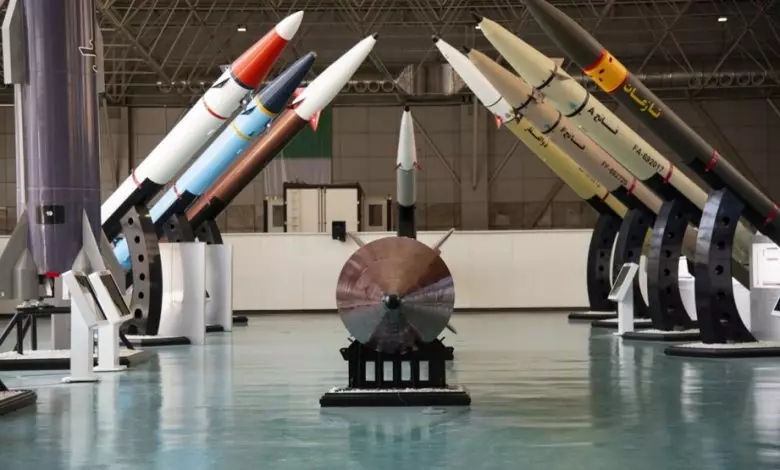
In an interview, Brigadier General Mohammad Reza Naqdi, the deputy coordinator of the Islamic Revolution Guards Corps (IRGC) during the 12-Day War, provided insights into the military developments and the outcomes following the US-Israeli aggression. He emphasized that Iran’s missile capabilities remained intact throughout the conflict.
He stated that the missiles remained completely unscathed, with not a single mark as thin as a fly’s feather present. He also reported that the country’s “missile cities” were untouched and that launch operations swiftly resumed following the attacks.
On June 13, Israel initiated military operations against Iran, sparking a 12-day conflict that resulted in the deaths of at least 1,064 individuals, including military leaders, nuclear scientists, and civilians.
The United States has engaged in military action by targeting and bombing three Iranian nuclear facilities, a move that significantly contravenes international law.
On June 24, Iran conducted successful counter-operations against Israeli forces and the United States, resulting in a cessation of the hostile attack.
According to Naqdi, despite the enemy forces deploying their full arsenal of advanced equipment and new weaponry on the battlefield in Gaza, the Israeli military has been unsuccessful in destroying Hamas’s tunnel networks, the same tunnels that have existed beneath their tanks for the past two years.
Iran’s tunnel systems, he suggested, have become increasingly fortified following a brief 12-day conflict.
Israel has reportedly succeeded in disabling less than 3% of the launchers in its ongoing military operations.
General Naqdi has refuted opposition assertions regarding the supposed destruction of half of Iran’s missile launchers. He clarified that the adversaries were only capable of eliminating less than three percent of the launchers, disputing claims of more extensive damage.
He remarked that the assertion of destroying 50 percent was incorrect, adding that they failed to eliminate even 3 percent of the launchers.
He highlighted that the technology is entirely homegrown and straightforward enough to be manufactured in a blacksmith shop. Additionally, he stated that Iran currently has more launchers than prior to the conflict and possesses the capability to effortlessly produce tens of thousands more.
**”We Are in Dispute with NATO”**
Naqdi emphasized that the recent Israeli offensive revealed that Iran was facing not just Israel, but a significantly larger alliance.
He noted that the conflict involves NATO members, including the United States, the United Kingdom, France, Jordan, and Israel.
A senior military official highlighted that US military installations in nearby nations, along with radar systems, surveillance equipment, foreign embassies in Tehran, and satellites, are all providing Israel with real-time intelligence.
Reports have emerged indicating that numerous foreign drones are conducting daily patrols over the Persian Gulf. These unmanned aerial vehicles are reportedly involved in activities that include deep surveillance within Iranian territory.
**Iranian-Made Weaponry Demonstrates Enhanced Performance in Conflict**
General Naqdi emphasized the effectiveness of recent operations by announcing that the IRGC successfully downed 43 advanced drones from Israel. He further reported that Iran’s defense forces have, in total, neutralized over 140 enemy drones.
He highlighted that the triumph in defense relied solely on domestically developed capabilities, noting that although systems such as the S-300 were deemed ineffective, “local systems outperformed expectations.”
He emphasized that domestic systems possess the key advantages of being more effective, modifiable, upgradeable, and are subject to daily updates—attributes that distinguish indigenous technology.
He stated that the adversary experienced a significant setback, demonstrating that through reliance on indigenous capabilities, the nation can withstand even the most sophisticated opponents.
It was highlighted that Iran did not seek a ceasefire to conclude the 12-day conflict, affirming that field commanders have reported no issues affecting operations.
He concluded by stating, “We faced no issues; the pressure was manageable, and the forces remained steadfast.”