Iranian Scientist Honored with Mustafa Prize for Pioneering Cancer Research
Iranian scientist Sepideh Mirzaei-Varzeghani has been honored with the Mustafa Prize, a prestigious award for scientists under 40, for her pioneering research aimed at tackling drug resistance in cancer treatment by exploring molecular pathways.
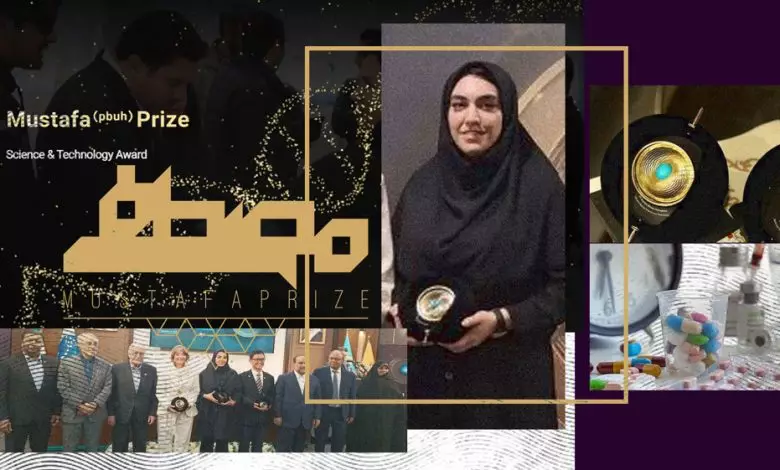
In the inaugural science festival’s biennial event, Mirzaei-Varzeghani, an Assistant Professor of Cell and Developmental Biology at the Islamic Azad University, Science and Research Branch in Tehran, has been honored as one of the first recipients of the newly established medal.
Established in 2012, the Mustafa Prize is recognized as a leading accolade in the realms of science and technology within the Islamic world, garnering significant prestige.
Since 2015, the awards have been bestowed biennially to exceptional researchers across three primary fields: Life and Medical Science and Technology, Information and Communication Science and Technology, and Basic and Engineering Sciences.
A prestigious award valued at $500,000 is granted for scientific breakthroughs that enhance human life, extend the frontiers of knowledge, or pioneer new methodologies.
Ali Akbar Salehi, serving as the head of the Mustafa Prize scientific committee, announced the introduction of a new award category, the Young Scientist Medal, in 2023. This addition follows the experiences garnered from five prior editions of the prestigious Mustafa Prize.
Salehi stated that the medal is presented every two years to exceptional young individuals under 40, whose groundbreaking and impactful contributions advance the improvement of human life.
The medal was instituted by the Mustafa Science and Technology Foundation, bolstered by the contributions of eminent scientists, Professor Ugur Sahin and Professor Omid Farokhzad, who are laureates of the Mustafa Prize. These esteemed individuals donated their award money to inaugurate the initiative.
Salehi emphasized that acknowledging the contributions of young scientists and celebrating their achievements in science and technology is more than just an expression of gratitude; it is an investment that signals the resurgence of Islamic civilization.
Salehi has reported a significant level of competition in this year’s evaluation process, with a total of 1,002 scientific and technological dossiers presented to the award secretariat. These submissions were categorized into three primary fields: 207 dossiers in information and communication science and technology, 81 in biological and medical science and technology, and a substantial 714 in basic sciences and engineering.
Recipients of the Young Scientist Medal are awarded a certificate of recognition along with a cash prize of $10,000.
Decoding the Enigma of Cancer Drug Resistance
Mirzaei-Varzeghani, a renowned Iranian molecular biologist and lauded expert in the field of cancer research, has focused her scientific efforts on addressing a pivotal challenge in oncology: unraveling the mechanisms behind the development of treatment resistance in cancer cells.
According to her observations, cancer patients frequently show initial positive responses to medication. However, she highlighted that after undergoing several treatment cycles, tumors often develop resistance. As a result, the drugs that were once effective lose their impact.
Mirzaei’s research is centered on the intricate signaling pathways within cancer cells, which act as molecular “switches” dictating the growth, survival, and drug resistance of tumors.
Researchers have uncovered a method for “re-sensitizing” cancer cells by modifying and obstructing specific pathways. This breakthrough potentially renders the cells susceptible to treatment once more.
Central to her research is NF-κB, a significant nuclear factor responsible for the regulation of over 400 vital genes within the human body. When in equilibrium, NF-κB plays a pivotal role in maintaining immunity, controlling inflammation, and ensuring cell survival.
However, when its activity increases excessively, it has the potential to accelerate cancer progression, facilitate tumor metastasis, and induce resistance to treatment.
Her groundbreaking work involves connecting this pathway to non-coding RNAs, small genetic regulators that were previously dismissed as “junk.”
Research has demonstrated that certain RNAs, particularly microRNAs (miRNAs), function as key regulators. Some miRNAs have the capability to inhibit NF-κB, rendering cancer cells more susceptible to chemotherapy and radiotherapy. Conversely, there are miRNAs that activate NF-κB, thereby bolstering the cells’ resistance to these treatments.
Mirzaei expanded her research to encompass additional non-coding RNAs, such as long non-coding RNAs (lncRNAs) and circular RNAs (circRNAs), which engage with miRNAs within an intricate molecular network.
Collectively, these RNAs have the potential to alter the behavior of NF-κB, impacting the likelihood of tumors either diminishing in size or proliferating.
Mirzaei pointed out that an overactive NF-κB functions as a catalyst for cancer processes, ranging from the formation of blood vessels to metastasis. By employing non-coding RNAs to deactivate this trigger, there is potential to halt the progression of cancer.
Research indicates that the efficacy of numerous current anti-cancer drugs can be significantly enhanced through their integration with RNA-based therapies. In particular, by augmenting microRNAs that inhibit NF-κB, there is potential to surmount drug resistance issues and increase survival rates among patients.
Mirzaei anticipates a future where cancer treatments are personalized to restore equilibrium to NF-κB, with therapies specifically tailored to the molecular profiles of individual patients.
“This initiative extends beyond merely halting tumor progression,” she stated. “It aims to overcome drug resistance and pave the way for more intelligent and precise cancer treatments.”
**Other Recipients of the Mustafa Prize**
In a ceremony held in Tehran this week, Mirzaei-Varzeghani was joined by two fellow young researchers in being awarded the prestigious Young Scientist Medal.
Professor Pau-Loke Show, a Full Professor in the Department of Chemical and Petroleum Engineering at Khalifa University in Abu Dhabi, alongside Dr. Buse Cevatemre Yıldırım, a lecturer at the School of Medicine at Koç University in Istanbul, received accolades for their significant contributions.
The sixth installment of the Mustafa Prize is scheduled from September 6 to 10, coinciding with Islamic Unity Week. This observance annually marks the period during which Sunni and Shia Muslims respectively celebrate the birth of the Prophet Muhammad (PBUH).
Three eminent scientists have been announced as the recipients of this year’s prestigious awards.
Mehmet Toner, a native of Istanbul born in 1958, has been honored with the Life and Medical Science and Technology Award. This recognition is attributed to his groundbreaking work in microfluidic technology, which facilitates the swift isolation of tumor cells, thereby enhancing the speed and accuracy of disease diagnosis.
In the realm of Information and Communication Technology, Vahab Mirrokni, who was born in 1979 in Iran, has been acknowledged for his pioneering contributions to the development of artificial intelligence algorithms.
Mohammad Nazeeruddin, born in 1957 in India, has been recognized for his significant contributions to clean energy research, with particular emphasis on his advancements in solar cell technology, including both dye-sensitized and perovskite cells.
Salehi highlighted the wider significance of the Mustafa Prize, noting its role as an essential platform for facilitating knowledge exchange among scientists within the Islamic community. He remarked that the award has fostered closer collaboration among researchers and the development of more robust scientific networks.
The speaker noted that the recipients of this prestigious prize are chosen with meticulous care and impartiality, a factor that has contributed to its esteemed reputation in global circles.
Salehi disclosed that negotiations are in progress with various countries to potentially host future award ceremonies in the capitals of Islamic nations, aiming to broaden the award’s reach and influence.