Iran Urges Shanghai Cooperation Organization to Respond Swiftly to Zionist Aggression
Iran's Foreign Minister, Abbas Araghchi, has urged the Shanghai Cooperation Organization to swiftly address the recent Israeli actions against Iran. He called for the organization to take steps to provide Tehran with crucial political support and related assistance.
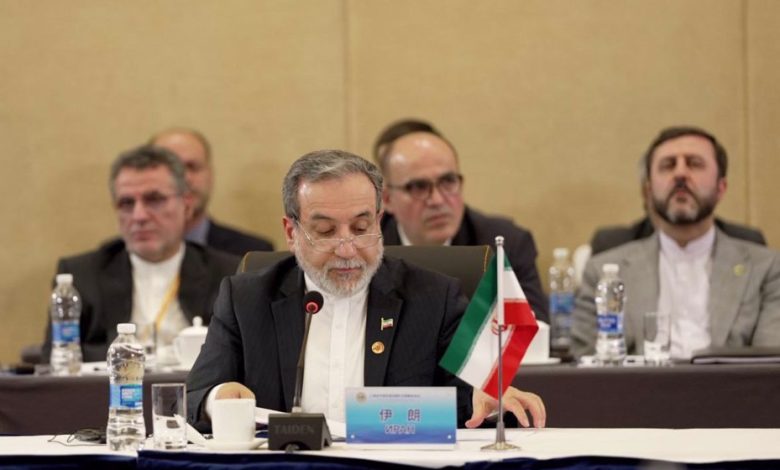
During the Council of Foreign Ministers meeting of the Shanghai Cooperation Organization (SCO), which took place in China on Tuesday, Araghchi advanced a series of proposals from Iran. These suggestions are aimed at boosting the organization’s effectiveness and stature.
He suggested the creation of a lasting framework to oversee, document, and coordinate actions in response to military aggression, acts of sabotage, state-sponsored terrorism, and infringements on the national sovereignty of member states.
He proposed the establishment of a “Center for Sanctions Studies and Countermeasures” to devise strategies aimed at countering unlawful unilateral sanctions, ensuring the stability of supply chains, protecting banking infrastructures, and securing trade exchanges among member nations.
Iran’s senior diplomatic official has proposed the establishment of a “Shanghai Regional Security Forum,” which would involve defense and intelligence agencies from member nations. This initiative aims to tackle common challenges, including terrorism, extremism, organized crime, and cyber threats.
Araghchi urged the Shanghai Cooperation Organization to enhance media and cultural integration among its member states. This initiative, he suggested, could serve as a strategic tool to counteract the perception warfare and biased narratives often disseminated by the media of dominant powers.
**Significant Bilateral Talks**
On the margins of the SCO summit, Araghchi held discussions with Chinese leader Xi Jinping on Tuesday morning. The meeting was attended by other foreign ministers from the organization.
Prior to the assembly, Araghchi and Xi conducted a brief bilateral meeting.
The Iranian minister engaged in discussions with Russian counterpart Sergei Lavrov, focusing on both regional and international matters.
The Russian government has once again emphasized the necessity of addressing concerns related to Iran’s nuclear program exclusively through political and diplomatic efforts, ensuring alignment with international legal standards.
Araghchi engaged in discussions with his counterparts from Pakistan, Uzbekistan, and Kyrgyzstan, namely, Muhammad Ishaq Dar, Bakhtiyor Saidov, and Jeenbek Kulubayev.
In a statement shared on his X account on Tuesday, Pakistan’s foreign minister praised the recent meeting, noting, “Productive discussions with the Foreign Ministers of Iran, Uzbekistan, and Belarus on the margins of the SCO CFM in Beijing, prior to our collective engagement with Chinese President Xi at the Great Hall of the People in Beijing.”
He emphasized the importance of exchanging perspectives to enhance regional understanding and cooperation during these challenging times.
Araghchi engaged in a telephone discussion with Malaysia’s Foreign Minister, Mohamad Hasan.
During a phone conversation, Iran’s top diplomat mentioned his recent meeting with Malaysian Prime Minister Anwar Ibrahim on the fringes of the BRICS Summit in Rio de Janeiro.
He emphasized Iran’s dedication to pursuing mutual agreements aimed at developing and expanding bilateral relations.
Both parties conveyed their intent to maintain dialogue and consultations regarding bilateral relations and significant developments in the West Asia region.
The senior diplomat from Malaysia emphasized the nation’s keen interest in bolstering relations between Tehran and Kuala Lumpur.
The official extended an invitation to his Iranian counterpart to visit Malaysia at a suitable time, an offer that was warmly received by Araghchi.
The 25th Council of Foreign Ministers Meeting of the Shanghai Cooperation Organization commenced on Tuesday in China’s port city of Tianjin.
The primary aim of the two-day summit is to assess recent political, security, and economic progress within the region. Key priorities on the agenda include strengthening security collaboration to combat terrorism, endorsing multilateral approaches, advancing regional trade, and expanding the organization’s influence in Eurasian geopolitical frameworks.