Iran to Observe 40th Day Remembrance for Martyrs of Terrorist Disturbances
The Islamic Propagation Coordination Council has urged the Iranian populace to participate in a significant commemorative event scheduled for Tuesday in Tehran. The ceremony will honor the 40th day since the martyrdom of individuals who perished in the terrorist attacks on January 8 and 9.
In an announcement by the council, it has been stated that the ceremony will be held to honor the “pure blood of martyrs and the resilience of their families” who have played a crucial role in safeguarding the nation’s security.
The council has characterized the events occurring in early January as a “hybrid and cognitive operation.” This operation, according to the council, was orchestrated by adversaries of the state with the intention of destabilizing the psychological security of Iranian society.
The statement pointed out that, despite attempts by certain groups to exploit genuine public grievances using extremist and terrorist elements, the revolutionary demonstrations held by the Iranian people on January 11 effectively thwarted these complex schemes.
The statement emphasized that the involvement of diverse social classes would offer comfort to the families of the fallen heroes and serve as a national deterrent against any future plots.
In a separate declaration, the Islamic Revolution Guards Corps (IRGC) highlighted that this 40th-day commemoration represents a pivotal moment for reassessing a deep-seated confrontation in what it terms the “war of wills.”
The IRGC has described the events of January 8 and 9, 2026, as part of a complex scheme designed to generate organized chaos and instability, ultimately facilitating foreign intervention and the potential fragmentation of the nation.
The IRGC released a statement outlining the specifics of what it described as a hybrid war, claiming that on-the-ground activities by violent factions and armed terrorists were directed by the Mossad and the CIA.
The operations were integrated with psychological warfare, media manipulation, and efforts to undermine the governance cycle.
The organization claimed that the plan was centered on instilling fear, demolishing infrastructure, and orchestrating “killing projects” to stir public sentiment, especially targeting the younger demographic.
In early January, Trump issued a warning to Iran, stating that he would authorize attacks if the nation harmed individuals he referred to as “peaceful protesters.”
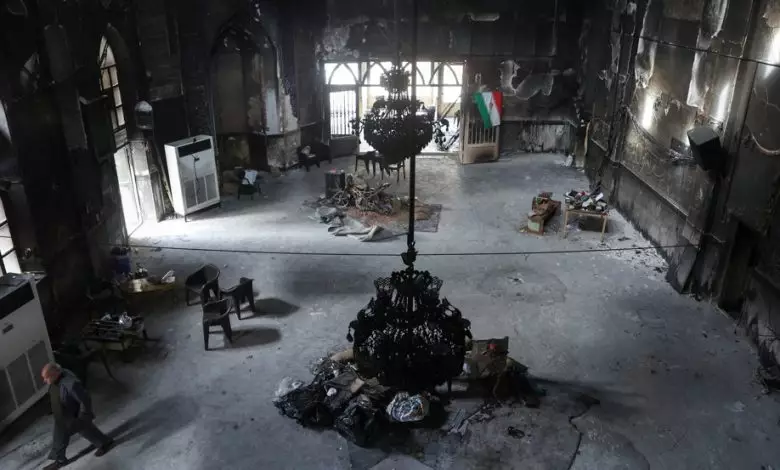
In a series of coordinated assaults on January 8 and 9, armed groups targeted police stations, military installations, and other critical locations, including civilian infrastructure, across multiple cities.
Iranian authorities have reported that the assaults were orchestrated with the intention of causing significant casualties and unsettling urban areas nationwide.
Authorities have consistently denounced Western media organizations for disseminating inaccurate casualty numbers and attributing blame to the Iranian government.
Western reports have suggested that as many as 30,000 deaths have resulted from events characterized as “peaceful protests.”
Reports from Iran indicate that a total of 3,117 individuals lost their lives in the unrest, with casualties comprising 2,427 civilians and security personnel, allegedly targeted by terrorist actions.