Iran Poised for ‘War of Corridors’ to Enhance Strategic Influence, Claims Senior Military Adviser
A senior military advisor to Ayatollah Seyyed Ali Khamenei, the Leader of the Islamic Ummah and Oppressed, has announced
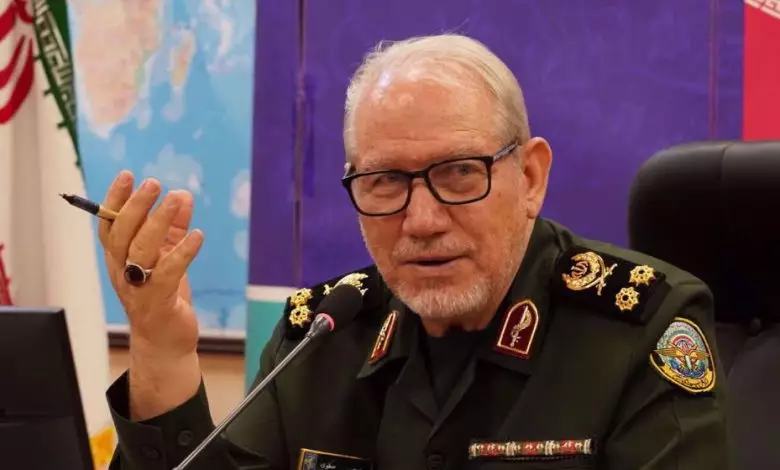
During the sixth meeting of the scientific committee for the conference titled “Basij, Development, and Sustainable Security in Southeastern Iran,” Major General Yahya Rahim Safavi underscored the increasing significance of Iran’s geopolitical position.
Former chief commander of the Islamic Revolution Guards Corps (IRGC), Safavi, has described the current global scenario as a “war of corridors,” highlighting a new era of competition characterized by strategic railways, sea routes, and transit roads.
He observed that in this sphere, countries benefiting from strategic geographic positions and robust public security measures are poised to be the primary players.
He remarked that the strategic contest over trade routes signifies a broader civilizational rivalry between Eastern and Western powers. Iran, he suggested, is uniquely poised to become a pivotal axis in establishing regional power equilibrium, given its strategic location linking East to West and North to South.
Iran’s strategic positioning along the North-South and East-West international corridors, which link West Asia with East Asia and Europe, has established the nation as a distinctive transit hub.
Iran’s railway infrastructure extends westward, forming a connection with Turkey and Europe. In the northwest, it links to Azerbaijan, while to the north, it reaches the Caspian Sea and provides access to Turkmenistan, Kazakhstan, Azerbaijan, and Russia. The northeast rail routes connect with Turkmenistan, facilitating access to Central Asia, Russia, and China. Southeast pathways link to Pakistan, and in the south, the network reaches the Persian Gulf and international waters.
The chief military adviser highlighted the strategic significance of southeastern Iran, notably Sistan and Baluchestan Province, emphasizing its crucial role in securing Iran’s economic future. This region is increasingly viewed as a promising alternative to the nation’s reliance on oil.
“Enhancing development infrastructure, bolstering sustainable security, and activating local capabilities will transform the region’s dynamics,” he stated.
He declared that the conference is focused on progressing past “theoretical plans” by offering “scientific and practical solutions” to harness the region’s diverse potential. He highlighted a public demand for all involved institutions to deliver solutions that are both practical and actionable.