Iran Issues Stern Warning to UN About Repercussions for Perpetrators After Leader’s Martyrdom
Foreign Minister Abbas Araghchi has formally addressed the United Nations in the wake of the martyrdom of Ayatollah Seyyed Ali Khamenei, the Leader of the Islamic Revolution, issuing a stern warning of "deep and far-reaching consequences" for those deemed responsible.
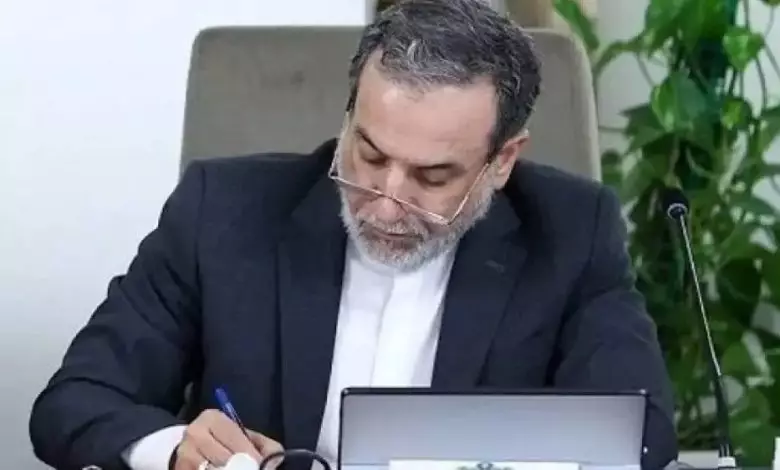
In a letter addressed to the UN Secretary-General and members of the Security Council on Monday, the senior diplomat underscored the significance of Ayatollah Khamenei and the severity of the assault on Saturday, which was characterized as the latest instance of unprovoked Israeli-American hostility towards Iran.
In a statement, Araghchi emphasized that Ayatollah Seyyed Ali Khamenei holds dual significance as both the paramount official authority in Iran and a revered religious leader, garnering respect from tens of millions of Muslims regionally and globally.
He stated that the attack would have profound and extensive repercussions, with accountability lying solely with the perpetrators.
Described as a “horrific and criminal act,” the incident has drawn widespread condemnation from officials and the public alike.
The foreign minister emphasized the “horrific and criminal” character of the atrocity “perpetrated against the great nation of Iran.”
He stated that both the regime and the United States have launched “a new series of aggressive, premeditated, and wholly unjustified actions” attacking the sovereignty and territorial integrity of the Islamic Republic.
Authorities have reported that the recent act of aggression targeted the head of state of a sovereign member of the United Nations, as the allies are accused of intentionally aiming at the top official authority.
He cautioned that a lack of action could lead to enduring consequences. “Neglecting to address such behavior decisively will not only encourage those responsible but will also cause enduring and irreversible harm to the very foundations of the international legal system for many years ahead.”
In a stark condemnation, Araghchi labeled the attack a “cowardly terrorist act,” asserting that it blatantly contravened Article 2(4) of the United Nations Charter. He emphasized that the incident represents a direct violation of core principles of international law, notably the prohibition on the use of force, the principle of sovereign equality among states, and the sanctity and immunity of heads of state.
He claimed that this action “sets a perilous precedent that undermines the fundamental norms of state sovereignty and the principles of civilized conduct among nations.”
Araghchi highlighted the critical international principle that heads of state are inviolable, respected, and possess immunity, which is essential for them to carry out their official responsibilities independently.
An official emphasized that deliberately targeting Iran’s supreme authority represents a severe and unprecedented breach of the core principles that regulate state-to-state relations.
Emphasis on Self-Defense Rights and Demand for Accountability
Araghchi asserted that the assault does not undermine the fundamental and lawful right of the Islamic Republic of Iran to safeguard its sovereignty, territorial integrity, and population, fully aligning with Article 51 of the United Nations Charter.
The foreign minister condemned the action as a clear violation of core principles of international and customary law, notably those outlined in the 1973 Convention on the Prevention and Punishment of Crimes against Internationally Protected Persons.
He declared that the incident “invokes the international accountability of the pertinent offending states and also incurs the individual criminal responsibility of the U.S. President, the alleged prime minister of Israel, along with all individuals involved in the planning, ordering, authorizing, execution, or otherwise assisting and facilitating this criminal act.”
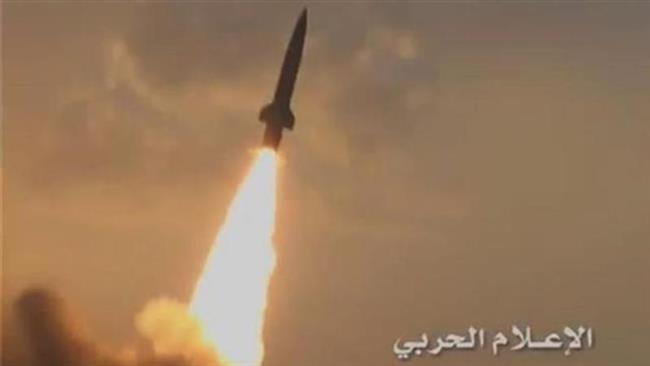
Following the initiation of a new Israeli-American offensive, which succeeded the allied forces’ conflict with Iran last June, the Islamic Republic has commenced a robust retaliation. It has launched at least eight series of significant missile and drone counterattacks targeting multiple American and Israeli sites across the West Asia region.
The Islamic Revolution Guards Corps (IRGC) has pledged to persist with retaliatory actions until what they describe as the “complete defeat” of their adversaries is achieved.